Diet
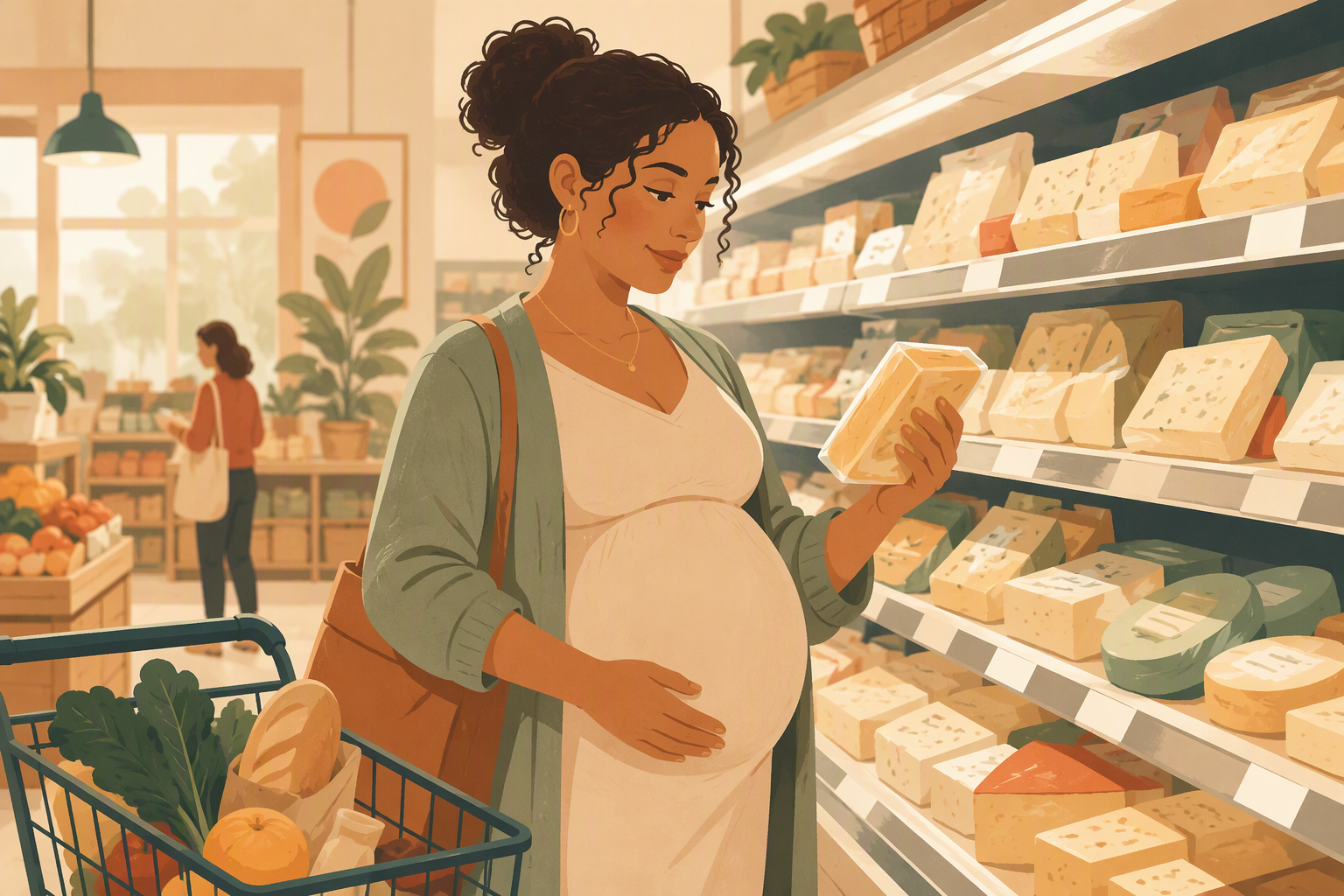
You’re at a friend’s place, the cheese board comes out, and you freeze with a cracker in your hand. Brie? Feta? Is cheddar okay? Cheese is the single most googled food in pregnancy, and honestly the confusion is fair — the advice isn’t ‘some cheeses are bad’, it’s ‘it depends how the cheese was made’. Let me make it simple, the way I eventually made it simple for myself.
The short answer
Hard cheeses (cheddar, parmesan) are fine. Soft cheeses are fine IF they’re pasteurised — check the label. The ones to pause are mould-ripened soft cheeses (brie, camembert), blue-veined cheeses, and anything unpasteurised — unless cooked until steaming.
What the cheese rule is really about
The concern is listeria, a bacteria that thrives in cool, moist environments — exactly the environment of soft, mould-ripened cheeses. Hard cheeses are too dry and salty for it. That’s the whole logic: moisture and mould-ripening are the risk factors, not ‘softness’ alone.
This is why the advice sounds contradictory: feta from pasteurised milk is considered fine, while a mould-ripened brie isn’t — even though both are ‘soft’. And any cheese cooked until steaming hot, like the brie in a baked dish, is off the worry list entirely.
The part that often gets missed
The label trick that ended my cheese anxiety: flip it over and look for one word — pasteurised. In Australia, the UK, and most of Europe, nearly all supermarket cheese is pasteurised and says so. If it says pasteurised and it’s not mould-ripened or blue, you can stop thinking and enjoy your cracker.
What you can actually do
1. Memorise the three red categories
Just three groups need pausing: mould-ripened soft cheeses (brie, camembert and friends), blue-veined cheeses (stilton, gorgonzola, danish blue — unless cooked), and anything made from unpasteurised milk. Everything else — cheddar, mozzarella, feta, halloumi, cream cheese, cottage cheese, parmesan — is fine when pasteurised.
Notice how much longer the ‘fine’ list is. Cheese is not cancelled; three specific styles are on hold for a few months.
2. Check for one word: pasteurised
Make it a reflex: pick up the cheese, find ‘pasteurised’ on the ingredients. If it’s there and it’s not mould-ripened or blue — good. If the label is missing or says ‘raw milk’ or ‘unpasteurised’, back it goes. At farmers’ markets and delis, ask directly; small producers vary more than supermarkets.
This takes four seconds and works in any shop. My kids can now spot the word on a label, which tells you how often they watched me do it.
3. Remember that cooking resets the risk
Listeria is killed by heat, so cooked-until-steaming changes everything: baked brie, blue cheese sauce on a hot steak, goat’s cheese tart straight from the oven — all fine when piping hot throughout. It’s the cold, as-is versions that carry the risk.
This was my dinner-party loophole through three pregnancies. Nobody feels deprived at a baked brie.
4. Have a party strategy
Cheese boards are where good intentions go to die, so decide before you arrive: I’ll have the hard cheeses, the pasteurised soft ones if the packet’s visible, crackers, fruit, and anything hot. If you can’t verify, stick to what you can. A quiet ‘I’m being picky, doctor’s orders’ is all the explanation anyone needs.
And if you accidentally eat a bite of something you shouldn’t have — don’t panic. One exposure carries a very small absolute risk. Watch for flu-like symptoms or fever over the next weeks and call your doctor if they appear; otherwise let it go.
When to check with your doctor or midwife
- Fever, muscle aches, vomiting or diarrhoea within two months of a risky food — mention the food when you call
- Any flu-like illness in pregnancy is worth a call anyway
Where to start
Next shop, do the four-second label check on your usual cheeses. You’ll likely find most of your favourites are pasteurised and staying on the menu — and the two or three that aren’t get a ‘see you in a few months’ note.
Cheese in pregnancy isn’t a minefield; it’s three categories to pause and one word to check. Learn it once and you never have to hover anxiously over a cheese board again — you’ll be the one calmly explaining it to the next pregnant friend.
Don’t memorise cheeses. Memorise one word: pasteurised.
Keep reading
Pregnancy Breakfast Ideas When You Feel Sick Every Morning
Getting something down when your stomach says no — the survival breakfast toolkit.
Gestational Diabetes Diagnosis? What to Ask About Your Meals
Just diagnosed with GD? How to approach food without fear — and the questions to bring.
Can You Drink Coffee While Pregnant? Understanding Caffeine Limits
The real caffeine rules — how much is okay, where it hides, and how to cut back kindly.
I hope this helped, even a little. Everything I write here comes from raising my three and from the planners and checklists I built because I needed them myself. If you take one thing from this page, let it be this: you are doing better than you think.
— Rahila x
Mum of three, obsessive list-maker, and the person behind Women Life Reset
Women Life Reset guides are general information, not medical advice. Always check your own situation with your doctor, midwife or health visitor.