Diet
You’re standing in front of the fridge doing mental gymnastics: is ham allowed? What about that dip from yesterday? Was there raw egg in that mayo? By my third pregnancy I’d stopped memorising rules and started understanding the handful of principles behind them — and that’s what I’m going to hand you here, because principles are so much easier to carry around than lists.
The short answer
Most food is fine. The real rules are short: avoid anything with a listeria risk (deli meats, unpasteurised cheeses, pâté, pre-made salads), raw or undercooked eggs and meat, high-mercury fish, alcohol, and too much caffeine. Everything else is about balance, not fear.
Why the food rules exist at all
Almost every pregnancy food rule traces back to one of two things: listeria and mercury. Listeria is a bacteria that’s rare but dangerous in pregnancy — it hides in foods that are ready-to-eat but not freshly cooked, which is why deli counters and pre-packaged salads are the risk, not ‘foreign food’ or ‘soft food’ in general. Mercury accumulates in big predatory fish and can affect a developing nervous system.
Once you see that pattern, the rules stop being random. You’re not avoiding foods; you’re avoiding specific bacteria and one mineral. Everything else — spicy food, ‘heating’ foods, whatever your aunt warned about — is culture, not science.
The part that often gets missed
The question that simplified my eating: ‘Was this cooked recently, or has it been sitting around ready-to-eat?’ Freshly cooked food, even steak or eggs, is generally fine. Food that’s been sitting cold and ready-to-eat for days — that’s where listeria likes to live. That one filter answers most fridge-door dilemmas.
What you can actually do
1. Learn the short ‘pause’ list properly
The genuinely-avoid list is shorter than the internet suggests: deli meats and pâtés (unless heated steaming), unpasteurised milk and cheeses, pre-made salads and buffets, raw or runny eggs (unless they’re lion-stamped or equivalent), undercooked meat and fish, high-mercury fish like shark and swordfish, alcohol, and caffeine over 200mg a day. That’s the core of it. Screenshot it, stick it on the fridge, done.
Everything else is normal healthy eating: variety, fruit and veg, wholegrains, protein, calcium. You know this part already — pregnancy doesn’t require a new cuisine.
2. Use the ‘cooked recently?’ filter
At the fridge or café, ask: was this cooked recently, or has it sat ready-to-eat? Leftover roast chicken from last night, reheated steaming — fine. That same chicken from a deli display that’s been sitting there — skip it. Freshly made sandwich from a busy place with high turnover — generally fine. A pre-packaged one from a petrol station — leave it.
When in doubt, heat it through. Listeria dies at cooking temperatures, which is why toasted sandwiches and piping-hot reheats get a green light.
3. Build a default safe plate
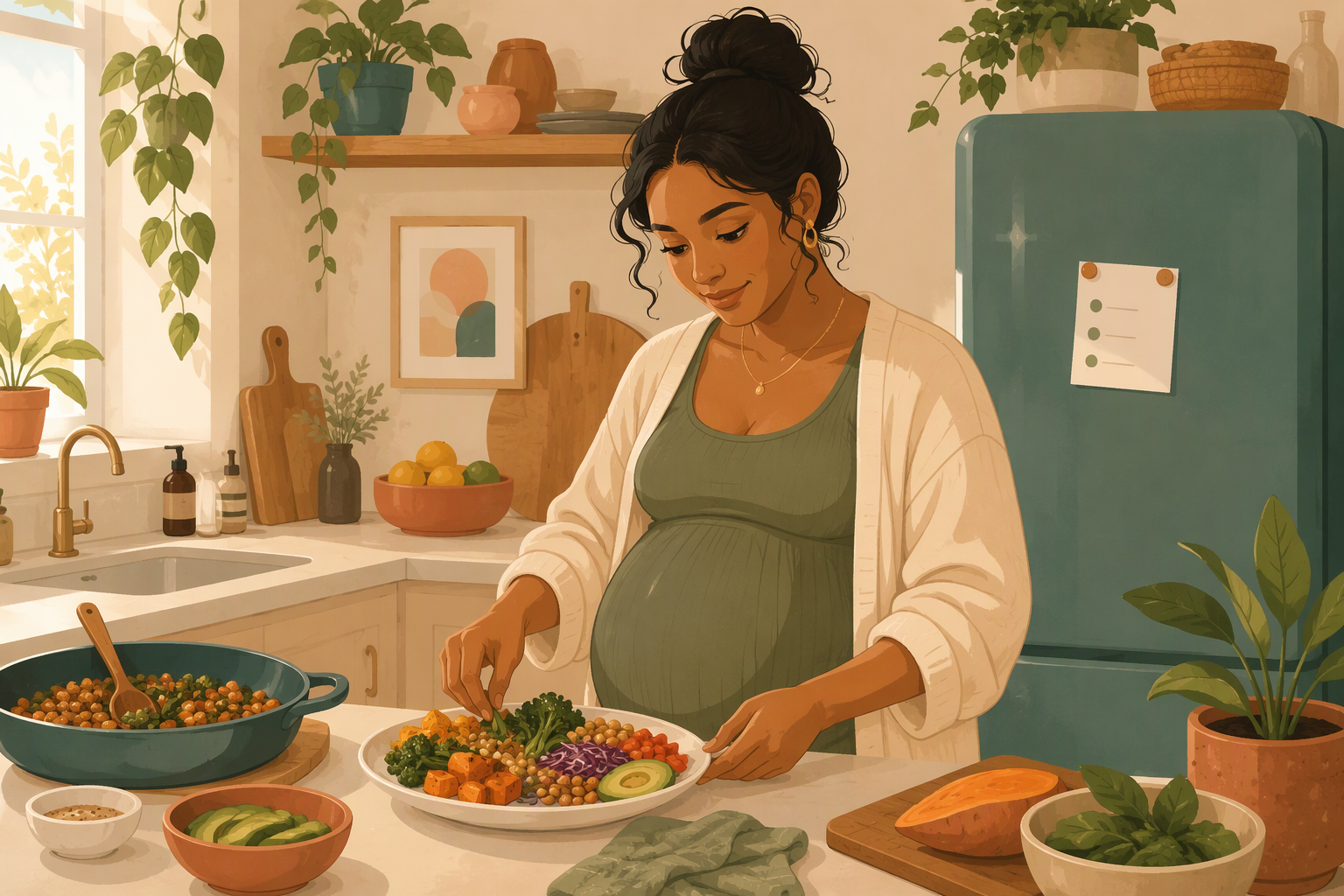
Decision fatigue is the real enemy — by 6pm nobody wants to run a risk assessment on dinner. So build five or six default meals you never have to think about: scrambled eggs on toast, pasta with a cooked sauce, rice bowls with well-cooked protein, jacket potatoes, hearty soups. Rotate them through the weeks you’re most tired.
Mine lived on a sticky note inside the pantry door. With my third baby and two kids underfoot, ‘no decisions at dinner’ was survival strategy, not laziness.
4. Handle eating out without anxiety
Restaurant anxiety ruins dates you really need right now. The shortcut: choose hot, freshly cooked dishes; ask for eggs and meat cooked through; skip the shared appetiser plate of cured meats and soft cheeses; and never feel awkward asking ‘is that pasteurised?’ — waiters hear it constantly.
And if something slips through — you realise the salad had feta halfway through — don’t spiral. The absolute risk from any single exposure is tiny. Note it, move on, and mention symptoms like fever or vomiting to your doctor if they ever appear.
Where to start
Tonight: write your personal pause list once, put it on the fridge, and choose two default dinners for this week. That’s the whole setup — the rest is just repeating it.
You will accidentally eat something on the list at some point. Every pregnant woman does. The rules are about reducing risk across nine months, not achieving perfection at every meal — and a mother who can enjoy her dinner is worth more than a perfect menu.
You’re not avoiding foods. You’re avoiding two specific risks. That’s a much shorter list.
Keep reading
Can You Eat Cheese While Pregnant? What to Check First
The cheese rules, decoded: which ones pause, which ones are fine, and the label trick.
Pregnancy Breakfast Ideas When You Feel Sick Every Morning
Getting something down when your stomach says no — the survival breakfast toolkit.
Gestational Diabetes Diagnosis? What to Ask About Your Meals
Just diagnosed with GD? How to approach food without fear — and the questions to bring.
I hope this helped, even a little. Everything I write here comes from raising my three and from the planners and checklists I built because I needed them myself. If you take one thing from this page, let it be this: you are doing better than you think.
— Rahila x
Mum of three, obsessive list-maker, and the person behind Women Life Reset
Women Life Reset guides are general information, not medical advice. Always check your own situation with your doctor, midwife or health visitor.