
Diet
The midwife rings after your blood test: your iron’s a bit low, here’s a supplement. And now you’re wondering — is this serious, can I fix it with food, and why does that tablet make my stomach feel terrible? Low iron is one of the most common findings in pregnancy — I had it with two of my three — and it’s very fixable once you understand the mechanics.
The short answer
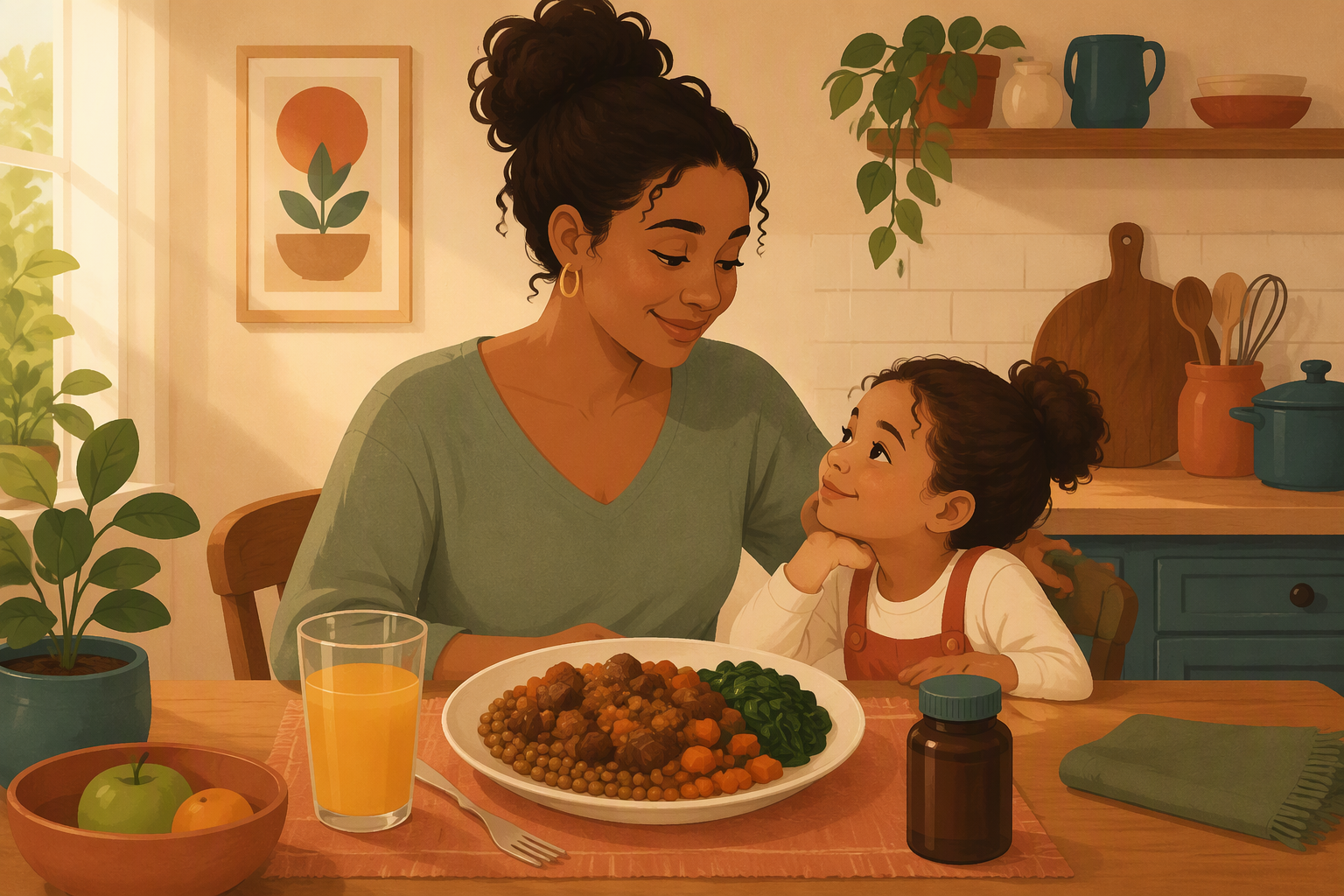
Food alone rarely fixes established low iron in pregnancy — supplements do the heavy lifting, while food maintains the gains. The tricks that matter: take iron with vitamin C, away from tea, coffee and dairy, and tell your provider if side effects are awful — there are gentler forms.
Why pregnancy drains iron
Your blood volume expands by up to half during pregnancy, and the baby is busily stocking their own iron reserves for their first months of life. The demand simply outruns what most diets supply — even good diets. So if your levels are low, it’s physiology, not a report card on your eating.
Low iron matters because it’s behind a lot of the ‘extra’ exhaustion, breathlessness on stairs, and pale, washed-out feeling that gets blamed on ‘just pregnancy’. Treating it can genuinely change how the third trimester feels.
The part that often gets missed
What surprised me: absorption is the whole game. An iron tablet taken with breakfast tea and toast with butter absorbs a fraction of one taken with orange juice on an empty stomach. Same tablet, wildly different result. Timing and pairing matter more than brand.
What you can actually do
1. Get the supplement ritual right
Take your iron with a glass of orange juice or water, away from meals if your stomach tolerates it, and at least two hours from tea, coffee, dairy and calcium supplements — all of them block absorption. If mornings are chaos, anchor it to a fixed moment: mine lived next to the kettle with a strict ‘juice, not tea’ rule.
Expect the dark stools — normal, harmless, and worth knowing about before they surprise you. If you take it every second day instead of daily, some research suggests absorption is just as good with fewer side effects; ask your provider if daily is rough on you.
2. Eat for maintenance, not rescue
The best food iron comes from red meat — your body absorbs it two to three times better than plant iron. If you eat meat, lean red meat a few times a week is the maintenance plan. Plant sources — lentils, beans, spinach, fortified cereals, dried apricots — work too, especially paired with vitamin C, but think of them as steady contributors, not a rescue plan for low levels.
Practical pattern: build two or three iron-forward dinners a week (bolognese, lentil curry, beef stir-fry) rather than sprinkling iron-food guilt on every plate.
3. Use the vitamin C multiplier
Vitamin C can double or triple iron absorption from a meal. Squeeze lemon over the lentils, add capsicum to the stir-fry, have fruit with the fortified cereal. And the reverse: keep the tea and coffee for between meals, not with them — the tannins put a handbrake on iron.
This is one of those rare nutrition tips that’s free, instant, and actually works. My lentil soup has had lemon squeezed over it for twenty years now.
4. Speak up about side effects
Constipation and nausea from iron tablets are the reason half of them end up abandoned in a drawer. Don’t abandon — adapt. Tell your midwife or GP: there are different formulations, gentler forms like iron bisglycinate, liquid options, and for significant deficiency, iron infusions that fix it in an afternoon. Suffering silently is not a requirement.
Rechecks are part of the deal — a follow-up blood test shows whether your levels are climbing. Seeing that number rise is one of pregnancy’s more satisfying small victories.
When to check with your doctor or midwife
- Breathlessness at rest, chest pain, or a racing heart — call today
- Dizziness or fainting episodes
- Extreme exhaustion that’s worsening despite supplements — ask about your levels
Where to start
Start with the supplement ritual: tomorrow morning, iron with juice, tea thirty minutes later. One change, and you’ve already improved absorption more than any food swap would.
Low iron in pregnancy is common, mechanical, and fixable — a plumbing issue, not a verdict. Take the tablet right, eat the steady foods, speak up if it’s rough on your stomach, and let the follow-up blood test show you it’s working.
Absorption is the whole game: juice with it, tea away from it, and the same tablet does double the work.
Keep reading
What Can You Actually Eat During Pregnancy? Foods Explained
Cutting through the food-rule fog: what’s off the menu, what isn’t, and why.
Can You Eat Cheese While Pregnant? What to Check First
The cheese rules, decoded: which ones pause, which ones are fine, and the label trick.
Pregnancy Breakfast Ideas When You Feel Sick Every Morning
Getting something down when your stomach says no — the survival breakfast toolkit.
I hope this helped, even a little. Everything I write here comes from raising my three and from the planners and checklists I built because I needed them myself. If you take one thing from this page, let it be this: you are doing better than you think.
— Rahila x
Mum of three, obsessive list-maker, and the person behind Women Life Reset
Women Life Reset guides are general information, not medical advice. Always check your own situation with your doctor, midwife or health visitor.