
Postpartum
Nobody really mentions it beforehand: after the baby comes the bleeding — weeks of it, whatever kind of birth you had. You’re a few days in, staring at a pad, wondering ‘is this much normal? Shouldn’t it be stopping?’ Let me walk you through the actual pattern, because almost everything about postpartum bleeding surprises women, and most of the surprises are normal.
The short answer
Postpartum bleeding (lochia) is heavy for the first days, then gradually lightens from red to pink to brown to pale over four to six weeks. A brief heavier gush when you stand up or after feeding is normal. Soaking a pad in an hour, large clots, foul smell, or bleeding that gets heavier again after lightening are the call-the-midwife signs.
Why you bleed for weeks
After the placenta detaches, it leaves a wound inside the uterus the size of a dinner plate — and that wound heals over weeks, weeping as it goes. That’s what lochia is. It happens after caesareans too, because it’s about the uterus, not the birth canal.
The pattern is a slow fade: bright red and heavy with small clots for the first few days, then pinkish and moderate through week one to two, then brownish and light, then a pale yellow-white discharge that can linger to four or even six weeks. Everyone’s clock varies a little.
The part that often gets missed
The two things that catch everyone out: the standing-up gush (blood pools when you lie or sit, then gravity delivers it when you rise — startling, and normal), and the breastfeeding surge (feeding triggers the hormone that contracts the uterus, so a heavier flow mid-feed is literally healing in action).
What you can actually do
1. Learn the colour clock
Red days 1–4, pink through about day 10, brownish and lightening after that, pale by week 3–6. Running back through the colours in reverse — bleeding that lightened then turns bright red and heavier again — is the pattern to call about, especially with pain or fever. Occasionally it just means you’ve overdone it, but it’s worth the conversation.
Snap a mental photo of the pattern each day, not each hour. The week-over-week trend is what matters; hour-to-hour variation is normal.
2. Pads only, changed often
Maternity pads only for the first weeks — no tampons or cups, because the cervix is still open and infection risk is real. Change them often, wash hands before and after, and shower daily. It’s unglamorous hygiene, and it’s the whole infection-prevention strategy.
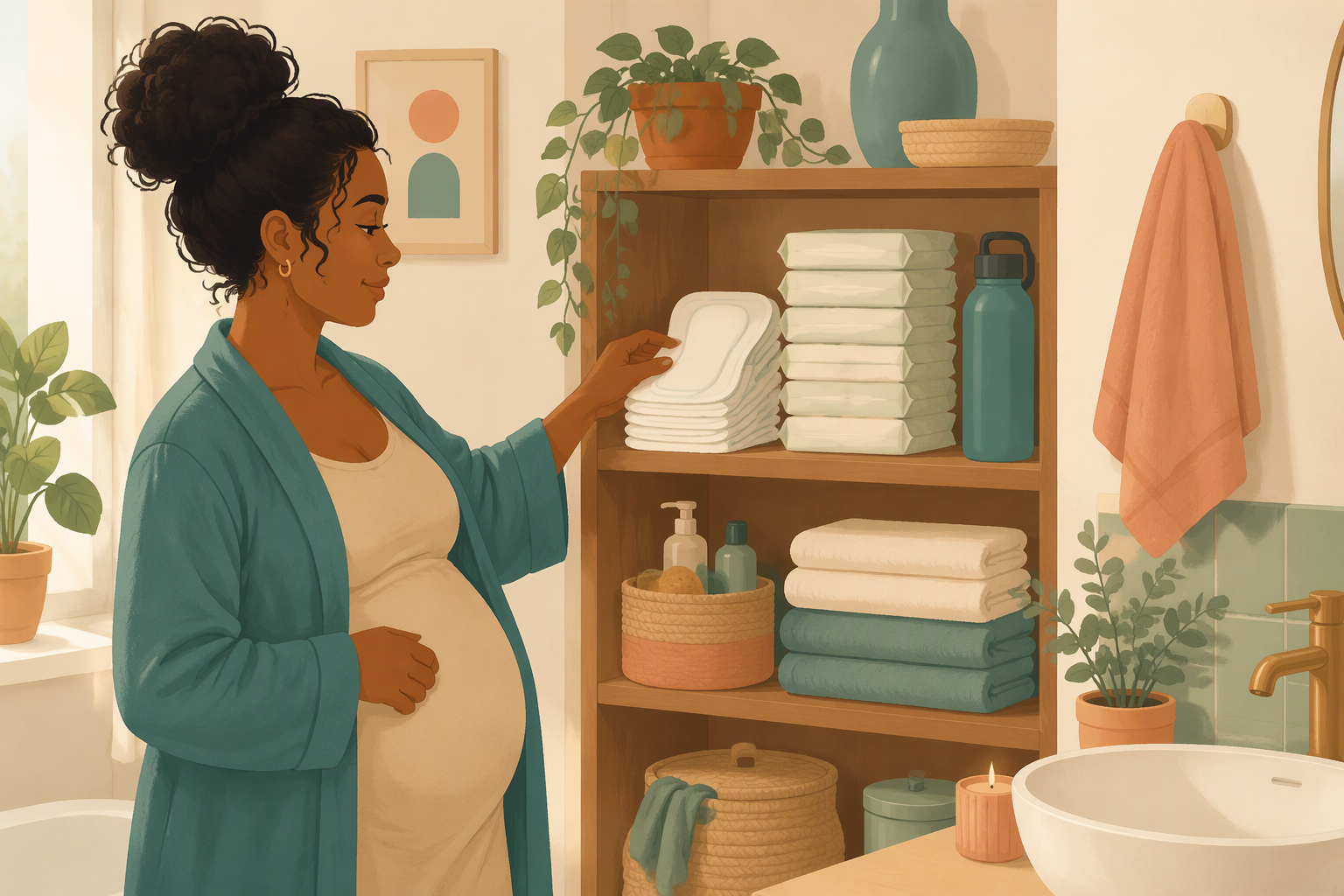
Stock more pads than you think. The early days go through them at a rate no leaflet prepares you for.
3. Know the standing-gush trick
When you stand after sitting or lying, pause a beat — the gush is coming and it’s usually normal. Same with the mid-feed surge. If a gush soaks through a pad in under an hour, or comes with clots bigger than a small plum, that’s when ‘normal pooling’ becomes ‘make the call’.
Big clots, one-off and followed by lightening, are often nothing — but describe them to your midwife anyway. Two minutes on the phone beats a week of wondering.
4. Track the trend, not the hour
Judge your bleeding weekly: lighter, paler, less? On track. Same heaviness for days, or heavier again? Call. Overdoing it — a big walk, a day of hosting — commonly bumps the flow for a day; that’s your body invoicing you. Rest, and it settles. If it doesn’t settle, that’s the sign.
Around six weeks many women get a final ‘is this my period?’ moment. If you’ve made it to your postnatal check, that’s a good question for it.
When to check with your doctor or midwife
- Soaking through a pad in an hour, or passing clots larger than a plum
- Foul-smelling discharge, fever, or flu-like aches
- Bleeding that had lightened turning bright red and heavy again
- Dizziness, racing heart, or feeling faint with bleeding — urgent
Where to start
Today: check you have enough maternity pads for a week, and save your midwife or postnatal ward number in your phone under ‘BLEEDING QUESTIONS’ so future-you finds it instantly.
Weeks of bleeding is one of postpartum’s least-mentioned facts, and now it’s one less mystery for you. Watch the colours drift paler week by week — that’s your body closing a remarkable chapter, one pad at a time.
Judge the week, not the hour: lighter and paler is the only trend that matters.
Keep reading
Why Do New Mothers Cry So Easily? What You Should Know
Crying at adverts, at tiny hats, at nothing — the science and the sanity of postpartum tears.
Feeling Lonely After Having a Baby? Where to Start
Surrounded by people, achingly alone — the isolation nobody photographs, and the ways through it.
Visitors After Birth: How to Set Boundaries Without Guilt
Everyone wants to meet the baby. You need to heal. How to hold both, kindly and firmly.
I hope this helped, even a little. Everything I write here comes from raising my three and from the planners and checklists I built because I needed them myself. If you take one thing from this page, let it be this: you are doing better than you think.
— Rahila x
Mum of three, obsessive list-maker, and the person behind Women Life Reset
Women Life Reset guides are general information, not medical advice. Always check your own situation with your doctor, midwife or health visitor.