
Labor
There’s a pop, or a gush, or a slow warm trickle you can’t quite control — and your brain yells ‘THIS IS IT’ while you stand there wondering what you’re actually supposed to do. In most labours, waters breaking is the start of a process, not an emergency siren. Here’s the calm version of what to do, in order.
The short answer
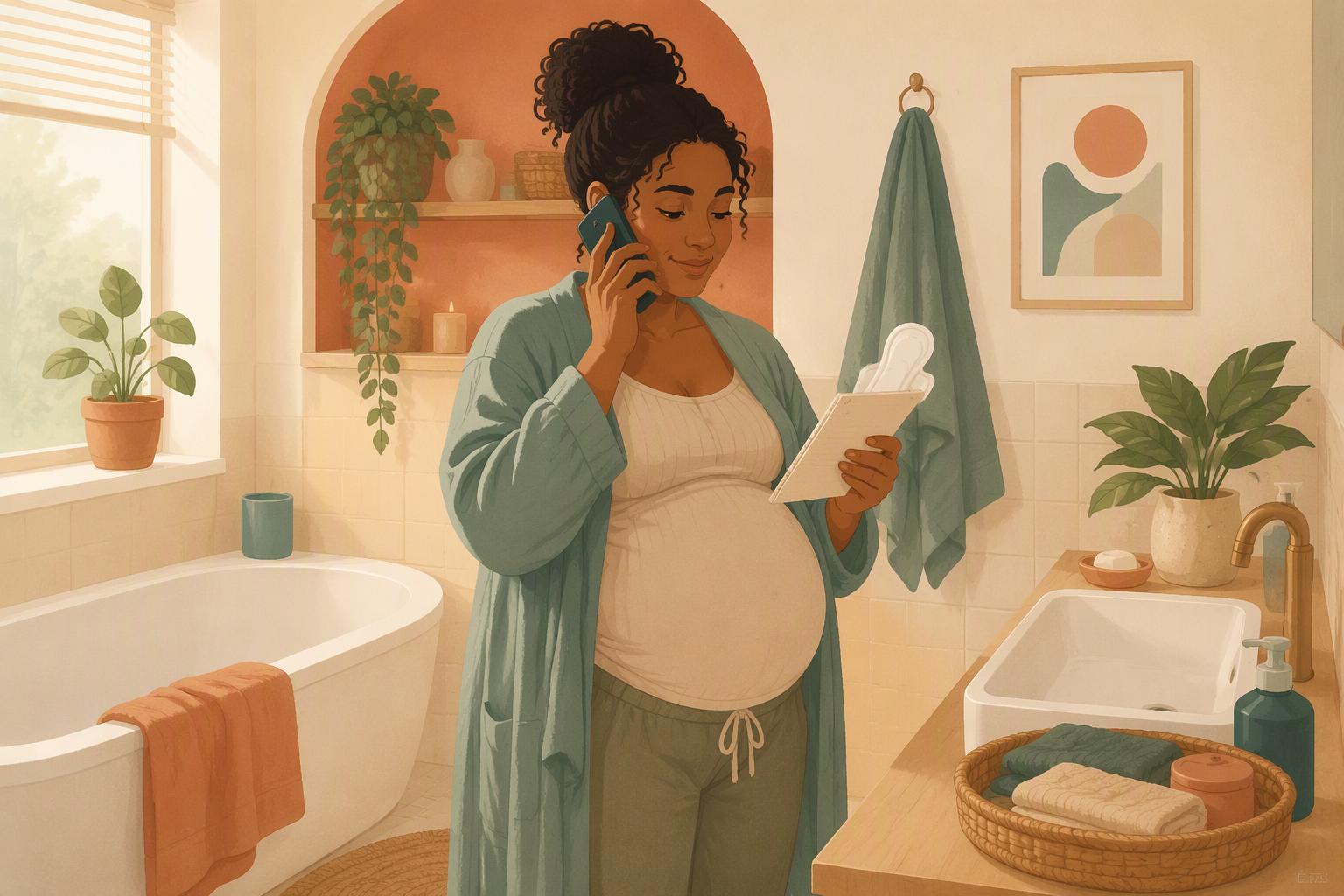
Note the time and the colour, put on a pad (never a tampon), and call your maternity unit — they almost always want to know, day or night. Clear or pale fluid with a moving baby usually means home a little longer; green or brown fluid, bleeding, or reduced movements means come in now.
What ‘waters breaking’ actually is
The amniotic sac — the fluid-filled cushion your baby has been floating in — ruptures. Sometimes it’s a cinematic gush; more often it’s a trickle that can be confused with a weak bladder or heavy discharge. Only about one in ten labours start with the waters going first; usually they break during labour itself.
Once the sac is open, the protective seal is gone, which is why the rules change: nothing up (no tampons, no sex), pad on, and the hospital wants to know because they’ll want you assessed within a certain window — often 24 hours — even if contractions haven’t started.
The part that often gets missed
The detail that turns this from panic to procedure: COAT. Colour, Odour, Amount, Time. When you ring, those four facts are what the midwife asks first. Clear or pale-straw fluid, normal smell, any amount, noted time — that’s a calm conversation. Green, brown, or blood-stained fluid changes the urgency entirely, so looking before you ring is genuinely useful.
What you can actually do
1. Do the COAT check first
Before anything else: note the time, look at the colour on your underwear or in the toilet, take in the amount (gush vs trickle) and whether it smells normal. Clear or pale pinkish-straw is reassuring. Green, brown or yellow-stained suggests meconium — the baby has pooed — and that means you’ll be asked to come in promptly for monitoring.
Take a photo of the pad if you’re unsure describing it. Midwives are gloriously unshockable, and a picture answers in one glance what ten nervous sentences can’t.
2. Pad on, nothing up
Pad on — maternity pad ideally — so you can keep seeing what’s coming out. No tampon, nothing inserted, no sex from here on: the seal is broken and infection risk is the reason for every rule. Shower is fine; skip the long bath once you know the waters have gone.
Keep changing pads and keep watching. The colour story continues after the first gush, and it’s the most useful thing you can report.
3. Make the call, whatever the hour
Call the maternity unit as soon as it’s happened — yes, even at 3am, and yes, even if you feel fine. They’ll ask your COAT details, whether baby’s moving normally, and whether contractions have started. If all is reassuring, many units let you wait at home for labour to establish, with clear instructions on when to come in.
If the fluid is green or brown, if there’s bleeding, if baby has gone quiet, or if you’re less than 37 weeks — that’s ‘come in now’, not ‘wait and see’. Say the colour clearly on the phone; it changes their advice.
4. Pack the waiting window wisely
Most first labours start contractions within 24 hours of the waters going. That waiting window is strange — technically in early labour, practically still at home. Use it: eat something proper, rest between pottering, finish the hospital bag, and keep notes of any contractions that start.
Know that if labour doesn’t establish on its own, induction will be offered — that’s about infection risk rising with time, not failure. The body usually gets there; sometimes it needs a nudge, and that’s a normal fork in the road, not a derailment.
When to check with your doctor or midwife
- Green, brown or blood-stained fluid — come in promptly
- Reduced or no baby movements
- Anything protruding into the vagina or a pulsing cord — call an ambulance and get on your knees with your bottom raised
- Waters breaking before 37 weeks
- Fever, feeling unwell, or foul-smelling fluid
Where to start
Right now, whatever stage you’re at: put maternity pads in the bathroom and save the maternity unit number where you’ll find it half-asleep. If it happens tonight, you’ll be grateful for the you who read this.
Waters breaking feels like the point of no return — and it is, in the loveliest way. One pad, four facts, one phone call, and then you’re simply a woman in the earliest stage of meeting her baby. The rest unfolds from there, with people who do this every night.
Colour, Odour, Amount, Time. Four facts, and panic becomes a plan.
Keep reading
Lost Your Mucus Plug? What Happens Next
The ‘show’ everyone whispers about — what it is, what it means, and what (usually) not to do.
When Should You Go to Hospital in Labour?
The 2am decision every labouring woman faces — a clear framework for timing it right.
Epidural During Labour: What Are the Benefits and Trade-Offs?
The honest, no-judgement rundown — what an epidural gives you, and what it asks in return.
I hope this helped, even a little. Everything I write here comes from raising my three and from the planners and checklists I built because I needed them myself. If you take one thing from this page, let it be this: you are doing better than you think.
— Rahila x
Mum of three, obsessive list-maker, and the person behind Women Life Reset
Women Life Reset guides are general information, not medical advice. Always check your own situation with your doctor, midwife or health visitor.