
Postpartum
The visitors have gone home, your partner’s back at work, and it’s 2pm on a Tuesday — just you, the baby, and a silence so loud it hums. You’re never physically alone, and yet you’ve never felt lonelier. If that’s you, you’re in very good company: loneliness is one of the most common and least-admitted feelings of new motherhood. Let me tell you where it comes from and, more importantly, where to start.
The short answer
New-mother loneliness comes from lost structure, lost identity, and relationships that haven’t caught up. What helps: one small regular anchor with other adults (a group, a walk, a class), honest talk with one person, and rebuilding a tiny bit of ‘you’ into the week — plus a chat with your health visitor if the loneliness feels heavy or hopeless.
Why motherhood isolates even surrounded by people
Before the baby, your days had scaffolding — work, colleagues, chats, errands, plans. The baby removes the scaffolding overnight and replaces it with one-to-one care of someone who can’t talk back. You’re giving all day and receiving no adult conversation, and the brain registers that as isolation even when you’re never alone.
There’s also the honesty gap: everyone asks about the baby, nobody asks about you — and admitting loneliness feels like admitting you don’t love your baby enough. Rubbish, of course. You can adore your baby and ache for adult company in the same hour. Most mothers do.
The part that often gets missed
The insight that helped me: loneliness after a baby isn’t a people shortage, it’s a rhythm shortage. One regular, repeated, low-effort point of contact — the same mums’ group every Thursday, the same walk with a neighbour — does more than a dozen one-off coffees. Belonging is built by repetition, not by intensity.
What you can actually do
1. Find one weekly anchor
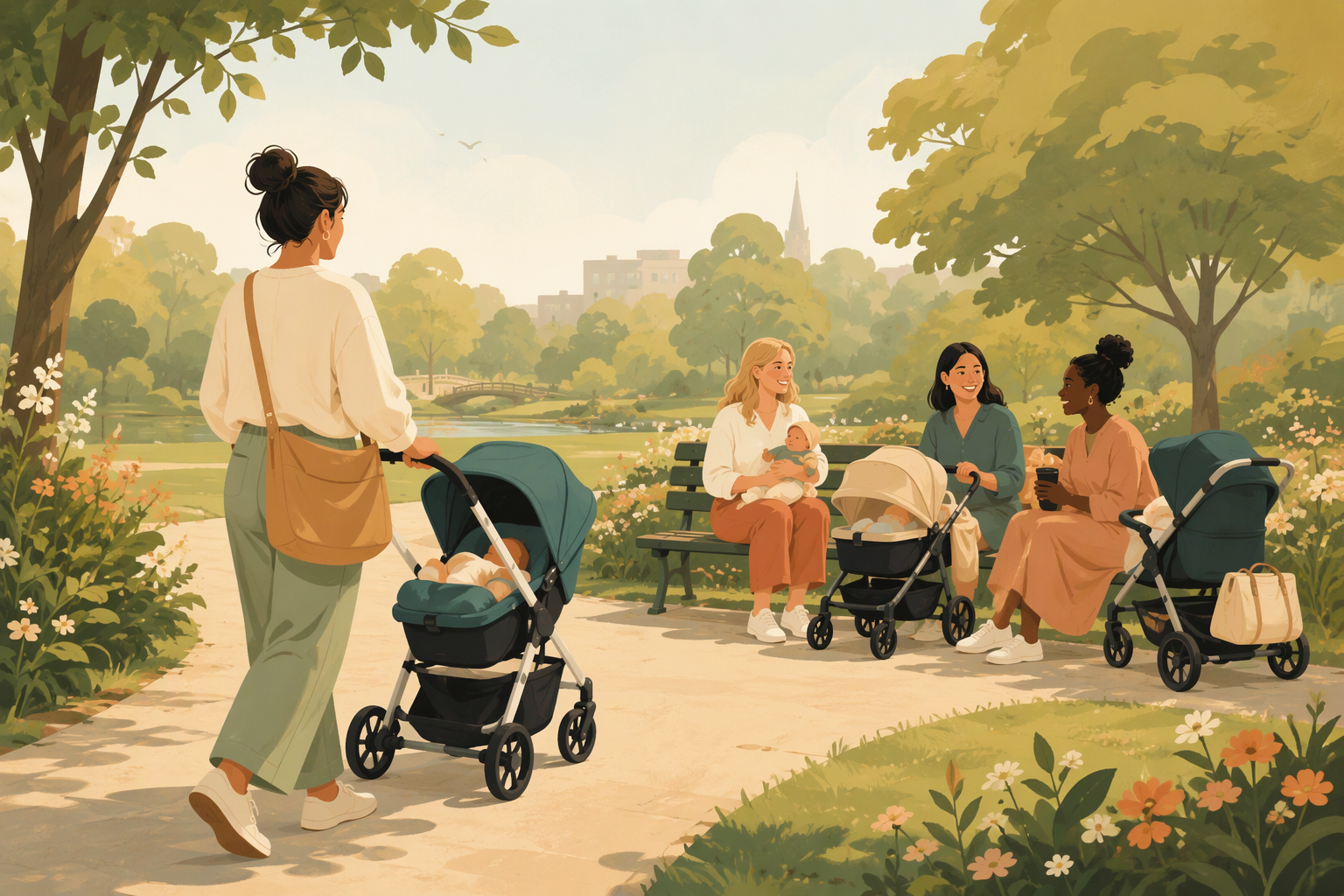
Choose one recurring thing with adults and protect it like a medical appointment: a new-parent group, a library rhyme time, a pram-walk meet-up, an exercise class with a crèche. Weekly, same time, no preparation required. The first visit is the hardest by a factor of ten; by week three you’ll know names.
Awkward is fine. Everyone in that room is performing the same courage. Go for the coffee afterwards even when you want to leave — that’s where the actual friendships start.
2. Use the two-sentence honesty rule
With one safe person, replace ‘we’re good!’ with two honest sentences: ‘The baby’s lovely. I’m lonelier than I expected.’ Watch what happens — almost every mother responds with her own version. The loneliness shrinks the moment it’s shared; it only grows in the performance that everything’s fine.
If nobody in your circle feels safe for that sentence, that’s important information — and exactly what helplines, health visitors and new-parent groups exist for.
3. Take the ten-minute version of your old self
You can’t have your old life back this month, but you can have ten-minute sips of it: the podcast while feeding, the chapter at nap time, the hobby’s smallest possible version. One square of your own identity, daily, tells your brain that you still exist inside the mother.
Mine was ten minutes of tea and a crossword app at the first nap. Ridiculously small. Genuinely medicinal.
4. Let your phone work for you
Used deliberately, the phone connects rather than isolates: voice notes to a friend instead of scrolling strangers’ highlight reels, one good group chat with people in the same life stage, a video call with your mum while you both do your chores. Set it up so it gives company, not comparison.
The rule: connect with people you know, ignore people performing. New-mother loneliness deepens under everyone else’s curated bliss.
When to check with your doctor or midwife
- Loneliness that feels hopeless, or like it will never change
- Going days without speaking to another adult and not minding anymore — withdrawal is a warning sign
- Any thoughts of harming yourself or that your baby would be better off without you — call your GP, health visitor or a crisis line today
Where to start
This week, book one anchor: find one local group or class and put the next session in the calendar. Going once is the whole assignment. The rest of the plan builds itself from that room.
The loneliness of new motherhood is real, common, and temporary — but it doesn’t fix itself by waiting. One repeated anchor, one honest sentence, ten minutes of you. That’s the ladder out, and the first rung is closer than it feels at 2pm on a Tuesday.
Loneliness after a baby isn’t a people shortage — it’s a rhythm shortage. Belonging is built by repetition.
Keep reading
Visitors After Birth: How to Set Boundaries Without Guilt
Everyone wants to meet the baby. You need to heal. How to hold both, kindly and firmly.
Postpartum Anxiety: When Worry Starts Taking Over
When every new-mum worry is on constant replay — recognising postpartum anxiety and getting your mind back.
First Week After Giving Birth: What Recovery Really Looks Like
The honest picture of week one — bleeding, sweating, tears and tenderness, and how to care for yourself through it.
I hope this helped, even a little. Everything I write here comes from raising my three and from the planners and checklists I built because I needed them myself. If you take one thing from this page, let it be this: you are doing better than you think.
— Rahila x
Mum of three, obsessive list-maker, and the person behind Women Life Reset
Women Life Reset guides are general information, not medical advice. Always check your own situation with your doctor, midwife or health visitor.