
Baby Development
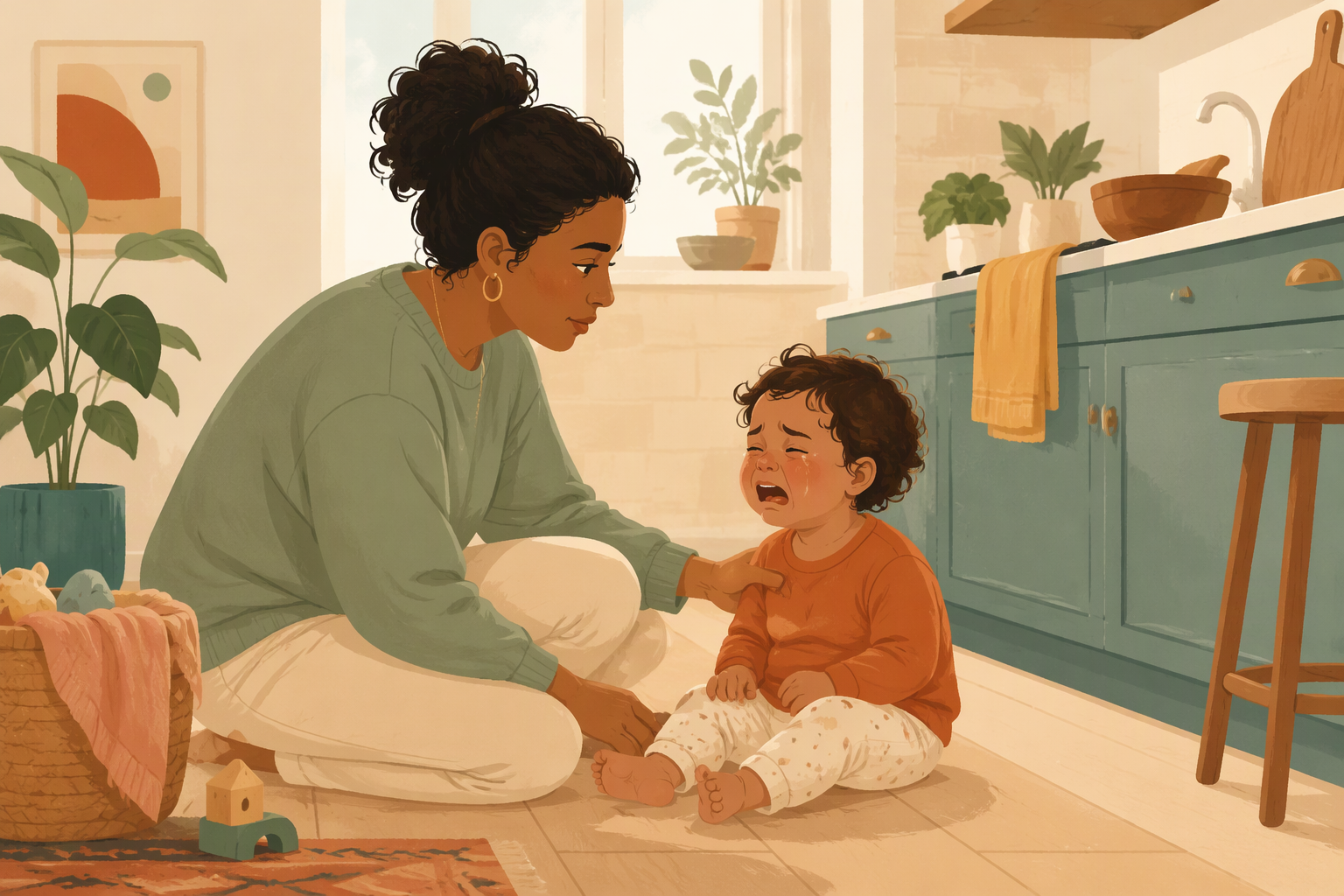
The cup was blue. It needed to be green. Your toddler is now horizontal on the kitchen floor, screaming like the world ended, and you’re standing there doing mental maths on whether anyone can see through the window. Welcome to the most predictable stage of childhood — and I mean that kindly, because predictable means there are things that genuinely work.
The short answer
In the meltdown itself: stay close, stay calm, keep them safe, use few words — the storm has to blow through; it can’t be argued out. Your calm nervous system is the tool that settles theirs. Prevention lives elsewhere: sleep, snacks, transitions warned in advance, and tiny choices offered all day.
Why toddlers melt down (and why it’s normal)
A toddler’s brain has full-sized emotions running on pre-verbal wiring. They want things they can’t say, understand more than they can express, and have almost no braking system — the part of the brain that regulates emotion won’t be mature for years. A tantrum isn’t bad behaviour; it’s an overloaded nervous system doing the only thing it can.
The triggers are reliable: hungry, tired, rushed transitions, and the burning toddler dilemma — desperate for independence, furious about limits. ‘I do it myself’ plus ‘no you can’t have the knife’ is the entire tantrum economy in one sentence.
The part that often gets missed
The idea that changed my parenting: connection before correction. A flooded toddler cannot hear reason — the thinking brain is offline. Your job in the moment isn’t teaching; it’s co-regulating: being the calm they borrow. The lesson, if one’s needed, comes twenty minutes later over a snack, when the brain is back online.
What you can actually do
1. Ride the storm: calm, close, few words
Mid-meltdown: move them only if there’s danger, get down to their level, and say almost nothing — ‘I’m here. You’re safe.’ Don’t reason, don’t threaten, don’t bribe; a flooded brain can’t process any of it, and big reactions teach that screaming buys attention. Stay boring and present until the wave peaks and passes.
In public, the same rules apply with an added accessory: ignore the audience. The supermarket floor is just your kitchen floor with fluorescent lighting. Anyone judging has either forgotten or never tried.
2. Name the feeling, skip the lecture
As the storm eases, name what happened in five words: ‘You wanted the green cup. That was hard.’ Naming isn’t agreeing — the cup stays blue — it’s teaching the vocabulary that will eventually replace the screaming. Toddlers who can say ‘I’m frustrated’ gradually stop needing to show it.
Then reconnect: a cuddle, a drink, a small reset. The relationship repairs first; any teaching about behaviour comes later, in calm, in one sentence.
3. Pre-empt with fuel and warnings
Most tantrums are scheduled by biology: the pre-lunch crash, the late-afternoon slump, the transition ambush. Feed before hunger, protect naps, and give warnings before changes — ‘two more minutes, then bath’. A timer the toddler can watch works better than your word, because the timer isn’t negotiable-with.
Watch for your own pattern: if every big shop ends in a meltdown, that’s not a naughty toddler, that’s a shopping trip scheduled across nap time. Move the trip, not the blame.
4. Offer two choices, all day long
Toddlers tantrum less when they steer more. Offer tiny controlled choices constantly: ‘Green cup or blue cup?’ ‘Walk or jump to the bath?’ ‘This book or that one?’ Every choice they make is power they don’t have to scream for. Two options, both acceptable to you — that’s the whole trick.
Keep choices out of the non-negotiables. ‘Do you want to hold my hand in the car park?’ invites a debate about safety; ‘Hold my hand or I carry you’ keeps the power where it belongs while still offering agency.
When to check with your doctor or midwife
- Tantrums where the child deliberately hurts themselves or can’t be calmed for long stretches, most days — mention it to your GP or child health nurse
- Any breath-holding spells that lead to fainting — common and usually harmless, but worth a check the first time
- Developmental concerns alongside the tantrums: few words, little eye contact, no pointing — raise them at the next check
Where to start
Pick one prevention habit this week — the two-minute warning before every transition is the highest-yield — and one in-storm habit: fewer words, calmer body. The rest follows.
Tantrums are the tuition toddlers pay for a brain still under construction. Stay the calm they can borrow, name what they can’t yet say, and feed and warn them before the cliffs. The blue cup era passes — and the child who was co-regulated through it becomes the kid who can say ‘I’m frustrated’ instead of showing you on the supermarket floor.
Connection before correction. A flooded brain can’t learn — it can only borrow your calm.
Keep reading
Baby Development Month by Month: What Really Matters
Milestone charts without the panic — what to actually watch for in year one.
When Can Babies Start Solid Foods? Signs of Readiness
Around six months — but the calendar matters less than these three readiness signs.
Baby Not Rolling Yet? When to Ask About Development
Every other baby is rolling. Yours isn’t. Here’s when it’s normal variation and when it’s a conversation.
I hope this helped, even a little. Everything I write here comes from raising my three and from the planners and checklists I built because I needed them myself. If you take one thing from this page, let it be this: you are doing better than you think.
— Rahila x
Mum of three, obsessive list-maker, and the person behind Women Life Reset
Women Life Reset guides are general information, not medical advice. Always check your own situation with your doctor, midwife or health visitor.