

Month 2 With Your Baby: First Smiles and Finding Your Feet
Month two is when the fog begins to thin. You are still tired — deeply, structurally tired — but the days start having a shape, and then one morning your baby looks right at you and smiles on purpose. It rearranges something in you. That smile is the headline of this month.
In this article
The heart of it
- The first real smile arrives around 6–8 weeks and rearranges everything
- One longer night stretch may appear — celebrate it without expecting it
- Evening fussiness peaks around week six, then eases — it is a phase, not a verdict
- Keep your own six-week checkup, and mention your mood honestly
- A loose eat-play-sleep rhythm beats any strict schedule this month
Your baby this month
- The first social smile — usually between 6 and 8 weeks, in response to your face and voice. It is real, and it is for you
- Early cooing — soft vowel sounds that are the very beginning of conversation
- Stronger neck control — tummy time lifts get higher and last longer
- Tracking with their eyes — slowly moving your face or a toy side to side is genuinely fascinating to them now
- Discovering their hands — staring at them, batting at nothing, occasionally bonking themselves in the face
Sleep right now
Many babies gift their parents one longer stretch at night this month — sometimes 4, even 5 or 6 hours. It will not be consistent yet, so celebrate it without expecting it. Total sleep is still around 14 to 16 hours, naps are still chaotic, and the witching hours in the evening can peak right around week six before easing. If evenings are brutal, it is a phase with an end date, not a verdict on your parenting.
Feeding this month
Feeds become a little more efficient — many babies finish faster than last month, which frees up precious minutes. A growth spurt around 6 weeks often brings a few days of nonstop eating; it passes. If you are breastfeeding, this is when supply regulates and things often start feeling easier. If you are pumping or formula feeding, you have probably found your rhythm by now. Either way: fed, growing, and loved is the whole assignment.
Play and connection
Your baby is now awake enough to enjoy short play windows after feeds. Talk and wait — leave space after you speak and watch them try to answer with coos and wiggles. Tummy time can grow to a few minutes, several times a day. Crinkle a soft toy near one ear and watch them search for it. Walks outside count as enrichment; the world is their documentary right now.
For you, mama
Your six-week postpartum checkup lands this month — keep it, even if you feel fine. Ask about anything still healing, mention your mood honestly, and ask when gentle exercise fits your recovery. Short stroller walks are medicine this month: sunlight, movement, and proof that the outside world still exists. If your body is cleared but you do not feel like yourself yet emotionally, say that out loud to someone. It is common, it is treatable, and it is not a character flaw.
Tiny routines that anchor the day
Month two is when many mums first feel the day has a shape — not a schedule, just a rhythm you can lean on. It usually starts small: the same song at nappy changes, a walk after the morning feed, the lamp you switch on for the last feed of the night. Babies learn the world through repetition, and so do tired parents.
If you want to see your own rhythm more clearly, try logging a few days. Not to police yourself — just to notice. Most mums are surprised by how much pattern is already there. The Newborn Daily Log makes this almost effortless: a page a day that totals feeds, sleep and nappies for you, with a week summary that shows the rhythm you could not see while living it.
This is also the month the smiles arrive — real ones, aimed at you — and suddenly everyone tells you to take more photos. A little structure helps that actually happen. The Baby’s Monthly Milestone Cards give you a card for each month and every first, with baby’s name filled in for you, so the two-month photo takes five minutes instead of becoming a project you postpone.
One anchor for you, too: pick one small thing that is yours each day — a hot drink drunk while it is hot, ten minutes outside. Routines are not about control. They are about a day that holds you up while you hold the baby.
Free: the First Trimester Checklist
Weeks 1–13, gathered on four calm fillable pages — week-by-week to-dos, an appointment log, and room for your notes. It’s free.
The tiny checklist
- Attend your six-week checkup and write your questions down beforehand
- Book the two-month pediatrician visit and first vaccines
- Catch the smile on video, even if it takes fifty tries
- Start a loose eat-play-sleep pattern during the day — no clock required
- Take one outing that is just for you, even if it is a solo grocery run
Two months in, and there is a little person emerging from the newborn bundle. Keep going — month three gets even sweeter.
Keep Every Day This Calm
The Newborn Daily Log turns the fog into facts — one page a day that totals feeds, sleep and nappies for you, with a week summary that shows the rhythm. Instant download.
This article is for organizational purposes only and isn’t medical advice — your healthcare provider knows your situation best.
These planners and trackers are organizational tools only and are not medical advice. Always consult your healthcare provider about your pregnancy and your baby’s care.
Quick answers
When do babies start smiling on purpose?
Social smiles usually appear between 6 and 8 weeks. Before that, smiles are reflex (often gas). The first real smile — in response to your face and voice — is a milestone worth watching for, and worth the wait.
How much tummy time does a 2-month-old need?
Start with a few minutes, 2–3 times a day, always supervised and awake. Short and frequent beats long and miserable. By 3–4 months most babies build up to 20–30 total minutes spread across the day.
Is the 6–8 week fussy peak real?
Yes — crying typically peaks around 6 weeks and starts easing by 3–4 months. It’s development, not something you’re doing wrong. If crying seems like pain, or comes with fever or feeding trouble, call your pediatrician.
Why does my 2-month-old cry so much in the evening?
Evening fussiness peaks around six weeks and is so common it has a name — the witching hour. Overstimulation, tiredness and cluster feeding all pile up at the end of the day. Dim the lights, lower the noise, offer a feed, and wear the baby if it helps. It passes; most babies settle noticeably by three to four months.
When do babies start smiling for real?
Usually between six and eight weeks — a social smile, in response to your face and voice, different from the windy newborn grimace. If you have not seen one by twelve weeks, mention it at your next check, but most babies simply arrive there in their own time.
Educational only — not medical advice. Always consult your healthcare provider.
One calm email a week
Gentle, practical organization for pregnancy and new motherhood — start with the free First Trimester Checklist (instant download, no account needed).
Free instant download · Opens right in your browser · No Canva account needed
Subscriber perk: private coupon codes by email — our list never pays full price
Make this month easier
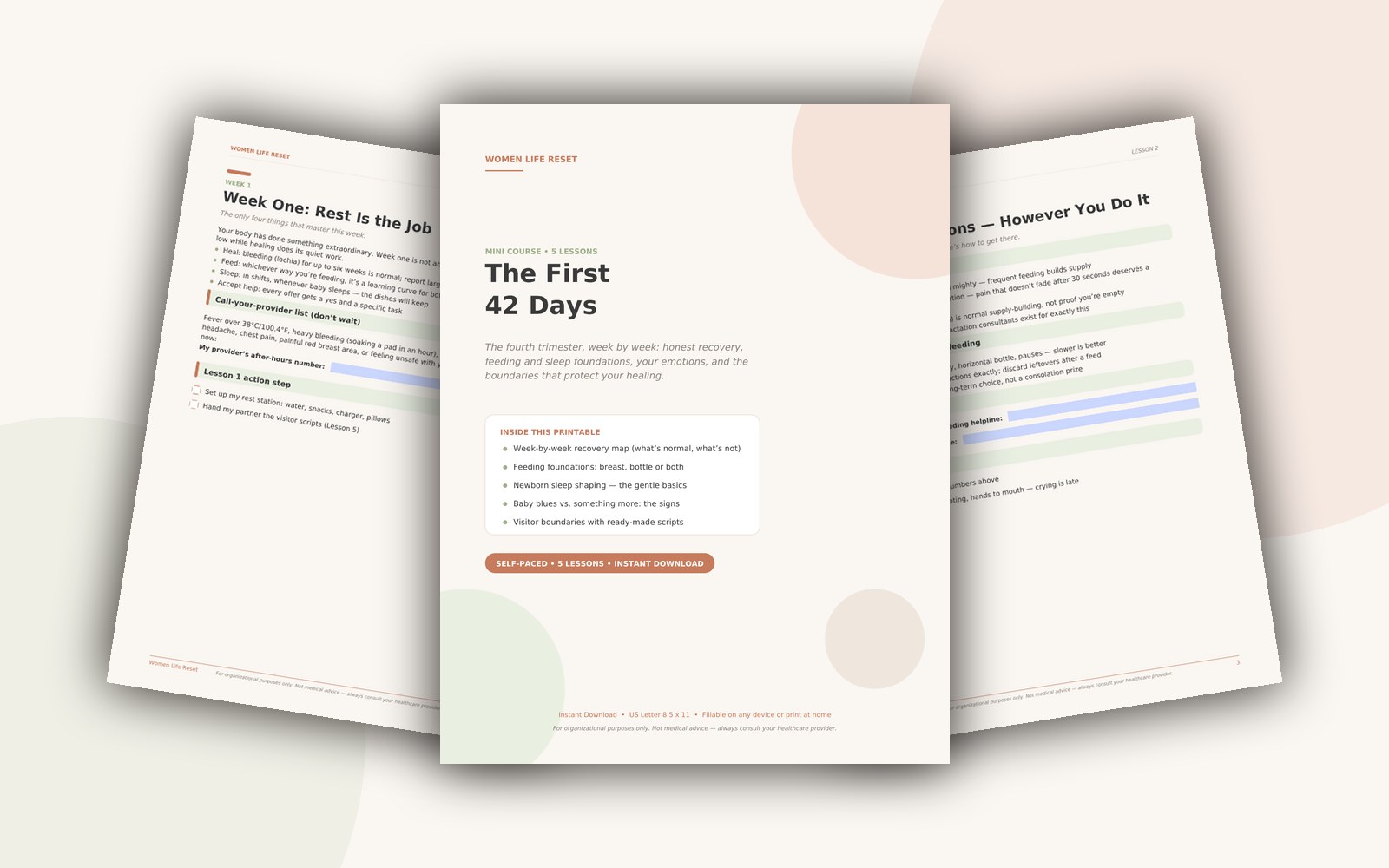 The First 42 Days — Fourth Trimester Course
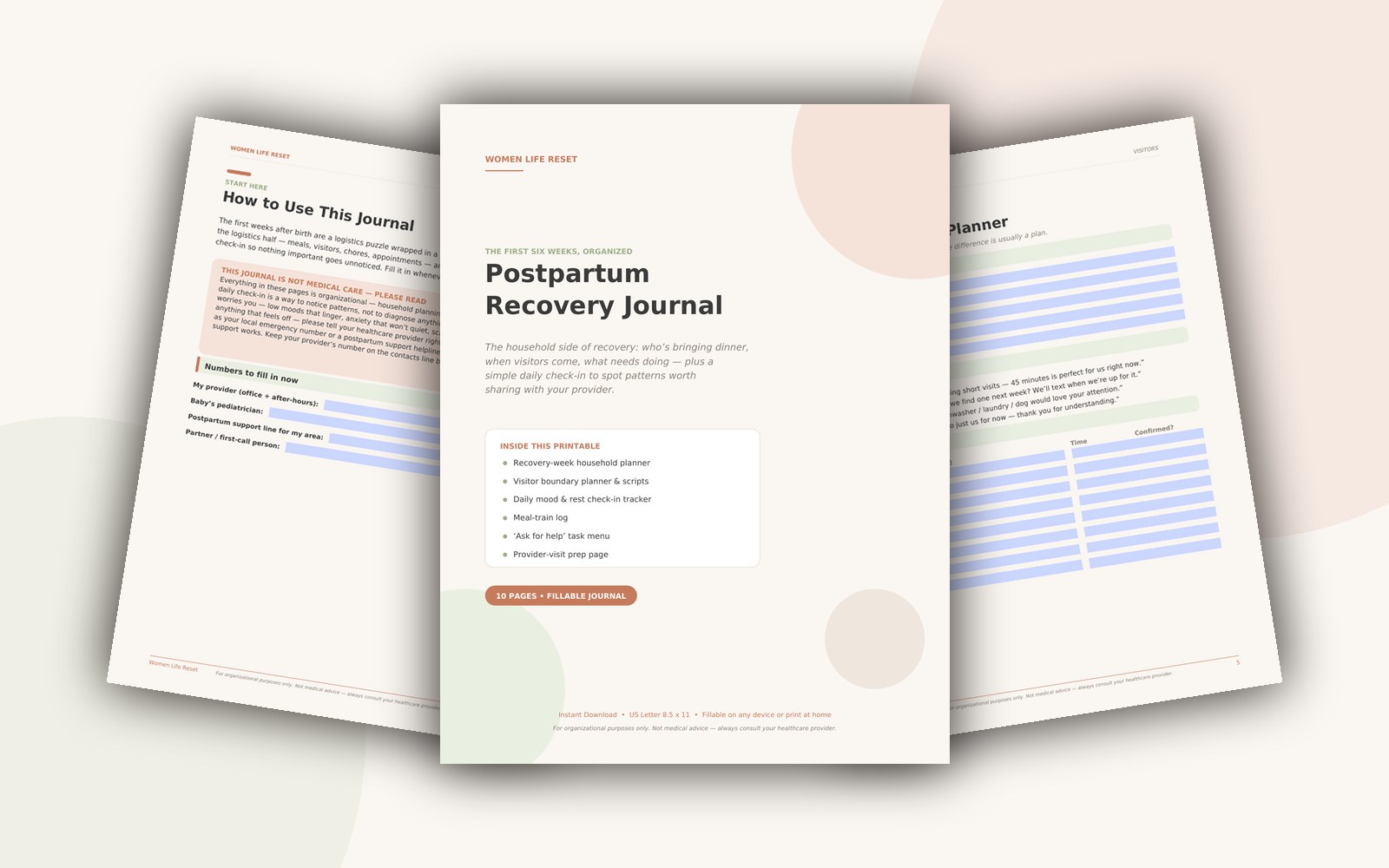 Postpartum Recovery Journal
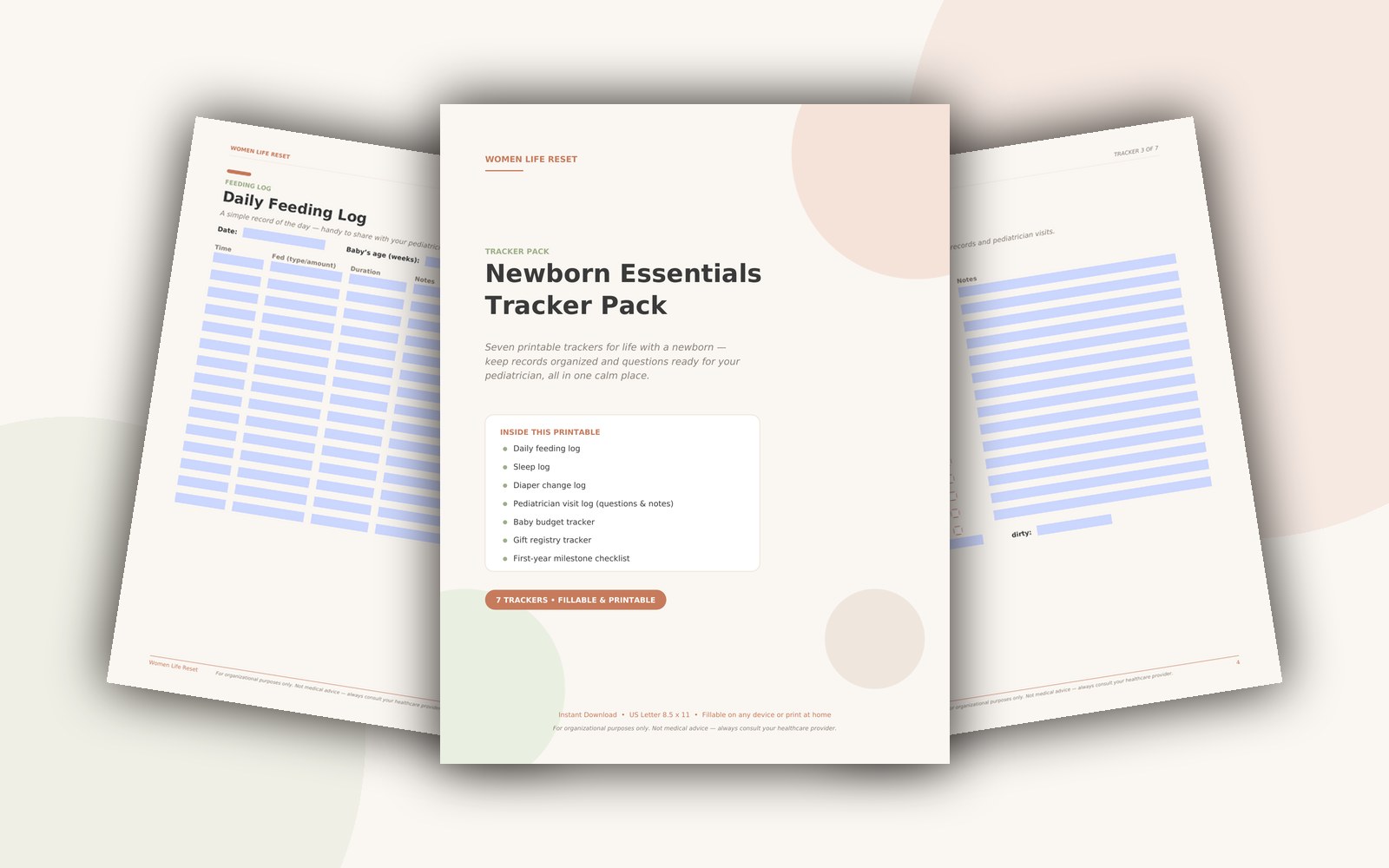 Newborn Essentials Tracker Pack
Those first weeks are a blur and this course felt like a friend who had done it before. The feeding and sleep lessons saved us — I re-read them at 3am more than once.
Popular on the blog




Fresh from the blog




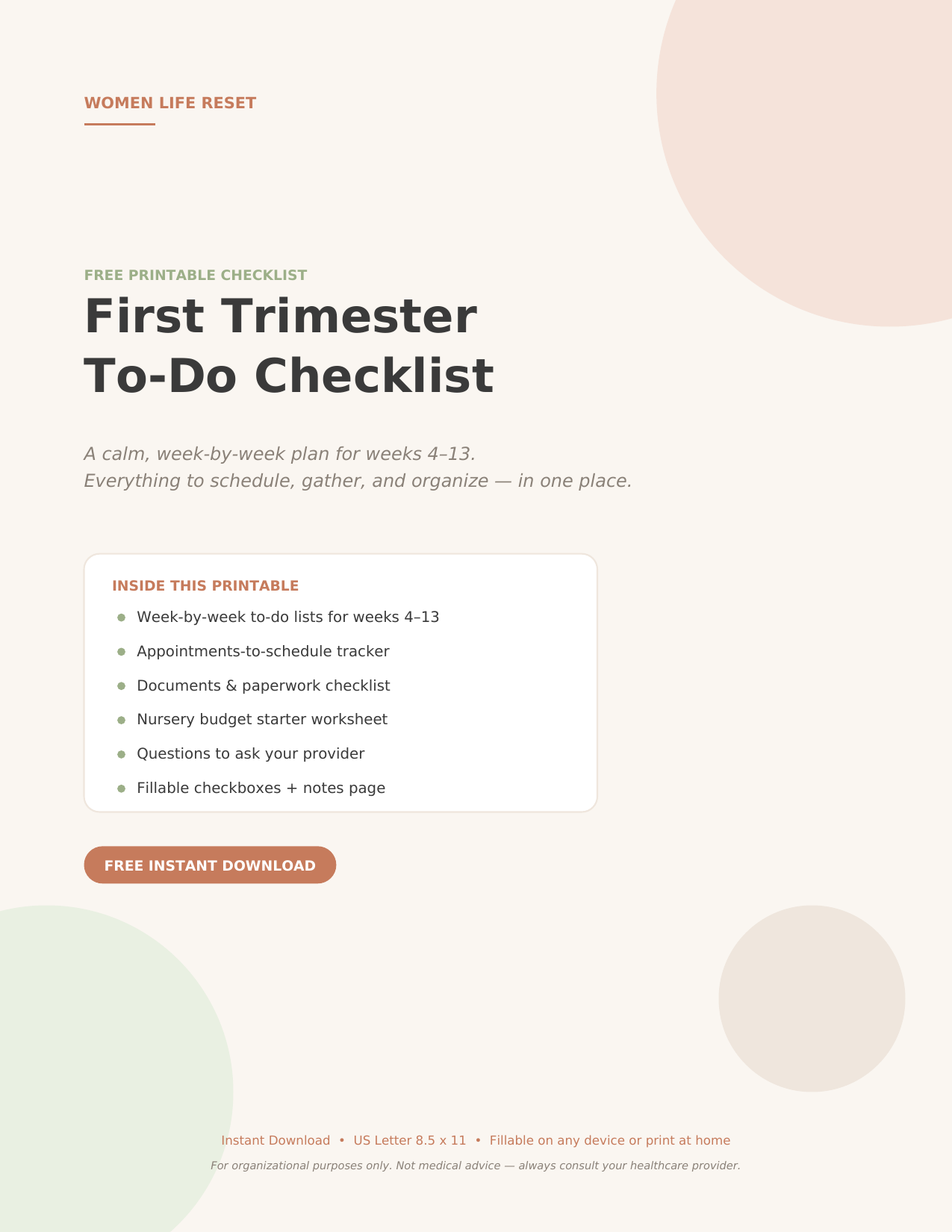
Your 15% welcome code is waiting
Join the Mom Club and I’ll send you my First Trimester Checklist free, plus your standing code MOMCLUB15 — 15% off everything in the store, every time you shop. One gentle, practical email a week. That’s the whole deal.
No spam, no pressure — unsubscribe anytime and keep the checklist. Only gentle notes from me, Rahila.