

Month 3 With Your Baby: The Rhythm Begins
Somewhere in month three, many parents look up and realize the days have started to rhyme. Not a schedule — nothing so rigid — but a pattern you can almost hum along to. Your baby is more awake, more social, and more fun, and you are starting to feel a few percent more like yourself.
In this article
The heart of it
- The days start to rhyme — three naps and a pattern you can almost hum
- Cooing back-and-forth is the foundation of language — talk, then wait
- Wake windows of 1.5–2 hours keep an overtired meltdown away
- A five-minute bedtime routine started now pays off for months
- Your energy creeps back — let it grow without guilt
Your baby this month
- Cooing conversations — back-and-forth vowel sounds with real turn-taking. This is the foundation of language
- Hands discovered, officially — clasped, chewed, and studied like fascinating new toys
- Bringing things to the mouth — hands, blankets, your knuckles, everything within reach
- Pushing up on forearms — tummy time looks like a tiny plank now, with a much steadier head
- Maybe a first giggle — if it has not happened yet, it is close. Keep doing the ridiculous voice
Sleep right now
Three naps a day are starting to emerge, and night sleep often consolidates into one longer stretch of 5 to 7 hours for some babies — others need more time, and both are normal. Wake windows of about 1.5 to 2 hours are a helpful guide: an overtired three-month-old fights sleep hard. A simple, repeatable bedtime routine (dim lights, feed, song, down) started now pays off for months.
Feeding this month
Feeds are efficient and your baby is getting distractible — a sound across the room can pull them off mid-feed. Feeding in a calmer spot helps. If breastfeeding feels dramatically easier than week two, that is the regulation everyone promised. Watch output and growth, not the clock. And if your pediatrician is happy with weight gain, you are allowed to stop waking the baby to feed at night. Sleep is food for you.
Play and connection
This is the golden window for easy play: your baby is alert, immobile, and thrilled by your face. Hang a simple play gym and let them bat at it. Hold them upright facing out and narrate the room. Read anything aloud — a board book, your text messages, the news — the words all count. Mirrors are magic at this age; babies find that other baby absolutely riveting.
For you, mama
You may notice your energy creeping back in small ways — a shower before noon, a thought that is not about the baby. Let those moments grow without guilt. If you had a vaginal birth or a c-section, gentle core and pelvic floor work can usually begin now (a pelvic floor physio visit is one of the best gifts you can give yourself). Also: postpartum hair shedding may be starting. It is alarming, it is hormonal, and it grows back.
Reading your baby’s patterns
By month three, something quietly shifts: the days start repeating themselves on purpose. Feeds space out, naps gather into rough slots, and you begin to predict your baby instead of only reacting. This is the moment a little observation pays off enormously.
You do not need a strict schedule — babies this young change too fast for clocks. What helps is noticing your baby’s own sequence. Most three-month-olds follow some version of eat, play, sleep, and knowing where you are in that loop answers half the day’s questions: grizzling after a long awake stretch is usually tiredness, not hunger.
If guessing has been the hard part, a week of light logging turns fog into pattern. The Newborn Daily Log totals each day’s feeds, sleep and nappies for you and colours the sleep stretches, so by day seven you can literally see the rhythm. Two minutes a day, no app to open at 3am.
And because this is the month babies wake up to the world — tracking toys, studying faces, finding their hands — it is a lovely time to start the photo habit properly. The Baby’s Monthly Milestone Cards make the three-month photo a five-minute ritual, and the firsts cards catch the grin, the roll, the giggle with a date on them. Future you will be glad you started now, when the changes come weekly.
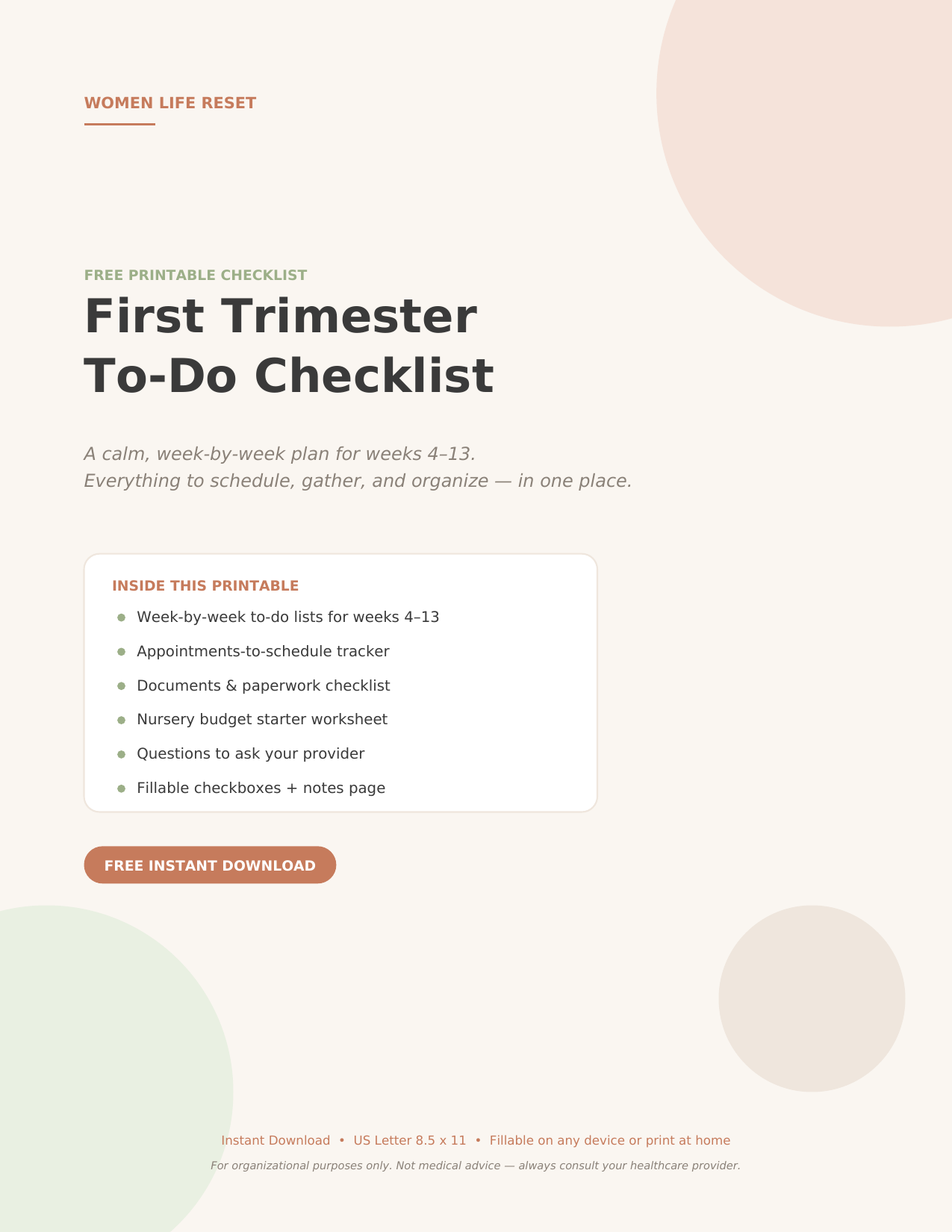
Free: the First Trimester Checklist
Weeks 1–13, gathered on four calm fillable pages — week-by-week to-dos, an appointment log, and room for your notes. It’s free.
The tiny checklist
- Sketch a loose daily rhythm: wake, eat, play, sleep, repeat
- Start a five-minute bedtime routine you can repeat every night
- Get outside daily — the stroller nap is legitimate napping
- Book a pelvic floor or physio check if anything still feels off
- Write down three things the baby did this month. Memory is mush right now
The rhythm that starts this month is the one you will build the whole first year on. Enjoy the cooing — it does not get much cuter than this.
Keep Every Week This Calm
The Newborn Daily Log turns the fog into facts — one page a day that totals feeds, sleep and nappies for you, with a week summary that shows the rhythm. Instant download.
This article is for organizational purposes only and isn’t medical advice — your healthcare provider knows your situation best.
These planners and trackers are organizational tools only and are not medical advice. Always consult your healthcare provider about your pregnancy and your baby’s care.
Quick answers
When do babies get into a routine?
Around 3 months, loose patterns emerge — not a schedule, but a rhythm you can predict. Most babies settle into 3 naps and a longer first night stretch somewhere between 3 and 4 months. Follow baby’s cues more than the clock.
How many naps does a 3-month-old take?
Usually 3–4 naps totaling 4–5 hours of daytime sleep, with wake windows around 1.5–2 hours. Every baby’s different — watch for tired cues (staring off, rubbing eyes) rather than forcing a timetable.
Should a 3-month-old sleep through the night?
Some do, many don’t — both are normal. ‘Sleeping through’ at this age means a 5–6 hour stretch, not 12 hours. Night feeds are still developmentally appropriate and common.
How many naps should a 3-month-old take?
Most three-month-olds take three to four naps a day, totalling roughly four to five hours of daytime sleep, with wake windows of about one and a half to two hours. The range is wide and normal — watch your baby’s tired cues (red eyebrows, zoning out, sudden fussiness) rather than the clock.
Is it too early for a bedtime routine at 3 months?
No — this is a lovely time to start. Keep it short and repeatable: dim lights, a feed, a song, bed. Babies this age cannot be spoiled by routine; they are calmed by it. Expect the routine to settle you both before it settles the night.
Educational only — not medical advice. Always consult your healthcare provider.
One calm email a week
Gentle, practical organization for pregnancy and new motherhood — start with the free First Trimester Checklist (instant download, no account needed).
Free instant download · Opens right in your browser · No Canva account needed
Subscriber perk: private coupon codes by email — our list never pays full price
Make this month easier
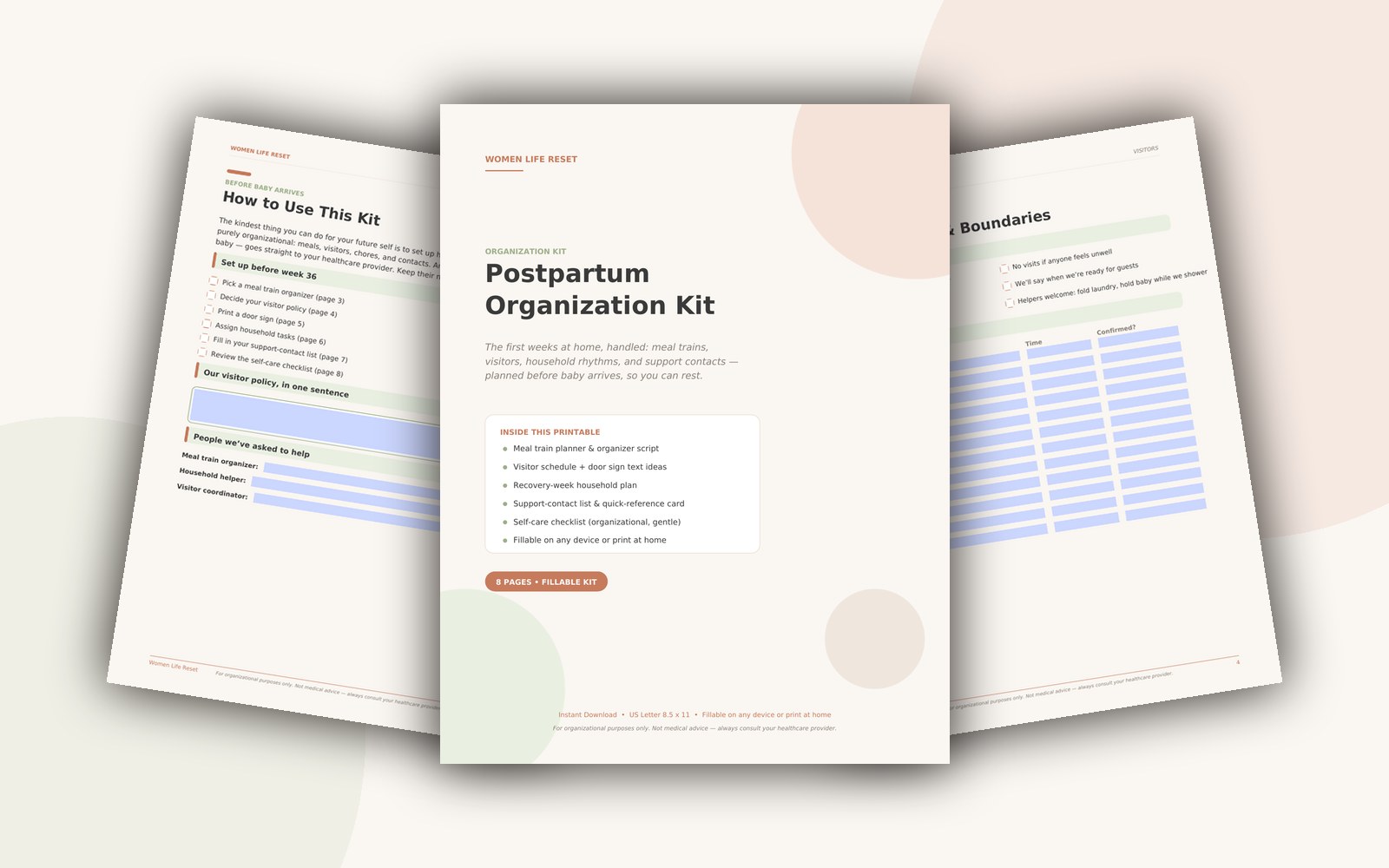 Postpartum Organization Kit
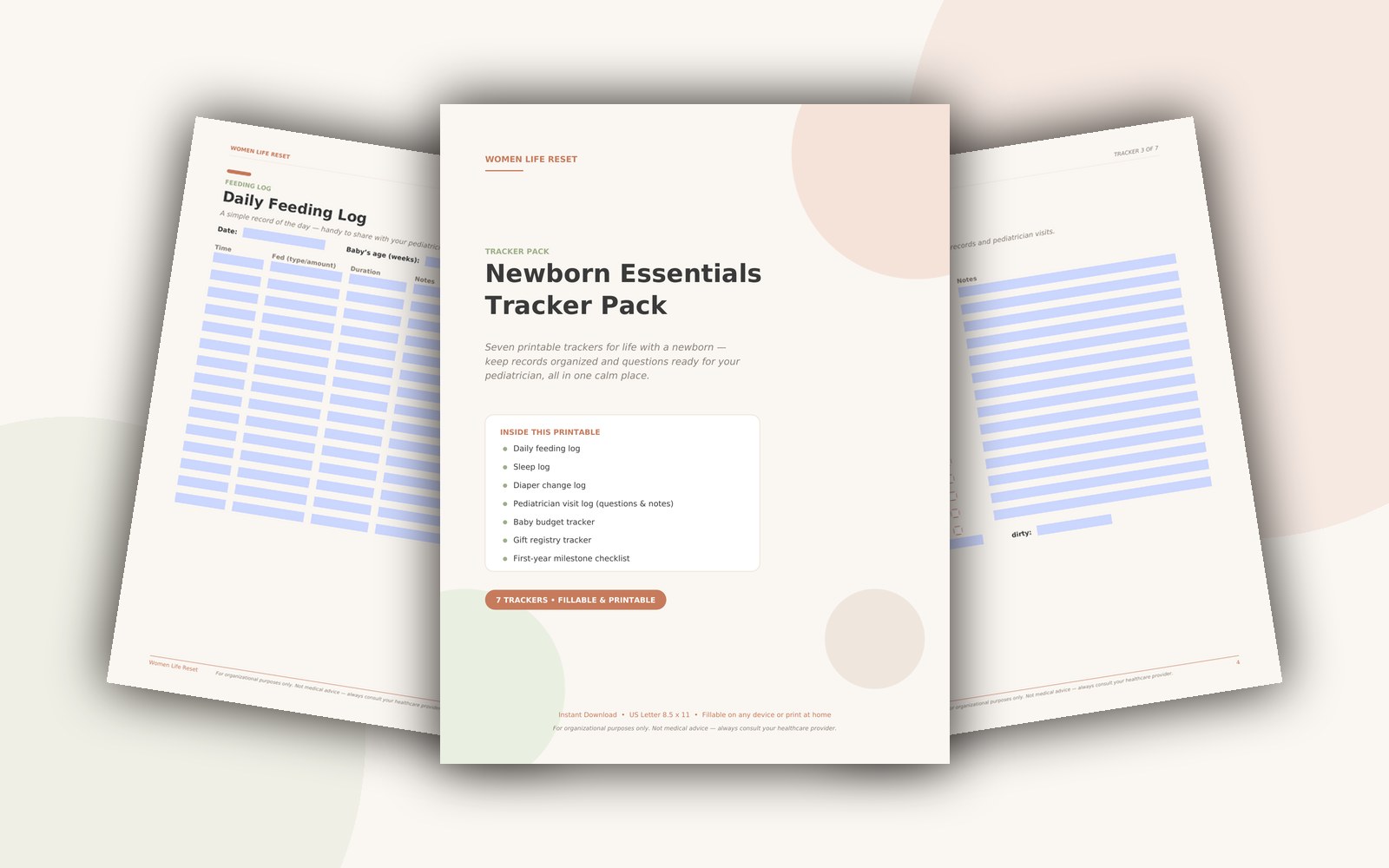 Newborn Essentials Tracker Pack
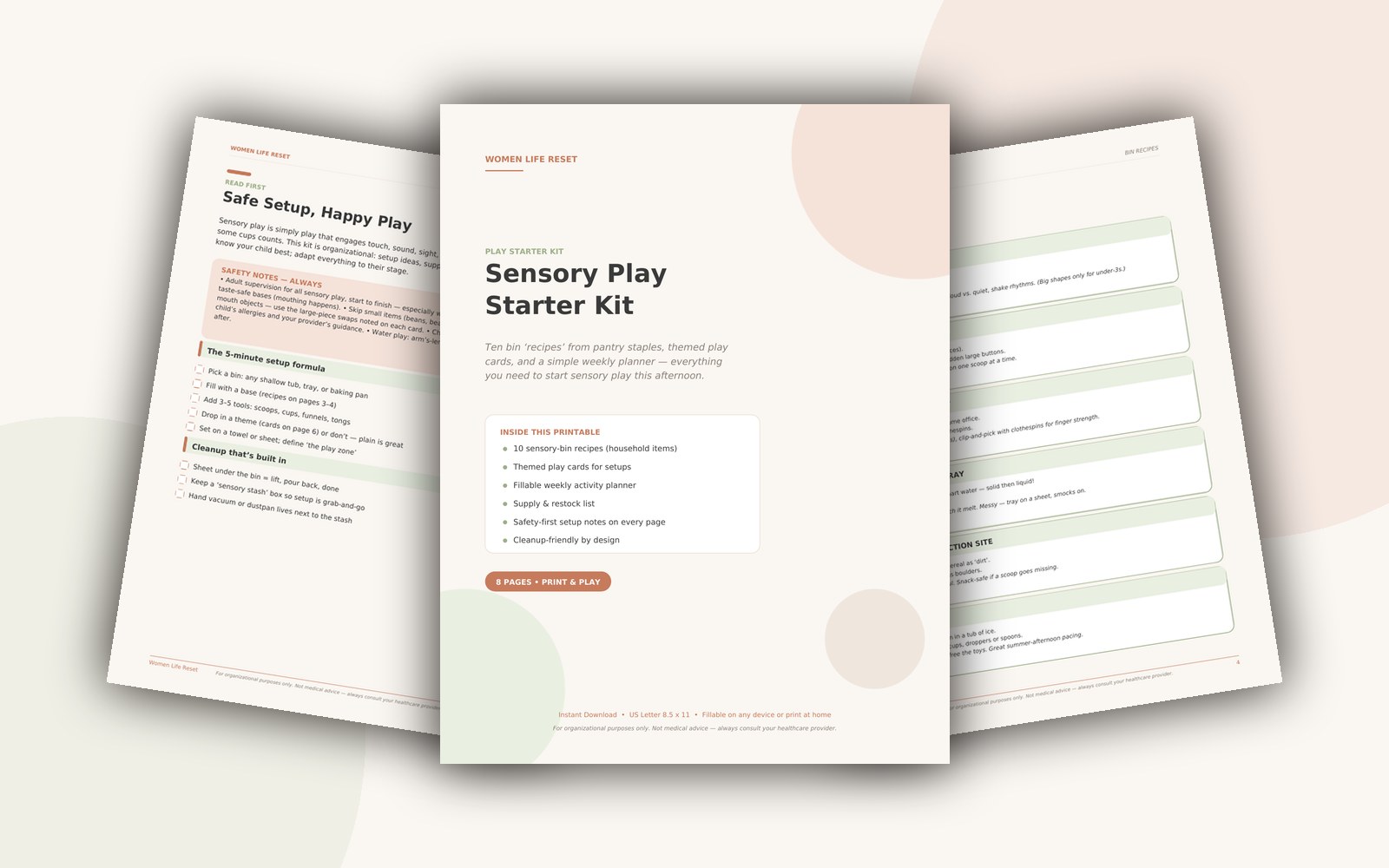 Sensory Play Kit
Nobody warns you about the recovery part. This kit did — I felt prepared instead of blindsided, and the checklists got my mum helping without asking me a thing. Four stars — I’d love a companion volume for months two to six.
Popular on the blog




Fresh from the blog




Your 15% welcome code is waiting
Join the Mom Club and I’ll send you my First Trimester Checklist free, plus your standing code MOMCLUB15 — 15% off everything in the store, every time you shop. One gentle, practical email a week. That’s the whole deal.
No spam, no pressure — unsubscribe anytime and keep the checklist. Only gentle notes from me, Rahila.