

Early Pregnancy Symptoms: What's Normal, What's Not, and What to Do
One day you’re fine. The next, your breasts ache, you’re crying because the toaster is “being weird,” and you’re so tired at 7pm that cooking dinner feels like a triathlon. Early pregnancy symptoms arrive like a confusing weather system — and because you’re probably not telling anyone yet, you’re processing the whole storm alone.
Let’s fix that. Here’s what’s genuinely normal in the first weeks, what’s worth a phone call, and how to keep track of it all without letting the tracking become its own full-time job.
In this article
The Common Cast of Characters
Most early symptoms trace back to two hormones: hCG (the one the test detects) and progesterone (the one that makes you feel like a different person). The usual suspects:
- Sore, fuller breasts. Often the very first sign, sometimes before a missed period.
- Bone-deep tiredness. Not “didn’t sleep well” tired — fell-asleep-at-my-desk tired. Progesterone is a sedative, and your body is also building a placenta, which is hard physical work.
- Nausea. Can start as early as week 4 to 6, peaks around week 9, and despite the name, keeps no particular hours.
- Smell superpowers. Suddenly the fridge, the trash, your husband’s coffee — all unbearable.
- Mood weather. Tears, irritability, joy, dread — sometimes within the same twenty minutes.
- Light spotting. Around the time your period was due, some women get brief implantation spotting. Light and short is usually fine; heavier bleeding deserves a call.
The "Is This Normal?" Filter
Here’s a calm filter for the noise. Most symptoms are uncomfortable but harmless, and the honest answer to “is this normal?” is almost always yes. The ones that aren’t fine to watch-and-wait:
- Heavy bleeding (soaking a pad in an hour) or bleeding with severe pain
- Sharp, one-sided pelvic pain
- Pain or burning when you pee
- Fever over 100.4°F / 38°C
- Dizziness or fainting that doesn’t pass
- Nausea so severe you can’t keep fluids down for 24 hours
Everything else — the weird, the gross, the emotional — goes on the “mention it at my next appointment” list. Which brings us to the practical part.
The Symptom Log That Saves Your Sanity
Here’s what actually happens at early appointments: the midwife asks “how have you been feeling?” and your mind goes completely blank. Everything you meant to mention evaporates the second you sit on that paper-covered table.
The fix is gloriously simple: a running daily log. One line a day — symptoms, severity, anything you want to ask. It takes ninety seconds, and it turns your appointments from memory tests into actual conversations. It also catches patterns you’d never notice in the fog: “huh, the nausea is always worse when I skip breakfast” is the kind of discovery that makes the next week easier.
I built our Pregnancy Weekly Planner around exactly this idea — each week has a spot for symptoms, questions for your provider, and the little wins worth remembering. It’s $9.99, prints at home, and it’s the difference between arriving at appointments flustered and arriving with your notes in hand like the organized legend you are.
Coping Day to Day (the Unfiltered Version)
A few survival notes from the trenches. Eat before you get out of bed if mornings are rough — crackers on the nightstand is a cliché because it works. Protein every couple of hours steadies both nausea and mood better than big meals. Sleep is not lazy right now; you are growing a whole organ (the placenta) on top of everything else your body does, and the 8pm bedtime is biology, not weakness.
And the secrecy part — the hardest part for many moms. You’re nauseous at work, exhausted at dinner with friends, and saying “just tired!” on repeat. Pick one safe person you can be honest with. Everything feels lighter when one human knows.
If you want the whole early-pregnancy stretch organized in one place — appointments, questions, symptoms, the lot — the Complete Pregnancy Organizer does that for the full nine months. But start with the weekly pages; small and doable beats comprehensive and abandoned.
These planners and trackers are organizational tools only and are not medical advice. Always consult your healthcare provider about your pregnancy and your baby’s care.
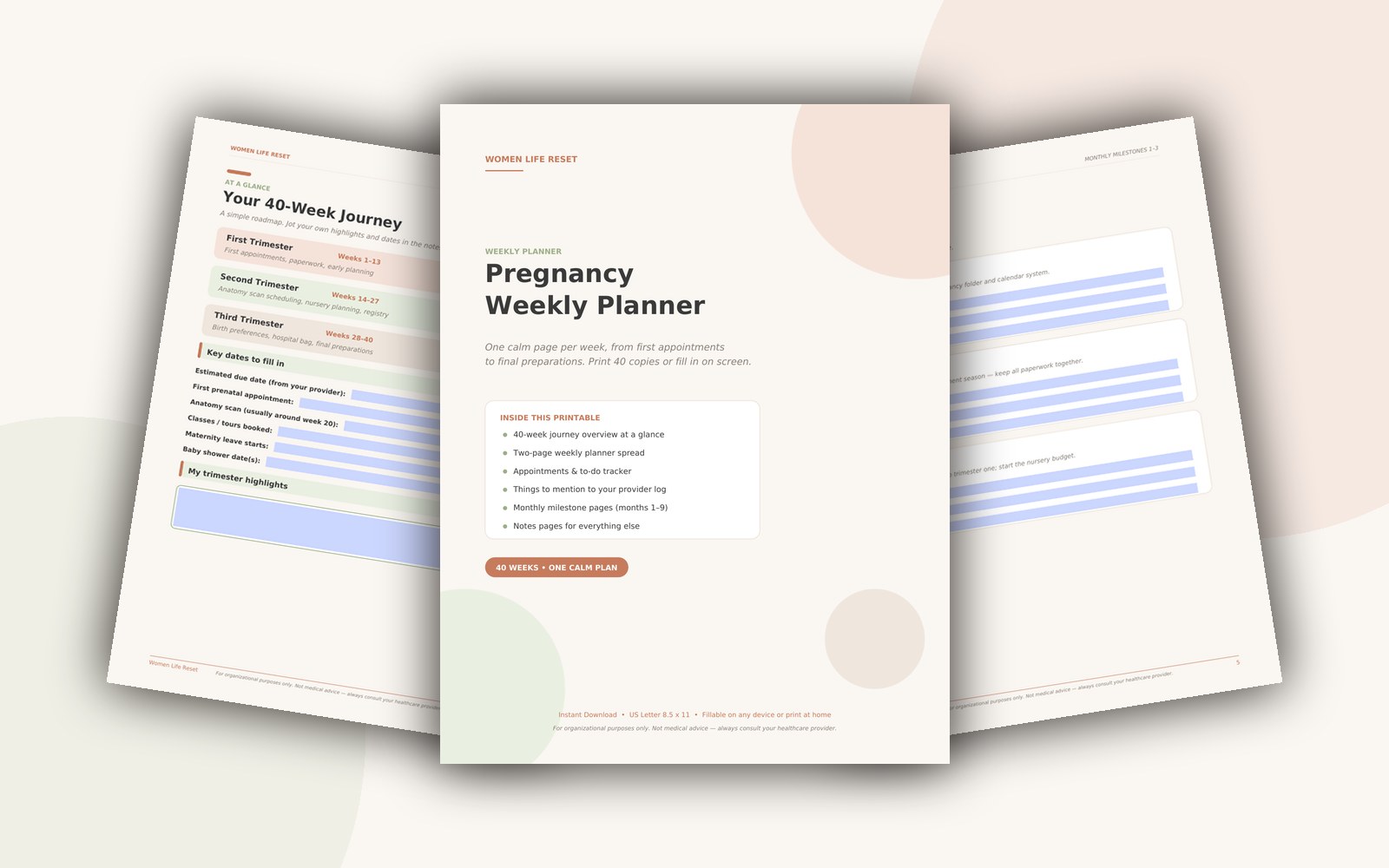 Pregnancy Weekly Planner
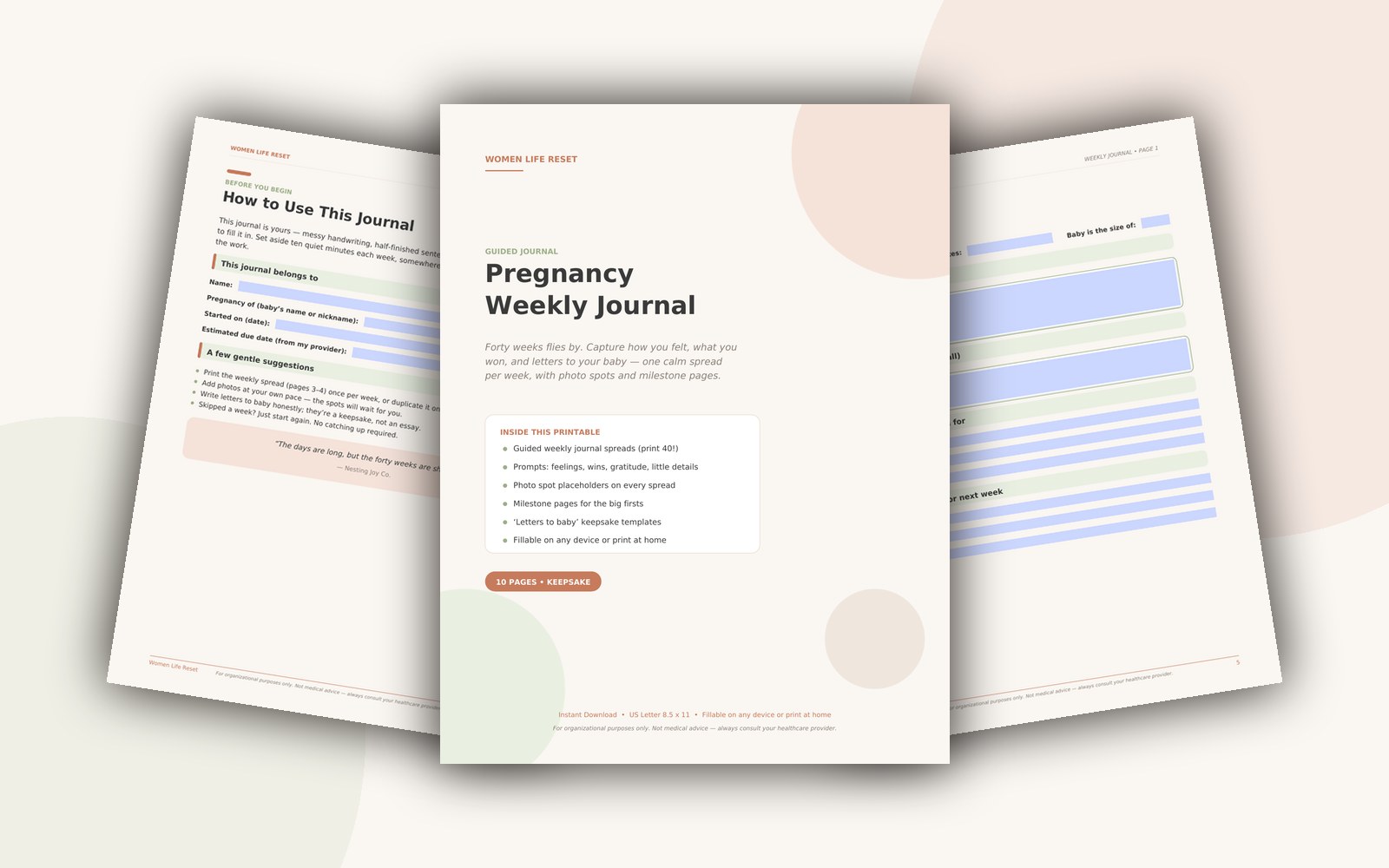 Pregnancy Journal
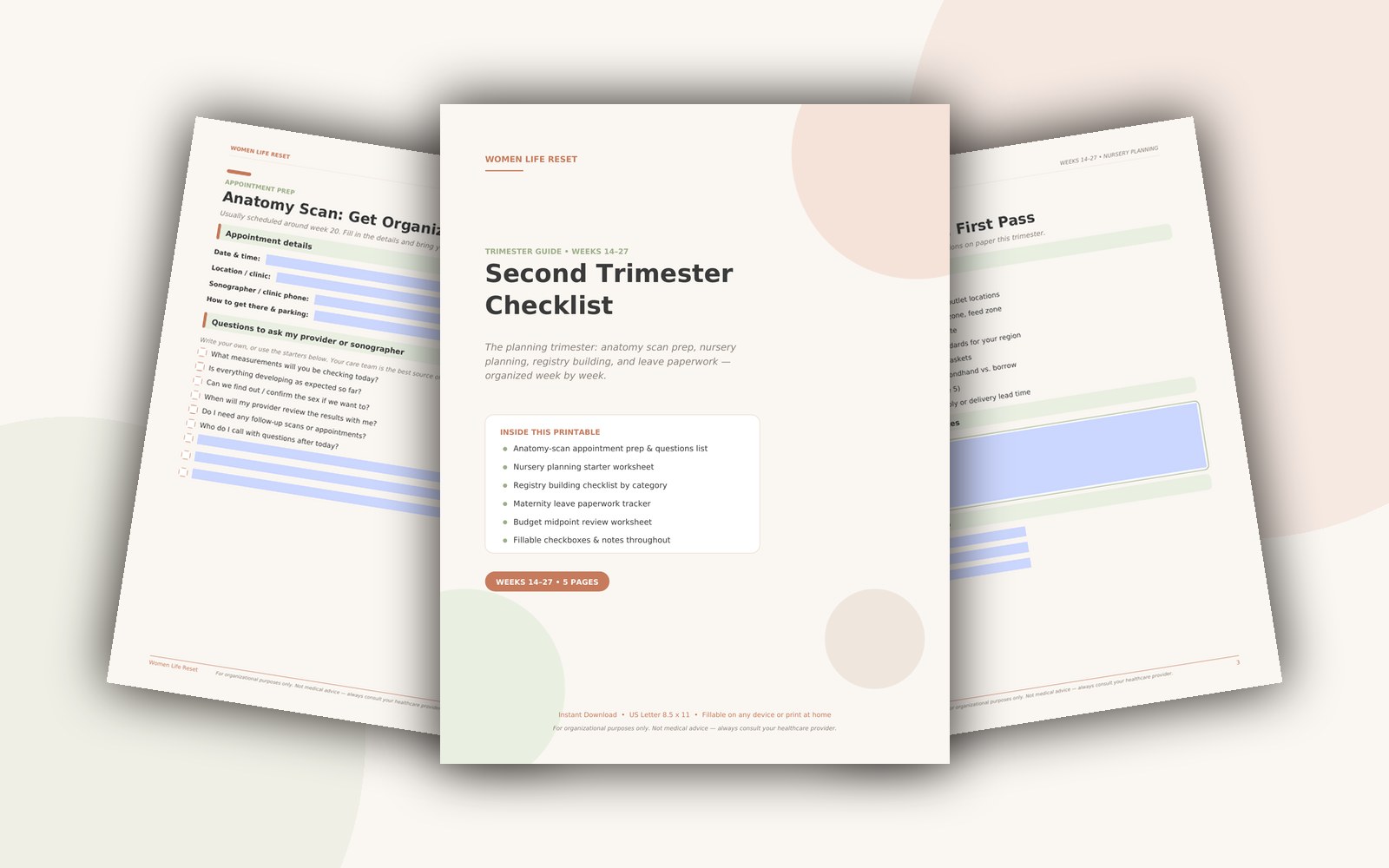 Second Trimester Checklist
I stuck the weekly page on my fridge and suddenly pregnancy had a shape. My husband started reading it too. Worth ten times the price, honestly.
Quick answers
When do pregnancy symptoms usually start?
Most women notice something between weeks 4 and 6, though breast tenderness and fatigue can show up before a missed period. Every body runs its own schedule — no symptoms at 6 weeks is normal too.
Is spotting in early pregnancy normal?
Light, brief spotting around implantation (or after a pelvic exam) is common and usually harmless. Heavy bleeding, bleeding with pain, or anything that soaks a pad quickly is a call-your-provider-now situation.
When does morning sickness peak and end?
It typically peaks around week 9 and eases by weeks 12 to 14 for most women. If you can’t keep any fluids down for a full day, that’s hyperemesis territory — call your provider rather than waiting it out.
Educational only — not medical advice. Always consult your healthcare provider.
Popular on the blog




Fresh from the blog




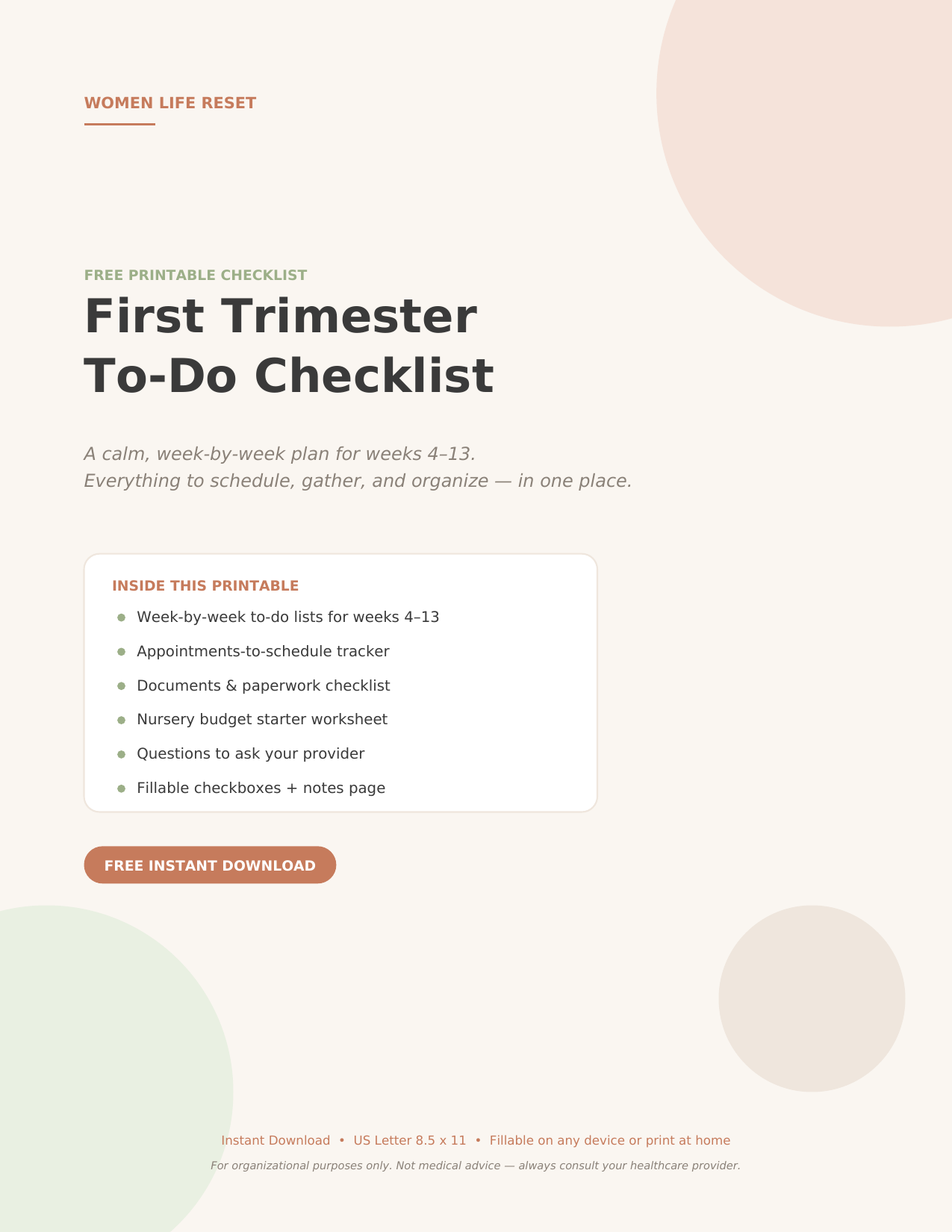
Your 15% welcome code is waiting
Join the Mom Club and I’ll send you my First Trimester Checklist free, plus your standing code MOMCLUB15 — 15% off everything in the store, every time you shop. One gentle, practical email a week. That’s the whole deal.
No spam, no pressure — unsubscribe anytime and keep the checklist. Only gentle notes from me, Sarah.
Leave a Reply