

Pumping at Work: The Return-to-Work Plan That Keeps Your Supply (and Your Sanity)
There’s a specific kind of panic reserved for the moment you realize you’re going back to work while still breastfeeding. It’s not the leaving (okay, it’s partly the leaving). It’s the logistics: Where do I pump? When? What if a meeting runs long? What do I even pack? Nobody hands you a manual for this — so consider this the manual.
Whether your return is in two weeks or two months, a little structure now turns your first week back from a white-knuckle endurance test into something you can actually handle. Let’s build it.
In this article
Know Your Ground First
Before any logistics, know this: in the US, federal law (the PUMP Act) requires most employers to give you reasonable break time and a private space to pump — and that space cannot be a bathroom. “Private” means a door, a lock, and not a fishbowl conference room.
You don’t need to lead with the law, but you need to have the conversation early — ideally two to three weeks before your return date, in writing, with your manager and HR. “I’ll need two to three 20-minute breaks and a private room with an outlet” is a complete sentence. Most managers have handled this before; you’re rarely the first.
The Pumping Schedule That Protects Your Supply
Here’s the physiology in one sentence: milk runs on demand, so skipped sessions tell your body to make less. The goal at work is simple — pump roughly when the baby would eat.
For most moms that means a session every three hours or so: mid-morning, lunch-ish, mid-afternoon. A 9-to-5 day usually fits three sessions without heroics. Block them in your calendar as recurring, named something boring like “personal appointment,” and treat them as unmovable meetings — because biologically, they are.
A trick that saves the whole system: keep a one-page log of what you pumped and when, plus roughly what the baby took while you were apart. Two weeks of that shows you your real pattern — whether supply is holding, whether one session always under-produces (move it thirty minutes earlier), whether Friday drops because you skip the afternoon pump. Guessing breeds anxiety; a tiny record breeds adjustments.
We made exactly those pages — session logs, stash tallies, childcare handoff sheets — inside the feeding section of Back to Work, Mama, our return-to-work course. It also has the scripts: what to say to your manager, what to put in the email to HR, how to handle the “can you skip just today?” conversation. Eight lessons, $19, written for the Sunday-night-before version of you.
The Gear Bag (Pack It Once, Check It Forever)
The daily pump bag fails when it’s rebuilt from memory at 6am. The fix is a standing kit that lives packed, with a restock checklist taped inside:
- Pump, parts (a full spare set — learn from others’ freezer-bag-of-parts emergencies), and the battery pack or cord
- Cooler bag with ice packs for the ride home
- Milk storage bags or bottles, labeled
- Hands-free bra (non-negotiable — it turns pumping into something you can do while answering email)
- Wipes, a spare shirt (trust me), and a photo of the baby — it genuinely helps letdown
If you like your checklists printable and pre-made, the Feeding & Pumping Logs set ($9) covers the daily tracking side — feeds, pumps, ounces, stash — in the same format daycares can fill in too, which ends the “how much did she eat?” text thread every afternoon.
The Feelings Part, Handled Honestly
Two things can be true: you might cry in the parking lot on day one, and by week three you might feel oddly capable and even enjoy the adult conversation. Most moms land somewhere in the shifting middle, and all of it is normal.
What helps: a deliberately short first week if you can negotiate it (start on a Wednesday), a photo routine with your childcare provider (one picture at nap time changes the whole afternoon), and a planned debrief — ten minutes with your partner each evening of that first week, because re-entry is a family system, not a solo mission. The course’s final lesson is entirely about this part, because the pump logistics are honestly the easy half.
These planners and trackers are organizational tools only and are not medical advice. Always consult your healthcare provider about your pregnancy and your baby’s care.
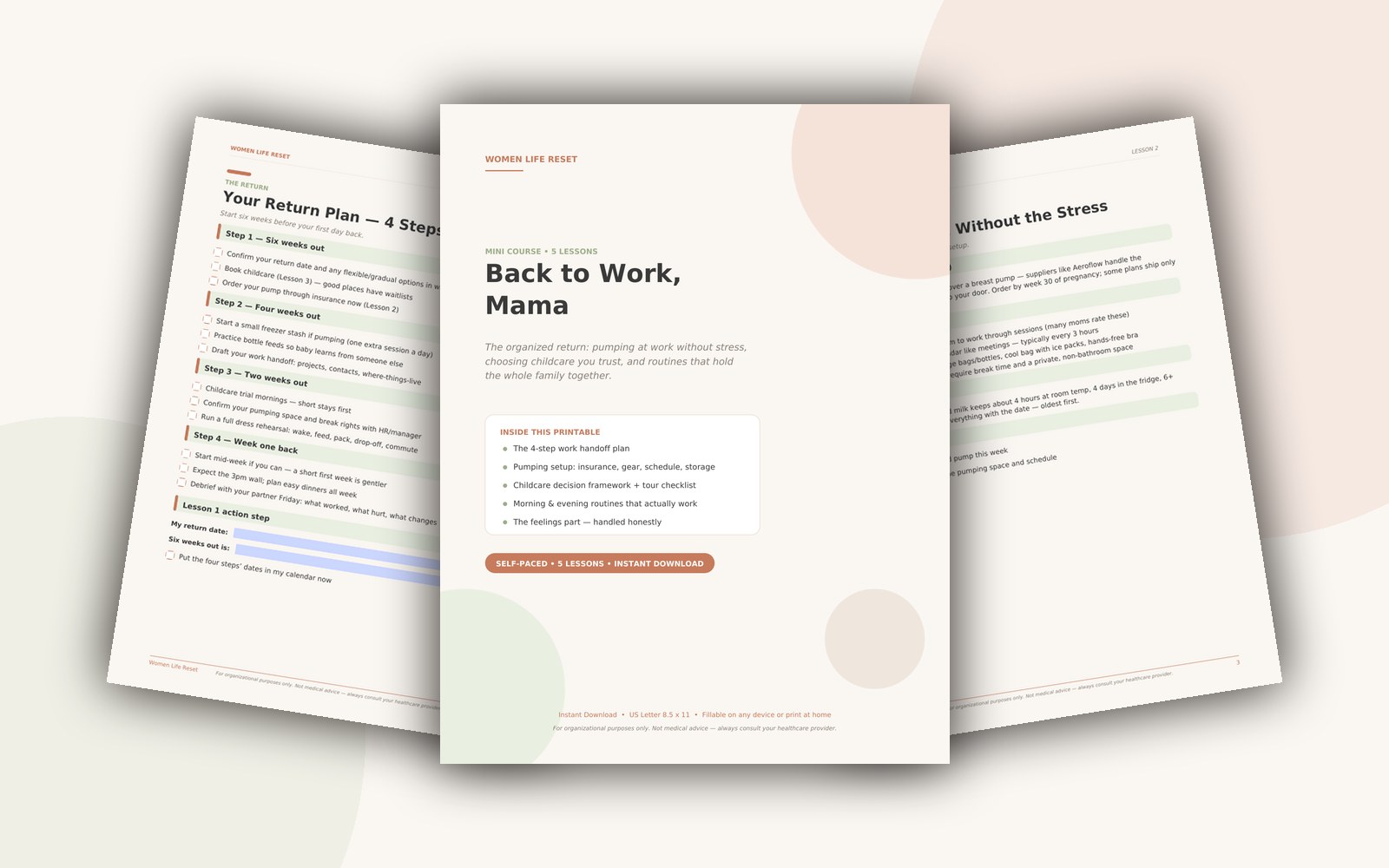 Back to Work, Mama course
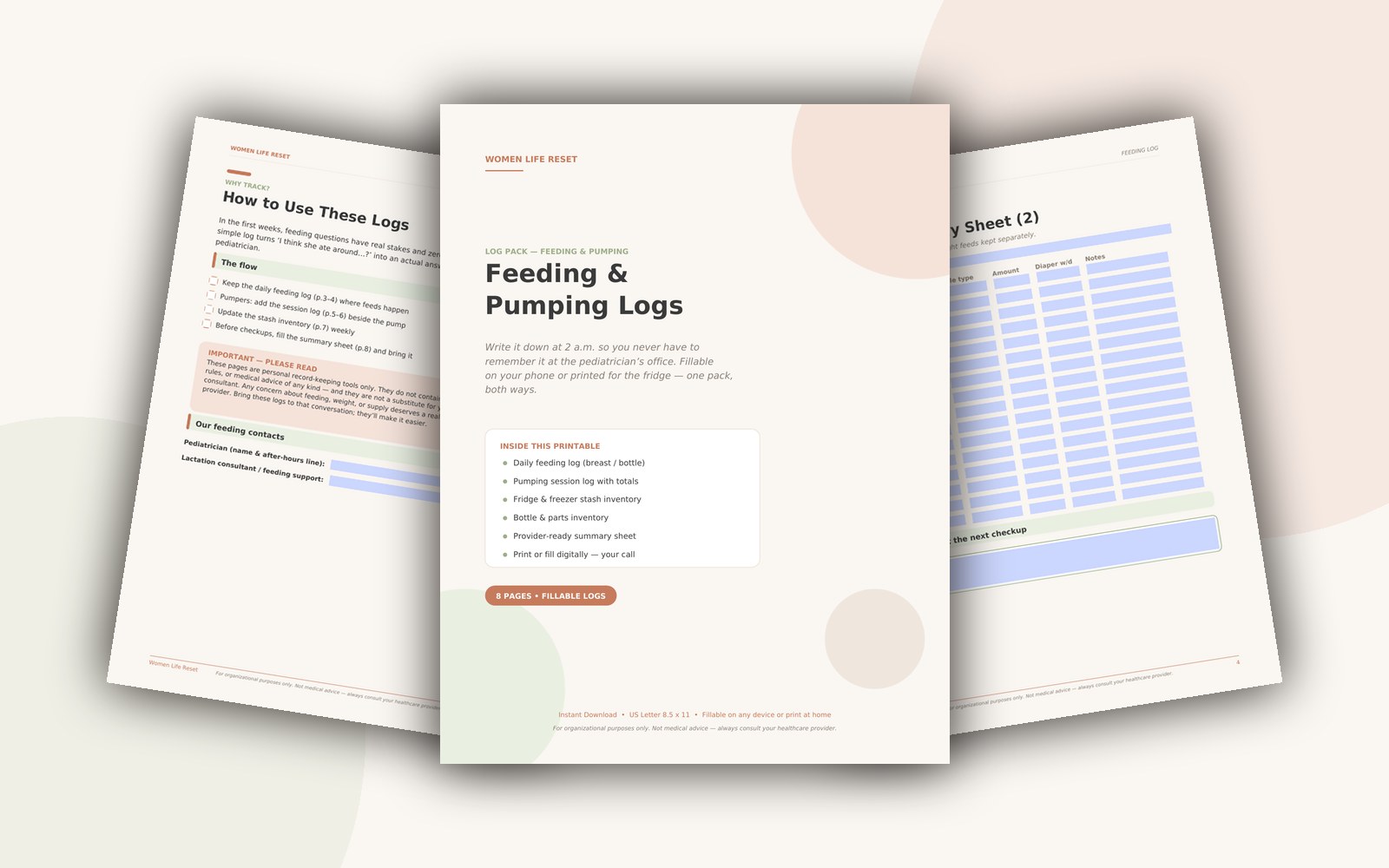 Feeding & Pumping Logs
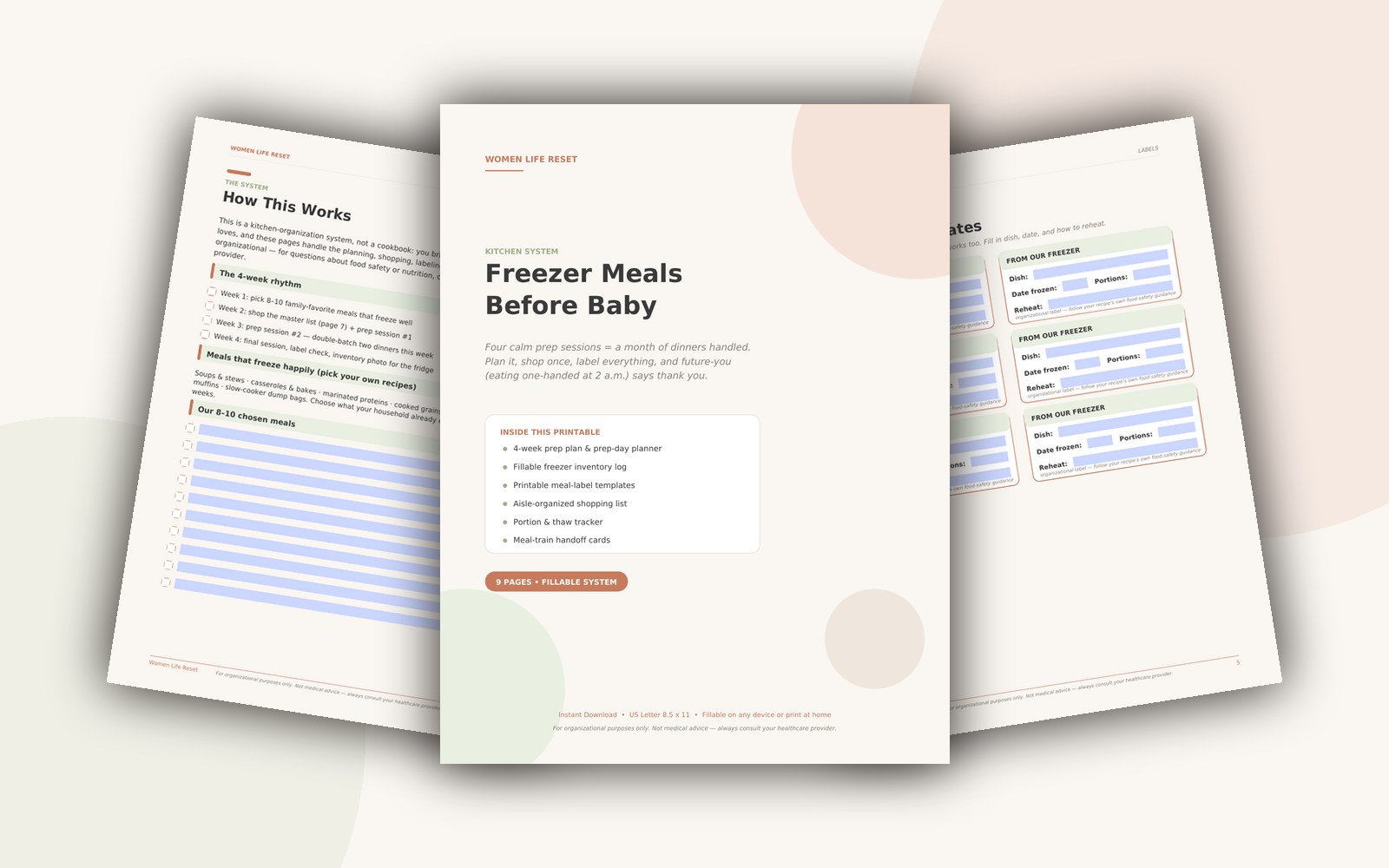 Freezer Meals Before Baby
I walked back into work with a pumping plan, scripts for my boss, and zero panic. The childcare checklist alone was worth it.
Quick answers
How often should I pump at work?
Roughly as often as your baby eats — usually every three hours, so two to three sessions in a standard workday. Consistency matters more than perfection; skipped sessions, repeated daily, are what shrink supply.
Does my employer legally have to give me a place to pump?
Under the US PUMP Act, most employers must provide reasonable break time and a private, non-bathroom space for pumping for up to one year after birth. If you get pushback, put the request in writing and loop in HR.
How much milk should I leave for the baby per workday?
A common rule of thumb is 1 to 1.5 ounces per hour apart — so roughly 10 to 12 ounces for a full workday, split across three to four bottles. Your own log will refine that number within two weeks.
Educational only — not medical advice. Always consult your healthcare provider.
Popular on the blog




Fresh from the blog
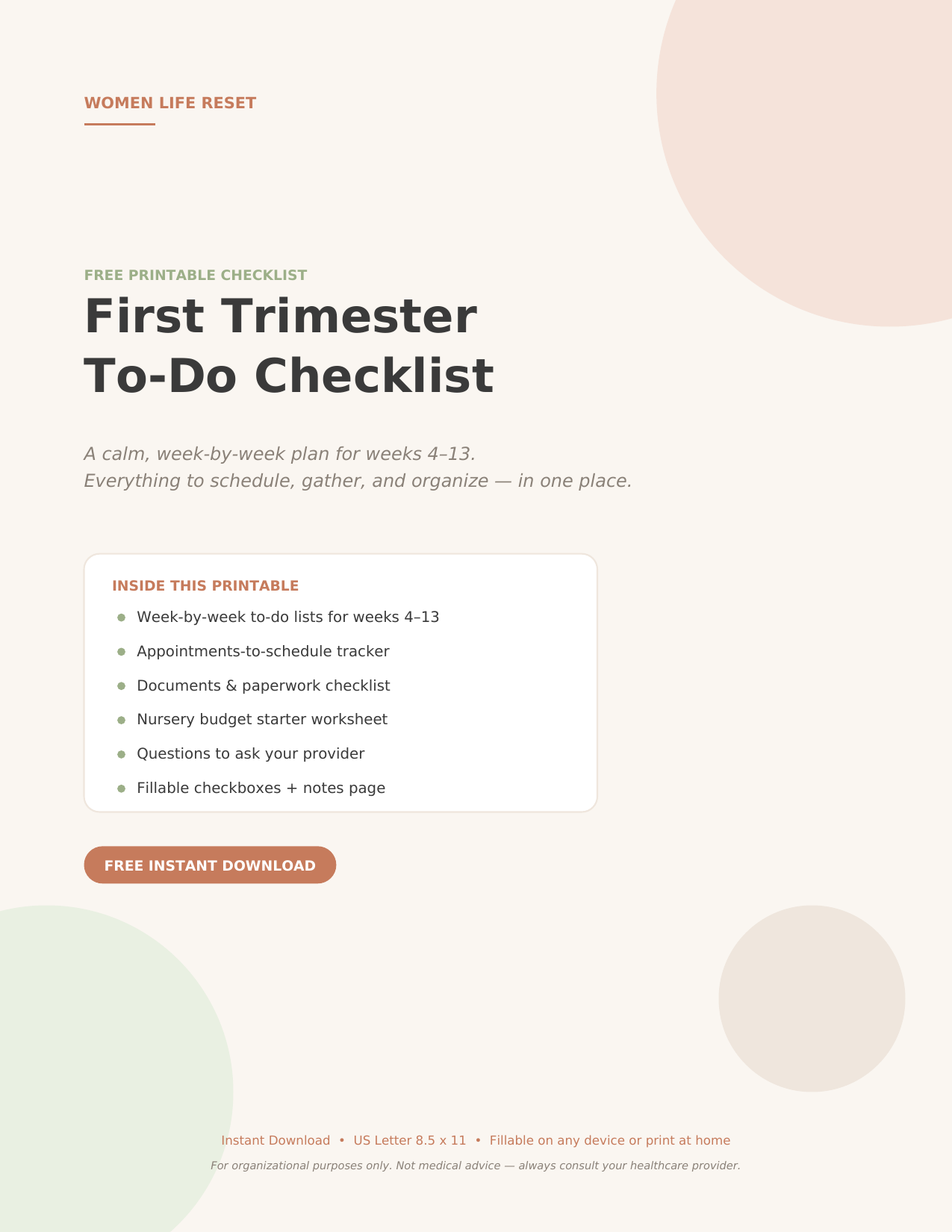
Your 15% welcome code is waiting
Join the Mom Club and I’ll send you my First Trimester Checklist free, plus your standing code MOMCLUB15 — 15% off everything in the store, every time you shop. One gentle, practical email a week. That’s the whole deal.
No spam, no pressure — unsubscribe anytime and keep the checklist. Only gentle notes from me, Sarah.
Leave a Reply