

What I Wish Someone Had Told Me Before My First Latch
Nobody told me that the first latch would happen while I was still shaking from delivery, half-dressed, with three people watching. Nobody told me that a newborn’s mouth is comically small and my aim would be terrible. And nobody told me that “it’s natural” doesn’t mean “it’s automatic.”
So let me be the friend who tells you. Everything below is what I’d say across my kitchen table to any mom about to try this for the first time — the honest version, including the parts that make the pamphlets nervous.
A quick honesty note before we start: this post contains partner links. If you buy through one, we earn a small commission — at no extra cost to you. It’s how we keep the lights on, and I only ever recommend what I’d put in my own cart. You can read our full affiliate disclosure anytime. — Sarah
In this article
The heart of it
- Breastfeeding is a learned skill — for both of you, not an instinct switch
- A good latch feels like tugging, not pinching; pain that doesn’t fade in 30 seconds means re-latch
- Your positioning matters more than the baby’s — bring baby to breast, not breast to baby
- Getting help early (day 1–2, not week 3) changes everything
Natural Doesn’t Mean Automatic
Babies are born with a rooting reflex, not a user manual. You’re learning a physical skill while exhausted and hormonal; your baby is learning it while brand new at literally everything. If the first days feel clumsy, that’s not failure — that’s two beginners doing something hard together. The moms who make it look serene in week six were exactly as clumsy in week one. You just didn’t see that part.
The First Hour (and Why It’s Okay If It’s Messy)
If you can, skin-to-skin right after birth gives you the best opening: babies placed on your chest will often bob and search and latch with almost comic determination. But plenty of first latches don’t happen in hour one — c-sections, NICU visits, exhaustion, a baby who just wants to sleep. All of that is fine. Colostrum comes in teaspoons, not ounces, and a sleepy first day doesn’t doom anything. You’re playing a long game.
What a Good Latch Actually Feels Like
Here’s the description I needed: a good latch feels like a deep, rhythmic tugging — strong, surprising, but not sharp. A bad latch feels like pinching or biting that doesn’t ease after the first 20–30 seconds. The rule that saved me: if it still hurts after half a minute, unlatch and try again. Slip a clean finger into the corner of the baby’s mouth to break the seal first (never just pull — learned that the hard way). Aim for a wide mouth, baby’s chin touching the breast, nose free, more areola below the nipple than above. It takes practice to even see these things. That’s normal.
The Positions That Save Your Back
You will feed this baby eight to twelve times a day. Position is not a detail — it’s the whole game. Three that carry most moms through the first weeks: Laid-back (recline at 45 degrees, baby tummy-down on you — gravity does the holding), Cross-cradle (maximum control of the latch while you’re both learning), and Side-lying (for night feeds, once you’ve got the hang of it — follow safe surface guidelines). Whichever you use: bring the baby to your breast, don’t hunch your breast to the baby. Your shoulders will file complaints otherwise, loudly, at 3 a.m.
The 3 a.m. Problem Nobody Warns You About
Days two through four are the gauntlet: milk coming in, cluster feeding, a baby who wants to eat constantly and a mom who is sure something is wrong. Usually nothing is wrong — frequent feeding is how supply gets built. What helps: feed on cue, watch diapers (wet and dirty counts are the truth-tellers), and have someone bring you water and snacks like it’s their job, because it is. What also helps: knowing what’s normal before you’re in it. This is exactly the gap a good class fills.
Milkology — The Ultimate Breastfeeding Class
The Ultimate Breastfeeding Class from Milkology is 90 minutes, taught by a certified lactation consultant, and built to be watched while you’re still pregnant — latching, positions, supply, pumping, troubleshooting, all of it. It’s the class I point every first-time mom to, because learning this at 3 p.m. with tea is much easier than at 3 a.m. with tears.
$19 usually $27
Partner link — you pay the same price (sometimes less with their sales), and a small commission supports Women Life Reset.
When to Get Help (Sooner Than You Think)
Call a lactation consultant if: pain lasts past the first minute of feeds, your nipples come out creased or damaged, baby isn’t back to birth weight by two weeks, diaper counts are low, or you simply feel lost. That last one is reason enough. An IBCLC visit — often covered by insurance — can fix in one afternoon what three weeks of struggling won’t. Asking early isn’t overreacting; it’s the pro move.
From our store
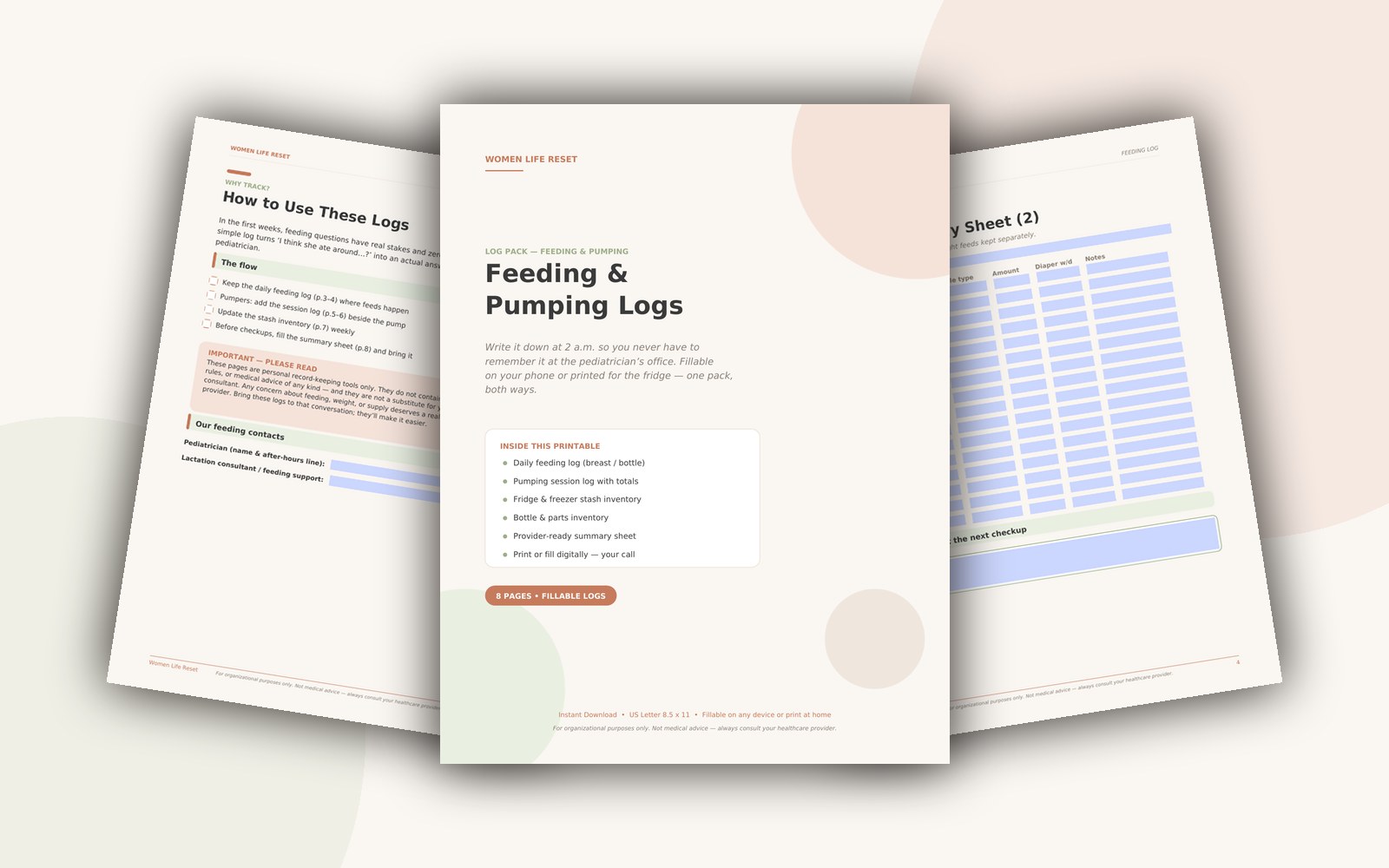
In the fog of week one, “which side did I last feed on?” becomes a genuine mystery. Our Feeding & Pumping Logs answer it in one glance — feeds, sides, diapers, and sleep in a one-hand-friendly layout.
Quick answers
How long should a feed take?
Newborns typically feed 10–30 minutes per side, but watch the baby, not the clock: active swallowing and a relaxed, milk-drunk finish matter more than minutes.
Is some pain normal at first?
Brief tenderness in the first 20–30 seconds can be normal in week one. Pain that persists through the feed, or visible nipple damage, is a sign to re-latch and get hands-on help.
How do I know the baby is getting enough?
Diapers and weight: by day five, expect at least six wet diapers a day and steady weight gain at checkups. Your pediatrician tracks this closely in the first weeks.
Should I take a breastfeeding class before birth?
If you can, yes — learning positions and latch basics while rested beats googling mid-feed at 3 a.m. A 90-minute class now saves hours of tears later.
The Takeaway
The first latch isn’t a test you pass or fail — it’s rep one of a skill you’ll both master. Learn the shape of a good latch, protect your back, feed on cue, watch diapers, and call in help early and shamelessly. You’re not behind. You’re right on time. — Sarah
Popular on the blog



Fresh from the blog



Your 15% welcome code is waiting
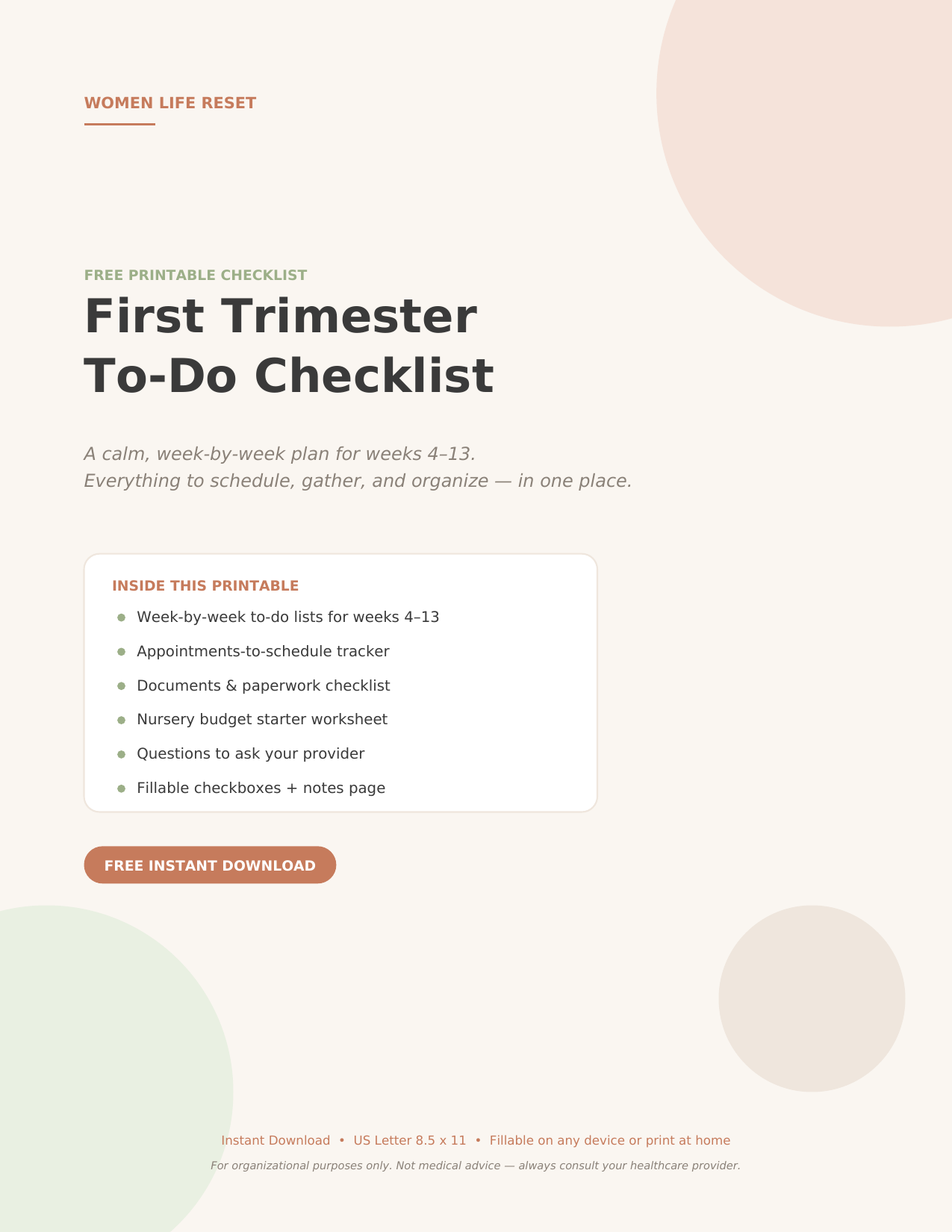
Join the Mom Club and I’ll send you my First Trimester Checklist free, plus your standing code MOMCLUB15 — 15% off everything in the store, every time you shop. One gentle, practical email a week. That’s the whole deal.
No spam, no pressure — unsubscribe anytime and keep the checklist. Only gentle notes from me, Sarah.
Leave a Reply