
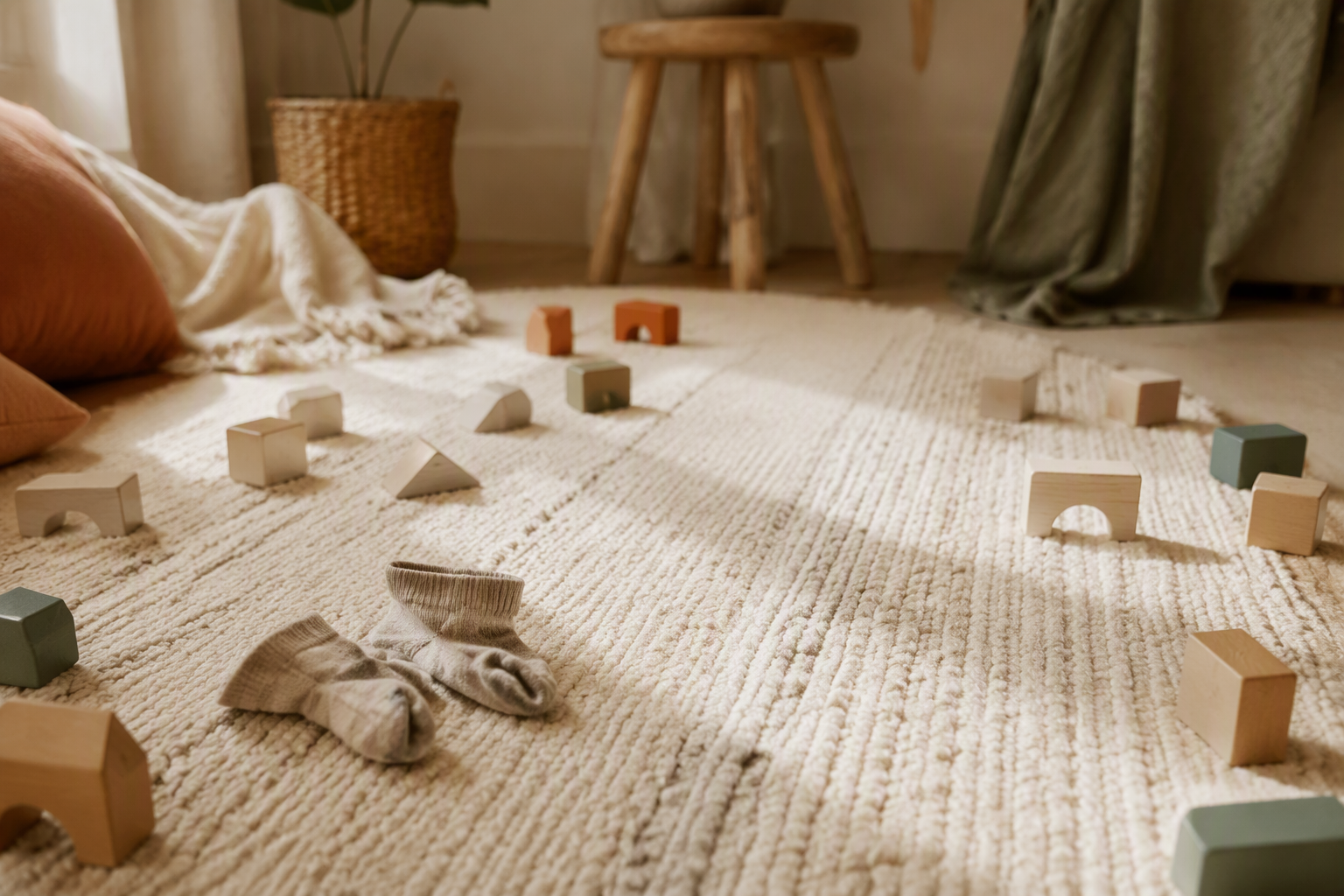
Month 7 With Your Baby: On the Move (Almost)
Month seven is the calm before the motion. Your baby is rocking on hands and knees, scooting backward across the living room, or army crawling with grim determination toward the one thing you do not want them to have. Real crawling is days or weeks away — which makes this the month to baby-proof in earnest.
In this article
The heart of it
- Rocking and scooting mean crawling is close — baby-proof in earnest now
- Soft finger foods build the pincer grasp; mess is the teacher
- Object permanence clicks — peekaboo is suddenly the best game alive
- First separation anxiety is healthy attachment, not a problem
- Drop the crib mattress to its lowest setting once sitting is solid
Your baby this month
- Pre-crawling moves — rocking, scooting, pivoting in circles, or the full army crawl. Some babies skip crawling entirely, and that is fine too
- The pincer grasp develops — raking gives way to picking up small pieces between thumb and finger
- Sitting steadily — most babies sit unsupported now, freeing both hands for mischief
- Object permanence clicks — your baby now knows hidden things still exist. Peekaboo becomes genuinely thrilling
- First wave of separation anxiety — crying when you leave the room means your baby has learned you exist even when gone, and would prefer otherwise
Sleep right now
Two naps are the standard now, with nights of 10 to 12 hours. New motor skills love to rehearse at bedtime — do not be surprised to find a sitting or rocking baby in the crib at midnight. Calmly lay them back down once or twice; the novelty fades. Separation anxiety can also show up at bedtime: a consistent routine and a warm, brief goodnight beat long, anxious exits every time.
Feeding this month
Solids shift from tasting to eating. Two to three small meals a day alongside milk feeds is a comfortable rhythm. Soft finger foods — ripe avocado spears, banana, well-cooked sweet potato sticks, soft scrambled egg — build the pincer grasp and self-feeding skills. Expect waste, expect mess, and expect the dog to gain weight. Keep offering variety without pressure; repeated neutral exposure is how babies learn to accept foods.
Play and connection
Peekaboo is the game of the month, in every variation — behind hands, behind a cloth, behind the door. Place toys slightly out of reach to motivate movement. Let your baby explore safe household objects: wooden spoons, measuring cups, an empty box. And narrate constantly — your running commentary is wiring up language even though the reply is still mostly “bah.”
For you, mama
With a nearly mobile baby, your one-handed life is ending — showers and hot coffee require strategy again. Set up one safe zone per room (a play yard, a gated area) so you have places to put the baby down without worry. Separation anxiety runs both directions, by the way: if leaving your baby with a trusted grandparent for an hour feels wrenching, that is biology, and it also gets easier with practice.
Baby-proofing your day, not just your house
Once baby is on the move, everyone tells you to baby-proof the house — and yes, do the sockets and the cupboard locks. But the quieter challenge is baby-proofing your day: rebuilding routines around a small person who can now get places, grab things and object loudly when stopped.
A few things genuinely help. Anchor the day with two or three fixed points — morning walk, afternoon floor time, the bedtime sequence — because a mobile baby burns energy on purpose and sleeps better for it. Rotate a small box of safe “not-toys” (a wooden spoon, a whisk, a measuring cup) for the kitchen while you cook. And lower the bar on everything else: a house with a crawler is tidy in one room at a time, and that is fine.
This is also the age when days out stop being logistics and start being fun. Babies this age are thrilled by leaves, pigeons, the bus. If you want easy ideas that cost nothing, the First Year Bucket List Cards give you fifty-two small adventures with a date to fill in — a lovely way to make an ordinary Tuesday count.
And if you have not yet handed baby to anyone else, the mobile months are when most mums first need to — a work call, a dentist, one hour of quiet. The Babysitter Binder makes that handover calm: emergency page for the fridge, the routine written down, a tonight sheet per visit. An hour to set up, and you leave the house without the knot in your stomach.
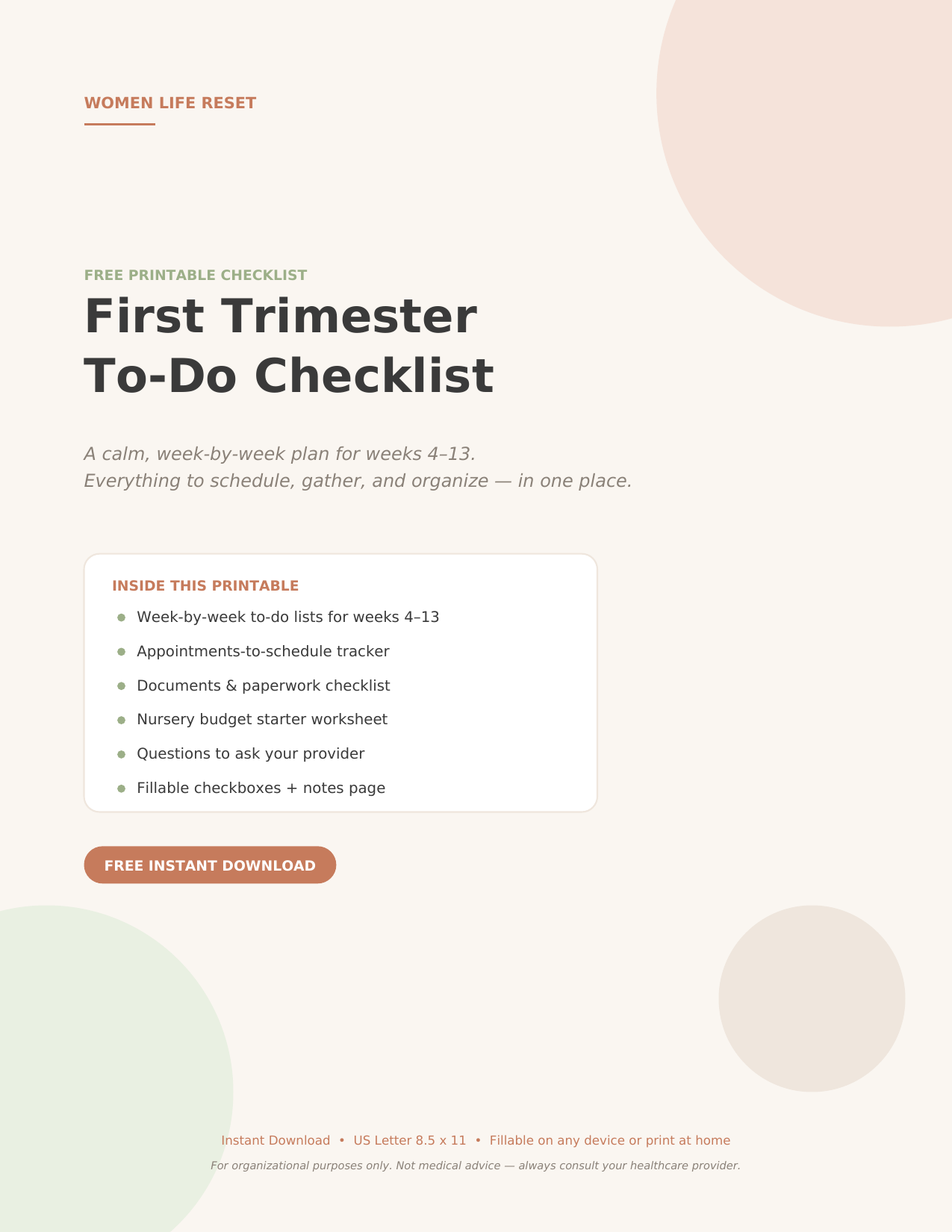
Free: the First Trimester Checklist
Weeks 1–13, gathered on four calm fillable pages — week-by-week to-dos, an appointment log, and room for your notes. It’s free.
The tiny checklist
- Baby-proof now: outlets, cords, cabinet locks, anchored furniture
- Move the crib mattress to its lowest setting if baby can sit or pull up
- Offer two finger-food meals most days — skill building counts more than quantity
- Play peekaboo daily; it genuinely teaches that you come back
- Practice one short separation — a coffee run counts
Enjoy the last stretch of “set the baby down and the baby stays there.” Everything is about to change.
Keep Every Week This Calm
The First Year Bucket List Cards give you 52 little adventures, one a week, mostly free — each dated as you do it. Instant download.
This article is for organizational purposes only and isn’t medical advice — your healthcare provider knows your situation best.
These planners and trackers are organizational tools only and are not medical advice. Always consult your healthcare provider about your pregnancy and your baby’s care.
Quick answers
When do babies start crawling?
Anywhere from 6 to 10 months — and some skip classic crawling entirely (scooting, rolling, army-crawling all count). What matters is that baby finds SOME way to move toward what they want.
How do I babyproof for a crawling baby?
Get on the floor at their eye level: cover outlets, anchor furniture, gate the stairs, lock low cabinets, and move cords and small objects out of reach. Do it before they’re fast — they get fast overnight.
Is separation anxiety normal at 7 months?
Completely — object permanence just developed, so baby now knows you exist when you leave, and protests. It’s a sign of healthy attachment. Short, warm goodbyes and consistent returns build security.
My 7-month-old is not crawling yet — should I worry?
Crawling typically starts between six and ten months, and some babies shuffle, bum-scoot or go straight to cruising without a classic crawl. What matters is that baby is finding some way to move and is using both sides of their body. Mention it at your next check if not, but late crawling alone is rarely a concern.
How much floor time does a mobile baby need?
As much as they will take — floor time is now their gym, classroom and job. Aim for several generous sessions a day on a safe patch of floor, and let them practice moving without much interference. Containers like walkers and jumpers are best kept brief; free movement builds the skills.
Educational only — not medical advice. Always consult your healthcare provider.
One calm email a week
Gentle, practical organization for pregnancy and new motherhood — start with the free First Trimester Checklist (instant download, no account needed).
Free instant download · Opens right in your browser · No Canva account needed
Subscriber perk: private coupon codes by email — our list never pays full price
Make this month easier
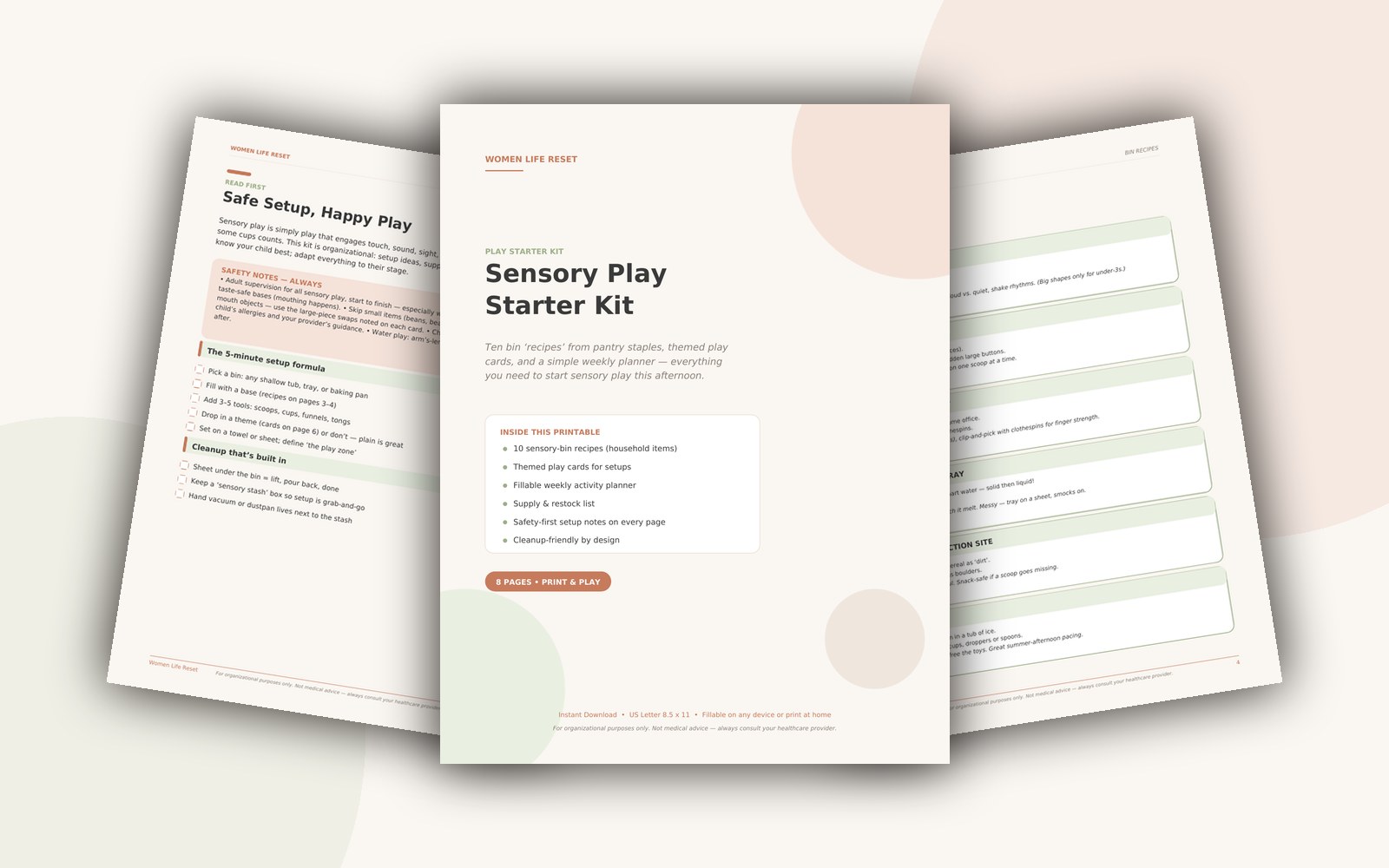 Sensory Play Kit
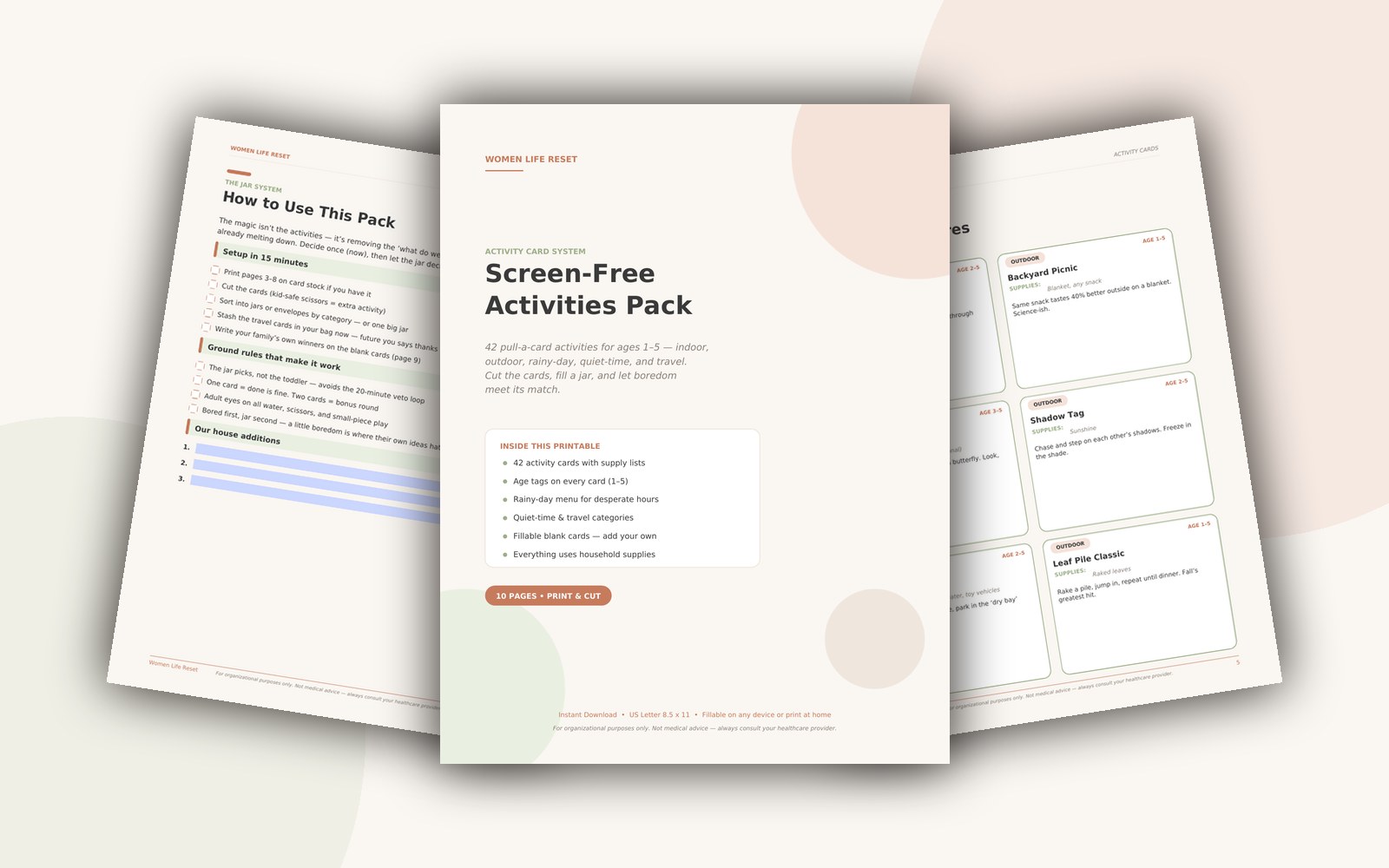 Screen-Free Activities Pack
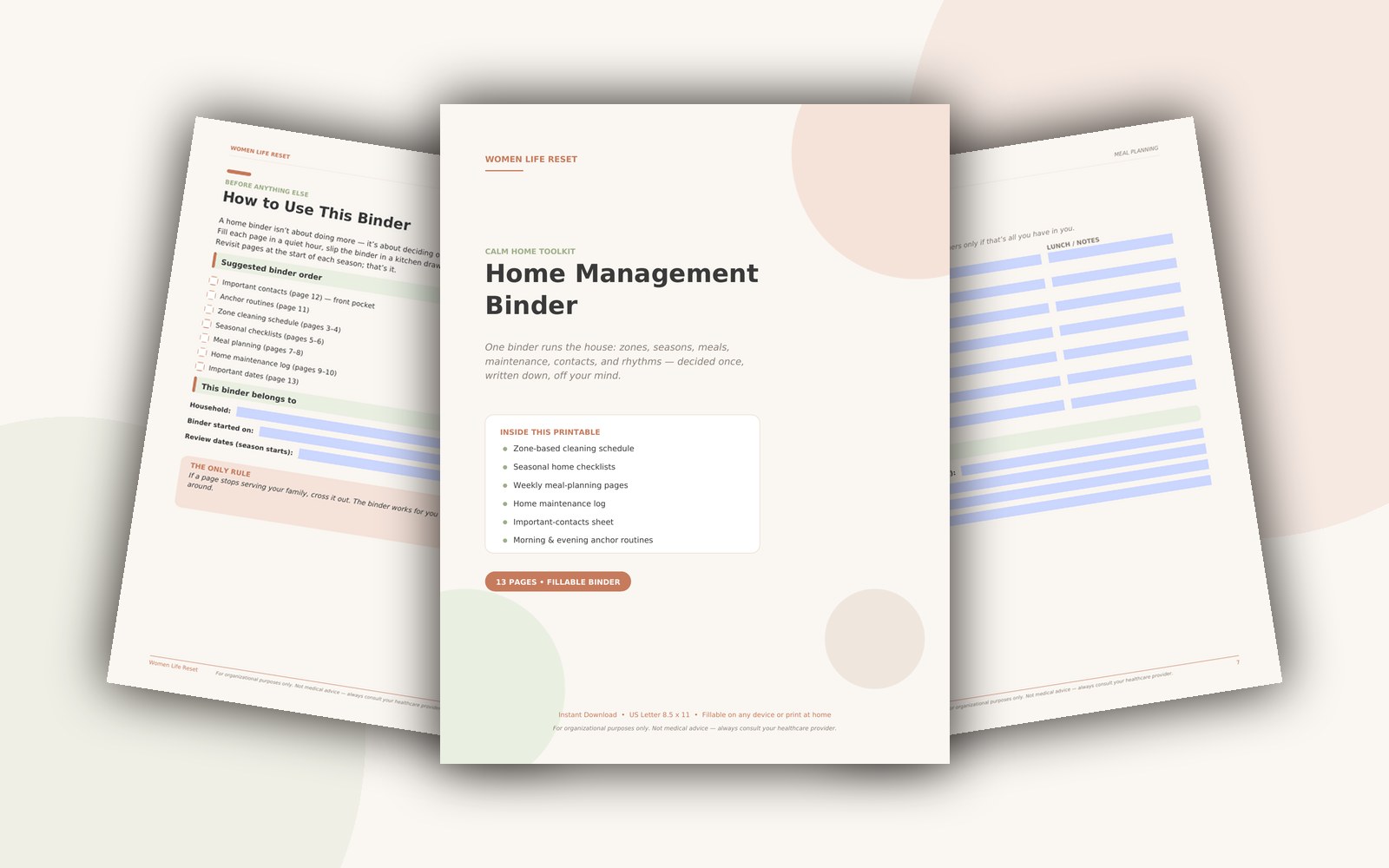 Home Management Binder — Mom Edition
I was terrified of labour. The breathing sections changed everything — I walked in actually feeling ready. My midwife asked where I learned it.
Popular on the blog



Fresh from the blog
Your 15% welcome code is waiting
Join the Mom Club and I’ll send you my First Trimester Checklist free, plus your standing code MOMCLUB15 — 15% off everything in the store, every time you shop. One gentle, practical email a week. That’s the whole deal.
No spam, no pressure — unsubscribe anytime and keep the checklist. Only gentle notes from me, Rahila.