
Month 6 With Your Baby: First Foods and Sitting Up
Half a year. Let that land for a second — you have kept a whole human alive and growing for six months. Month six brings one of the most photographed milestones of the first year: the first tastes of real food. It is messy, hilarious, and far lower-stakes than the internet makes it feel.
In this article
The heart of it
- Before the first birthday, food is for practice — milk still leads nutrition
- Start with iron-rich foods; go slow and expect 90 percent to hit the floor
- Learn gagging versus choking — an infant CPR class is worth every penny
- Two naps settle in; teething may scramble nights temporarily
- Half a year of keeping a human alive — let that land
Your baby this month
- Sitting up — first in tripod position with hands forward, then briefly hands-free. The cushion fortress still applies
- First foods — most babies start solids around now, once they sit with support, hold their head steady, and eye your dinner
- Teething may begin — drool, chewing, crankiness; some babies get a first tooth this month, many do not until later
- Babble gets conversational — strings of ba-ba and da-da with real intonation, like a tiny TED talk
- Stranger awareness begins — a new wariness of unfamiliar faces is a sign of healthy attachment, not rudeness
Sleep right now
Two solid naps are emerging as the three-nap schedule fades, and many babies sleep 10 to 12 hours at night with one or two feeds — some with none. Teething can temporarily scramble things; comfort your baby and return to the routine when the tooth settles. Consistency remains the whole trick: same routine, same sleep space, same boring nights.
Feeding this month
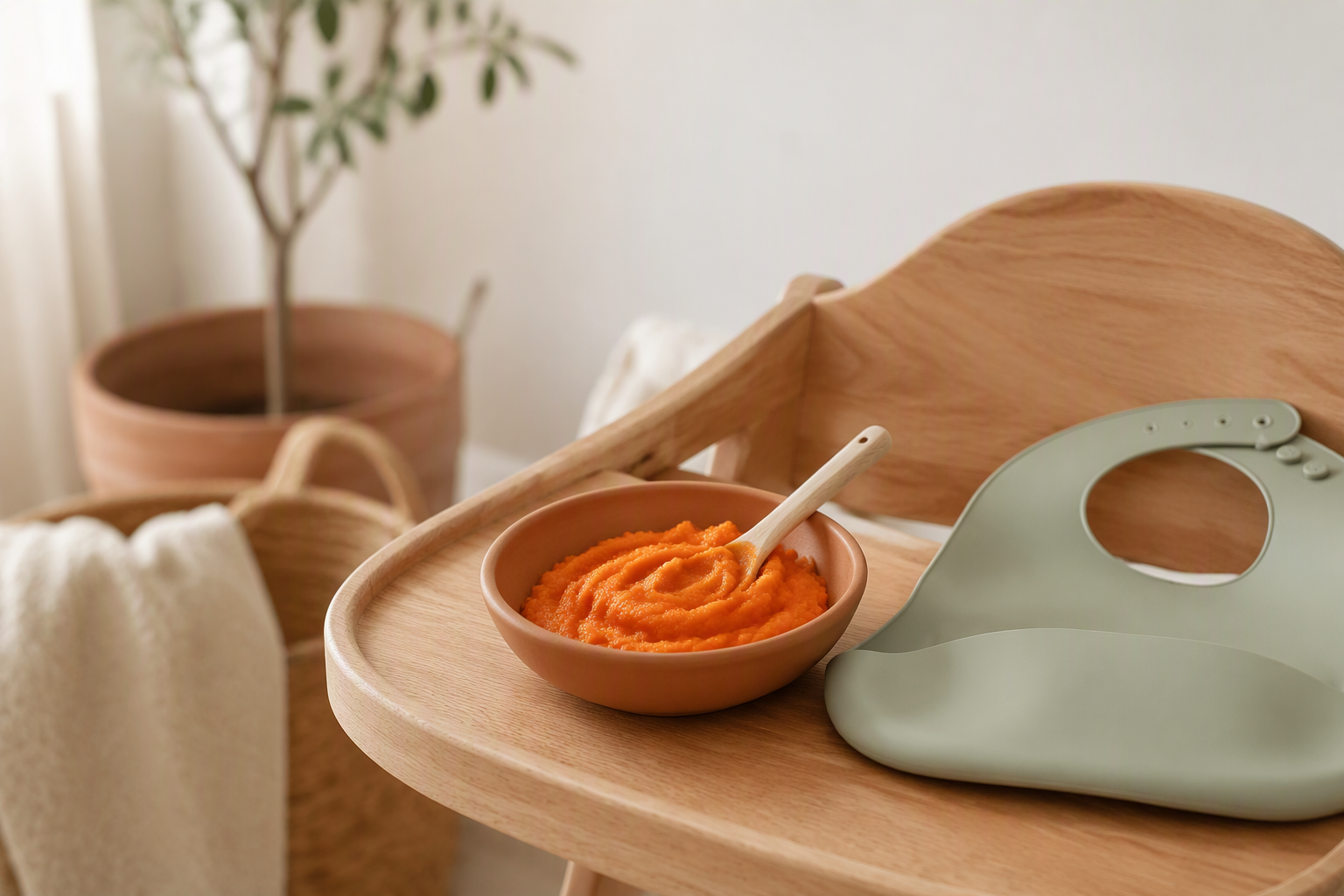
Here is the calm truth about solids: before the first birthday, food is for practice, not nutrition. Milk still does the heavy lifting. Start with iron-rich foods — iron-fortified infant cereal, well-cooked lentils, soft meats, egg — because iron stores from birth start running low around now. Offer one new food at a time, expect most of it to decorate the floor, and treat gagging (noisy, dramatic, normal learning) differently from choking (silent, an emergency — an infant CPR class is worth every penny). Water in a cup with meals is fine. There is no prize for starting early and no harm in going slow.
Play and connection
A sitting baby is a whole new playmate. Place toys just out of reach to encourage pivoting and early crawling moves. Containers with things to put in and dump out are endlessly fascinating. Keep reading daily — board books with textures and flaps are perfect now. And narrate your day like a cooking show host; the commentary feels silly and builds language.
For you, mama
The six-month mark often brings a strange mix: pride, exhaustion, and a quiet “who am I now?” question. All normal. If work is on the horizon, start thinking about logistics early — childcare, pumping plans, and the emotional side of the transition all deserve space. If you are staying home, this is a good month to find one regular thing with other adults — a walking group, a library baby hour — because adult conversation is a nutrient too.
Starting solids without the stress
Somewhere around six months, food stops being only milk — and for many mums the questions arrive all at once. What first? How much? Purées or finger foods? What about allergens? Here is the calm truth: at this age, food is practice, not nutrition. Milk still does the heavy lifting; solids are about tastes, textures and learning.
The mums who enjoy this stage most are the ones who keep a light record. Not to control — to relax. When you can see that baby tried eight foods this week and liked three, you stop worrying about the spoonfuls that hit the floor. Our First Foods Tracker is built exactly for this: a 100-food checklist that counts your progress, an allergen log for careful first tries, and a weekly meal planner so “what today?” is decided once, not daily.
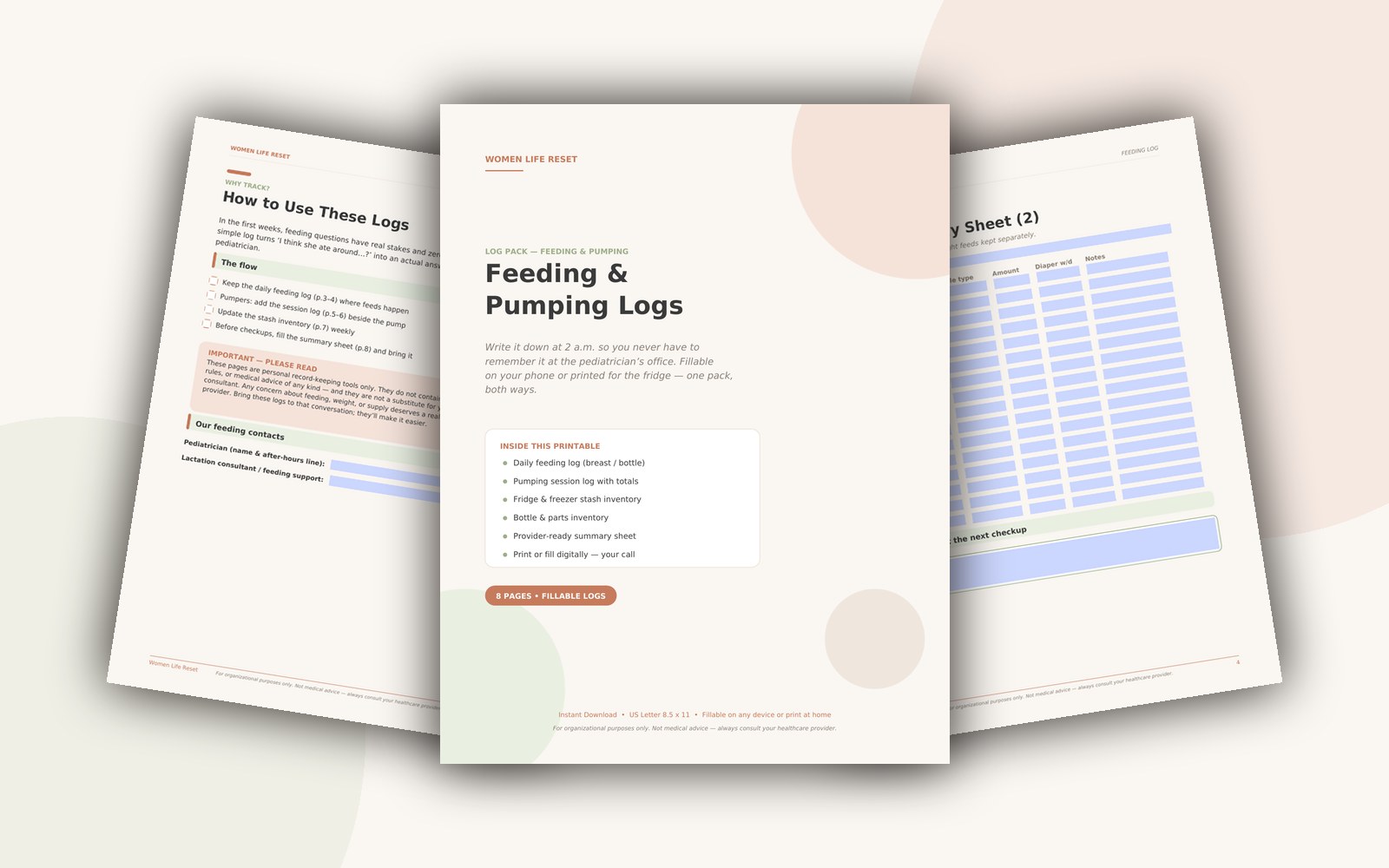
If you are breastfeeding or pumping alongside, feeds do not vanish overnight — they slowly shuffle. The Breastfeeding & Pumping Log keeps the milk side visible while the food side grows, so you can see the transition instead of guessing at it.
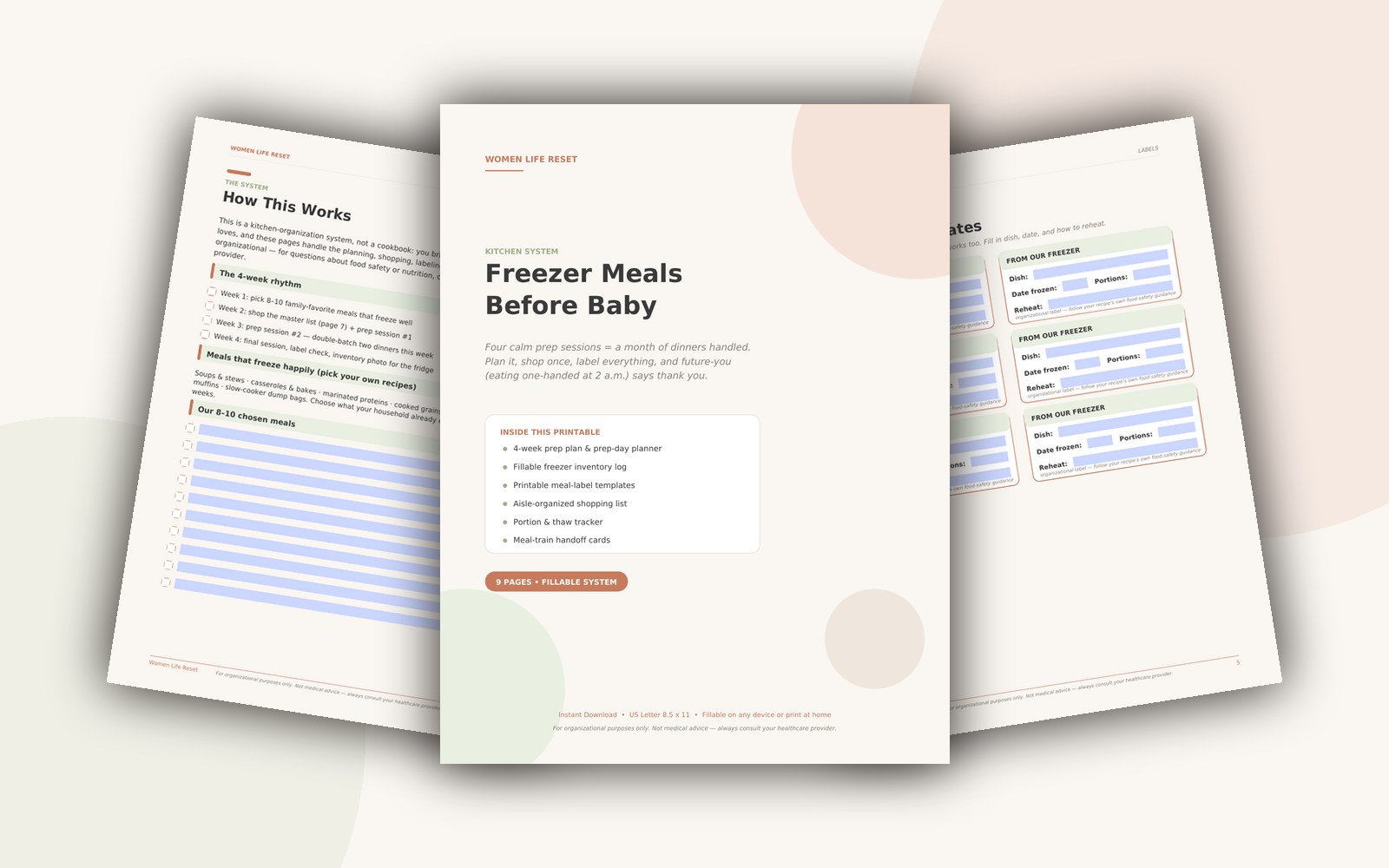
Expect mess. Expect faces. Expect a food to be rejected nine times and devoured on the tenth. The goal for these first months is not a baby who eats everything — it is a baby who thinks the high chair is a good place to be. That, and a freezer with a few labelled portions for the days you cannot. You are doing it right.
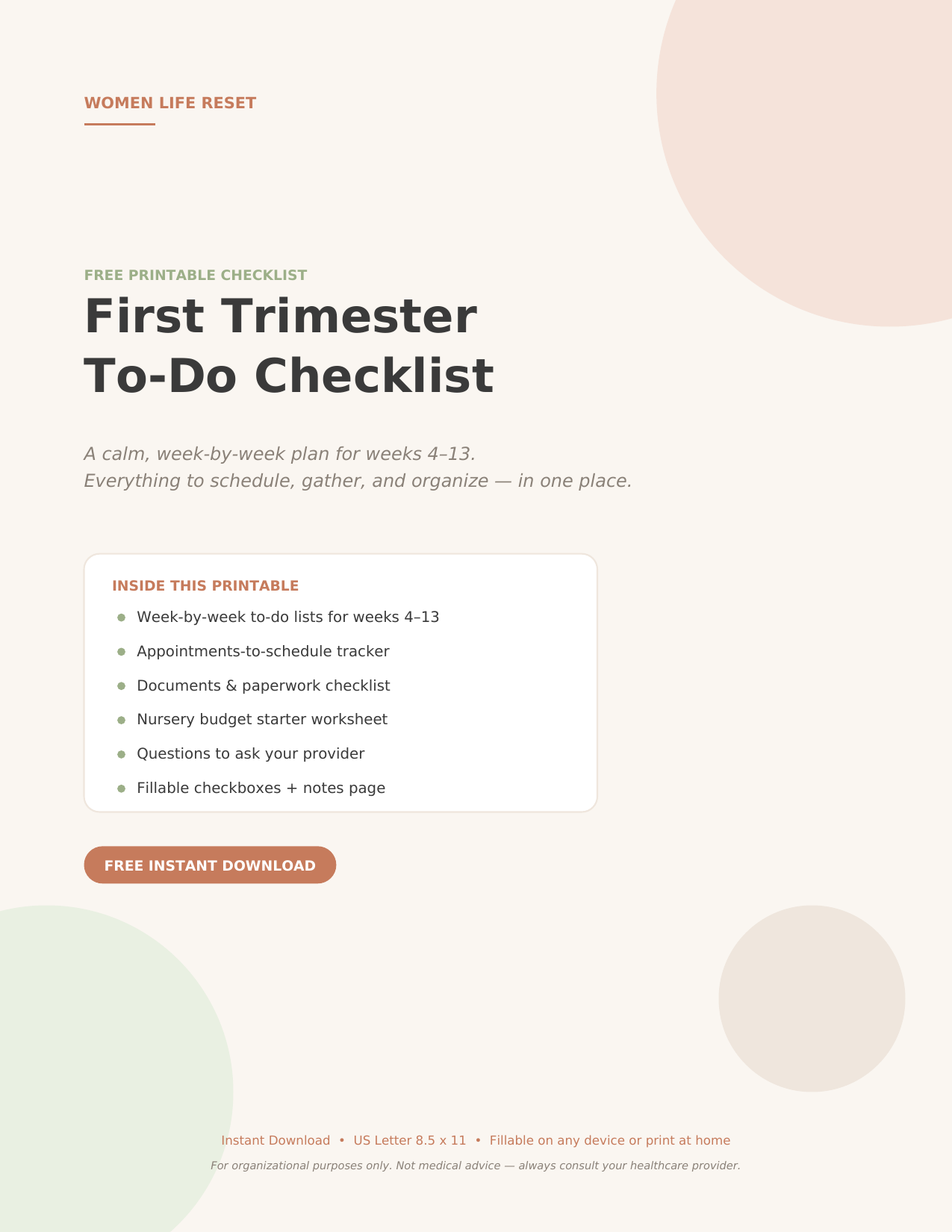
Free: the First Trimester Checklist
Weeks 1–13, gathered on four calm fillable pages — week-by-week to-dos, an appointment log, and room for your notes. It’s free.
The tiny checklist
- Get the green light on solids at the six-month checkup
- Stock three iron-rich first foods and a easy-clean bib
- Anchor two naps at roughly the same times daily
- Take a first-bites photo — accept that it will be 90 percent mess
- Do one thing this month that has nothing to do with the baby
Welcome to the second half of the first year — it goes even faster than the first.
Keep Every Meal This Calm
The First Foods Tracker counts 100 foods for you, logs allergens the careful way, and plans the week’s meals — calm first tastes. Instant download.
This article is for organizational purposes only and isn’t medical advice — your healthcare provider knows your situation best.
These planners and trackers are organizational tools only and are not medical advice. Always consult your healthcare provider about your pregnancy and your baby’s care.
Quick answers
When should I start solids?
Around 6 months, when baby can sit with support, holds their head steady, and shows interest in food. Before then, milk covers everything. Your pediatrician confirms readiness at the 6-month visit.
What are good first foods for a 6-month-old?
Soft, simple, iron-rich: mashed sweet potato, avocado, banana, well-cooked egg, iron-fortified cereal, soft meat purees. One new food at a time, a few days apart, so reactions are easy to spot.
Does starting solids replace milk feeds?
No — milk (breast or formula) stays the main nutrition through the first year. At 6 months, solids are practice: tastes, textures, and skills. Food before one is mostly for fun and learning.
How do I introduce allergens safely?
Offer common allergens (egg, peanut, dairy, wheat, fish, sesame) one at a time, early in the day, in small amounts, and wait two to three days before the next new one — watching for hives, swelling, vomiting or breathing changes, which need medical attention. Current guidance encourages not delaying them. A written allergen log keeps it organised and calm.
Purées or baby-led weaning — which is right?
Both work, and most families blend them. Spoon-fed purées make early days and allergens simple; soft finger foods build chewing and independence. Follow your baby’s readiness (sitting with support, good head control, interest in food) and your own comfort — and never leave a baby alone with food, whichever route you take.
Educational only — not medical advice. Always consult your healthcare provider.
One calm email a week
Gentle, practical organization for pregnancy and new motherhood — start with the free First Trimester Checklist (instant download, no account needed).
Free instant download · Opens right in your browser · No Canva account needed
Subscriber perk: private coupon codes by email — our list never pays full price
Make this month easier
 Feeding & Pumping Logs
 Freezer Meals Before Baby
 Sensory Play Kit
I stuck the weekly page on my fridge and suddenly pregnancy had a shape. My husband started reading it too. Four stars — I only wish it carried on into the first weeks after birth.
Popular on the blog




Fresh from the blog
Your 15% welcome code is waiting
Join the Mom Club and I’ll send you my First Trimester Checklist free, plus your standing code MOMCLUB15 — 15% off everything in the store, every time you shop. One gentle, practical email a week. That’s the whole deal.
No spam, no pressure — unsubscribe anytime and keep the checklist. Only gentle notes from me, Rahila.