

When Your Back Gives Up: Real Support in the Third Trimester
There’s a moment in the third trimester — mine was in a grocery store aisle at week 33 — when your back simply files for resignation. Standing hurts. Sitting hurts. The walk from the couch to the kitchen becomes a commute. And everyone keeps saying “just rest,” as if rest were a thing available to a person who can no longer roll over in bed without a five-step plan.
Let’s talk about what’s actually happening to your body, and the support options that genuinely help — because “push through it” is not a strategy.
A quick honesty note before we start: this post contains partner links. If you buy through one, we earn a small commission — at no extra cost to you. It’s how we keep the lights on, and I only ever recommend what I’d put in my own cart. You can read our full affiliate disclosure anytime. — Sarah
In this article
The heart of it
- Relaxin loosens your joints while your center of gravity shifts — the ache is mechanical, not weakness
- Small posture fixes and heat go far; “just rest” is not the only option
- A maternity support belt offloads the belly’s weight from your spine and pelvis
- Severe, sudden, or rhythmic pain with other symptoms is a call-your-provider moment
Why Everything Hurts Right Now
Your body is running three changes at once. The hormone relaxin is loosening every joint and ligament so your pelvis can open — wonderful for birth, wobbly for daily life. Your bump has moved your center of gravity forward, so your lower back muscles are working overtime just to keep you upright. And your growing uterus is pressing on nerves and blood vessels that never signed up for this. The result: lower back ache, hip pain, lightning bolts of round ligament pain, and that heavy, dragging feeling by evening. You’re not fragile. You’re carrying a construction site.
The Habits That Make It Worse
A few quiet culprits: standing with your weight dumped into one hip (the classic mom stance, even pre-baby), soft couches that swallow your pelvis, flat flip-flops with zero support, and the bump-forward swayback posture we all slide into by week 30. None of these are moral failures — they’re just leverage problems, and they’re fixable with small tweaks: both feet flat, a footrest under your desk, a rolled towel at your lower back, actual shoes.
Daily Relief That Actually Works
The unglamorous winners: heat on the lower back (15 minutes, not on the bump), prenatal yoga’s cat-cow morning and night, a pillow fortress for sleep (more below), swimming or a warm bath for the blessed minutes of weightlessness, and short walks instead of long sits — motion really is lotion for these joints. If you can swing it, a prenatal massage or a physiotherapist who specializes in pregnancy is worth every penny for stubborn pelvic pain.
Support Belts: What They Do
A maternity support belt is not a corset and not a gimmick. It wraps under the bump and gently lifts, redistributing the weight your back and pelvic ligaments are carrying alone. Moms describe the feeling as “someone holding my belly up for me.” The honest caveats: wear it for active hours, not 24/7 (your muscles still need to work), it’s not a fix for severe pain that needs a provider’s eyes, and sizing matters — measure where the chart says to measure, not your pre-pregnancy size.
Babybellyband — Original Maternity Support Belt
The Babybellyband is the one our community keeps recommending: designed by a maternity-wear maker, doctor-recommended, adjustable as you grow, with add-on shoulder straps and groin bands for pelvic pressure days. It’s machine washable, fits XS through XXL, and a lot of moms tell us it’s the difference between managing their day and surviving it.
$42 sizes XS–XXL
Partner link — you pay the same price (sometimes less with their sales), and a small commission supports Women Life Reset.
When Pain Is a Call-Your-Provider Thing
Normal third-trimester ache builds through the day and eases with rest or position change. Call your provider promptly if pain is severe or sudden, rhythmic (coming in waves that time like contractions), comes with bleeding, fever, numbness down a leg, or a bad headache with vision changes, or if your gut says something is off. Providers would always rather hear from you early. That’s what they’re for.
Sleeping When Everything Hurts
Left side, knees bent, one firm pillow between your knees, one wedge or folded blanket under the bump, one at your back so you can lean into it. Yes, it’s a nest. Yes, getting out of it for the fourth bathroom trip requires a crane. But a supported bump stops the ligament pulling that wakes you with those sharp groin jolts — and sleep, fragmented as it is, becomes measurably less awful.
From our store
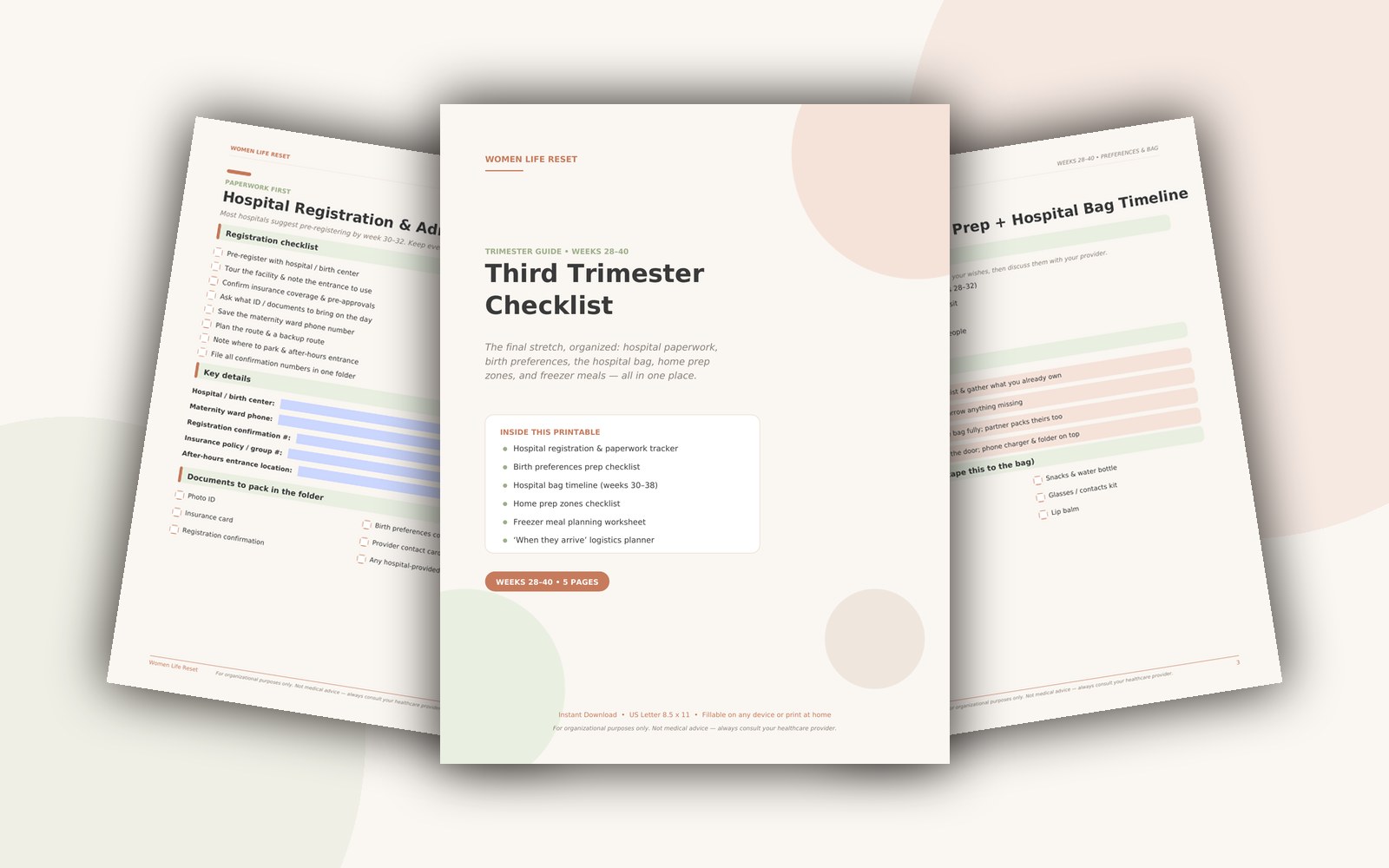
While you’re managing the physical side, our Third Trimester Checklist quietly handles the mental side — weeks 28 to 40 mapped out, kick counts, hospital-day readiness, so nothing sneaks up on you.
Quick answers
Is back pain normal in the third trimester?
Daily aching that eases with rest is extremely common — your joints are loosening and your center of gravity has shifted. Severe, sudden, or rhythmic pain deserves a call to your provider.
Do maternity support belts really work?
For many moms, yes — by lifting the bump, a belt reduces the load on your lower back and pelvic ligaments during active hours. It’s support, not a cure, and works best combined with posture fixes and movement.
How many hours a day can I wear a support belt?
Most makers suggest a few hours at a time during activity rather than all day — your core muscles still need to engage. Follow the guidance that comes with yours.
What helps round ligament pain specifically?
Slow position changes, supporting the bump when you cough or sneeze, side-lying with pillows, and a support belt for busy days. Sharp jolts that pass in seconds are typical; constant pain isn’t.
The Takeaway
Your body is doing construction at scale, and the ache is real — but it’s also manageable. Fix the small posture leaks, use heat and movement, build the pillow nest, and let a belt hold the bump when your back is done. “Just rest” was never a plan. This is. — Sarah
Popular on the blog



Fresh from the blog


Your 15% welcome code is waiting
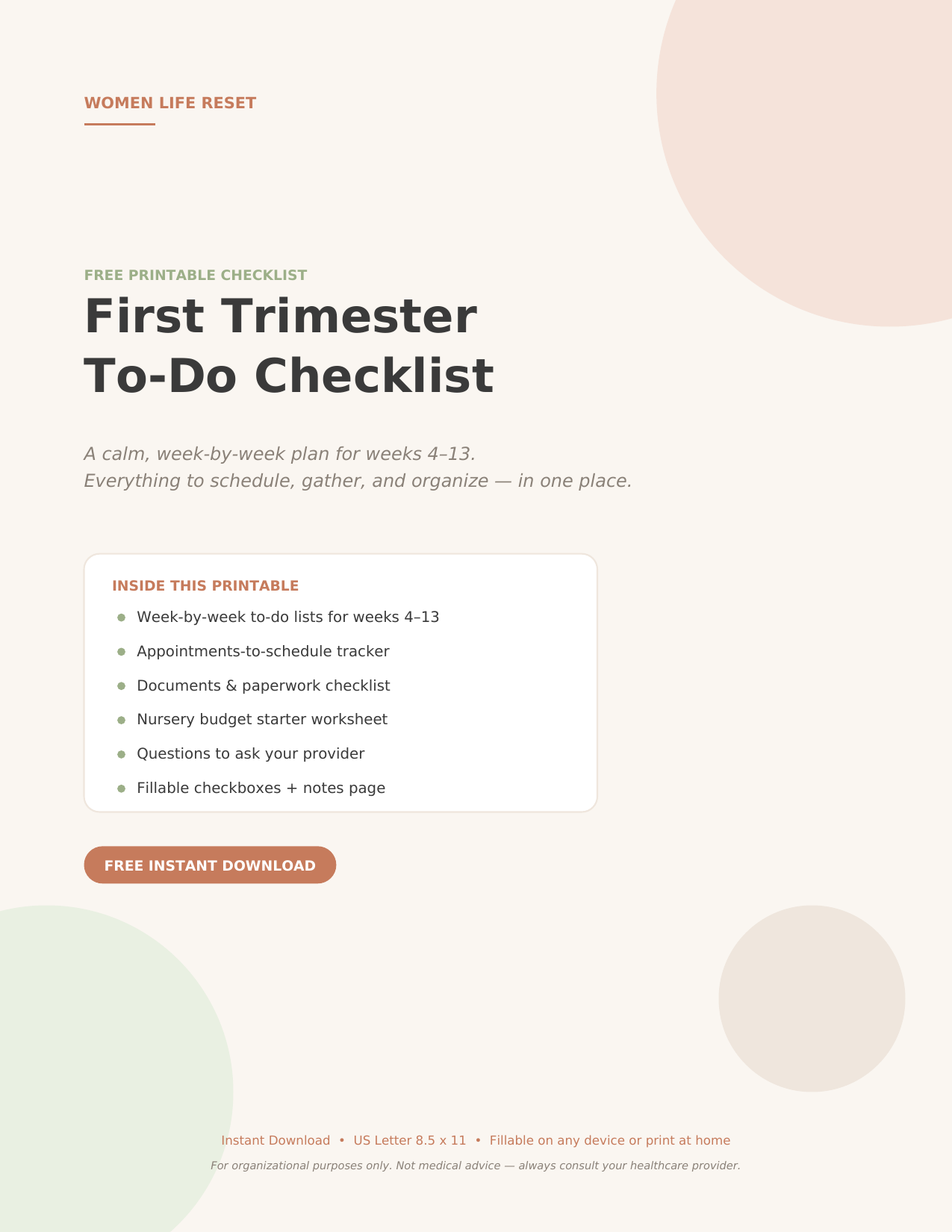
Join the Mom Club and I’ll send you my First Trimester Checklist free, plus your standing code MOMCLUB15 — 15% off everything in the store, every time you shop. One gentle, practical email a week. That’s the whole deal.
No spam, no pressure — unsubscribe anytime and keep the checklist. Only gentle notes from me, Sarah.
Leave a Reply