

Baby Budget Planner: First-Year Costs Organization Guide
“How much does a baby cost?” is one of those questions the internet answers with a terrifying number and no context. I typed it into a search bar at 1 a.m. during my first pregnancy and got back a five-figure estimate with zero explanation. Helpful, right? Here’s the organized truth: first-year costs vary enormously depending on your choices — but they’re almost entirely predictable. And predictable means plannable.
This guide won’t tell you what to buy or how to invest (that’s beyond our lane). What it will do is hand you the categories, a fill-in framework, and the timing — so you can build a first-year budget that reflects your family instead of a national average. Start this in the second trimester while you have brain space; our second trimester checklist shows where it fits.
In this article
The heart of it
- Two buckets: one-time costs and recurring monthly costs — fill in your real numbers
- The hidden categories (insurance changes, utility bumps, takeout) sink most budgets
- Build it in five steps, then have the money conversation with your partner
- Saving without deprivation is a strategy, not a sacrifice
- A trimester-by-trimester timeline spreads the big spends
The Two Big Buckets
Every first-year expense falls into one of two buckets, and they behave very differently:
Bucket 1: One-time costs — the gear and setup. These hit in months 4–9 of pregnancy and feel big, but they’re finite, registry-able, and heavily discountable.
Bucket 2: Recurring costs — the monthly rhythm. These start at birth and run for years. This bucket matters more to your long-term budget than any stroller decision ever will.
Plan them separately. Most budget stress comes from obsessing over Bucket 1 while ignoring Bucket 2.
Bucket 1: One-Time Costs (Fill In Your Numbers)
| Category | Typical range | Your number |
|---|---|---|
| Car seat + stroller | $150–$800 | $____ |
| Crib + mattress + bedding | $150–$700 | $____ |
| Changing setup + dresser | $50–$400 | $____ |
| Feeding gear | $50–$400 | $____ |
| Baby carrier/wrap | $30–$180 | $____ |
| First clothes (0–6 mo) | $100–$400 | $____ |
| Nursery decor/extras | $0–$500 | $____ |
| Bucket 1 total | ~$530–$3,380 | $____ |
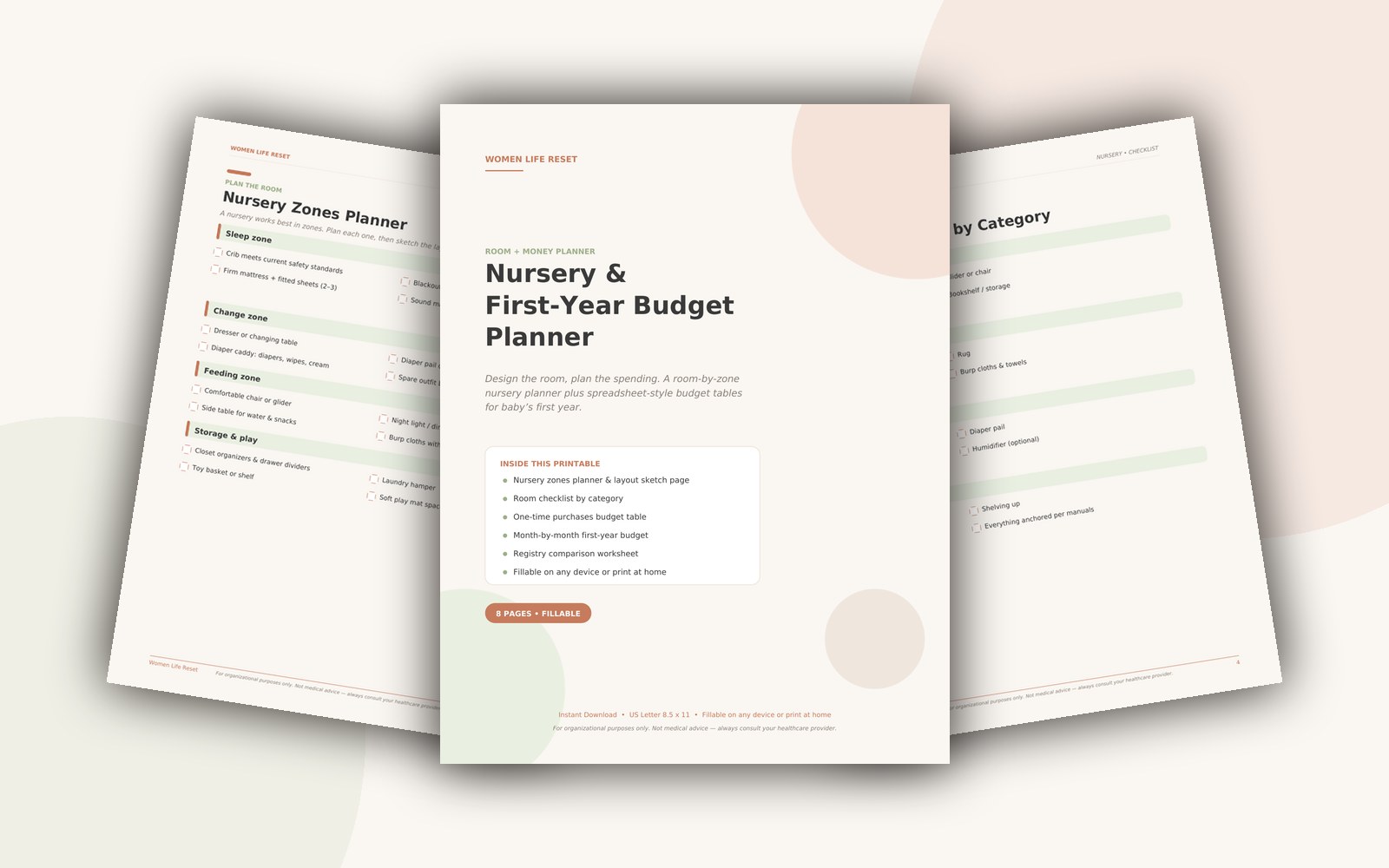
Three levers move this total more than anything else: registry gifts, secondhand furniture, and resisting the upgrade spiral (the $40 version of most baby gear does the job). Our nursery planning 101 guide has a three-tier budget table if the nursery is your big-ticket zone.
Bucket 2: Recurring Monthly Costs
| Category | Typical monthly range | Your number |
|---|---|---|
| Diapers + wipes | $50–$100 | $____ |
| Formula (if used) | $0–$250 | $____ |
| Childcare | $0–$2,000+ | $____ |
| Added health insurance premium | $0–$400 | $____ |
| Clothes (ongoing sizes) | $20–$60 | $____ |
| Misc (books, toys, supplies) | $20–$50 | $____ |
| Bucket 2 monthly total | $____ |
Childcare and insurance dominate this bucket for most families — which is why researching both early (childcare waitlists in trimester two, insurance enrollment deadlines before birth) is worth more than any coupon.
The Hidden Categories Everyone Forgets
Add a line for each of these in your plan, even if the number is small:
- Medical copays and out-of-pocket costs — delivery and pediatric visits vary wildly by plan; call your insurer in trimester two and get real numbers
- Parental leave income gap — if any leave is unpaid or partially paid, calculate the monthly shortfall now and start a buffer fund
- The “village” budget — meal delivery gift cards, a cleaner once a month, whatever support you might buy in month one
- Celebrations — baby shower contributions, first holidays, photos
- Your own recovery period — stocking the house, easy meals, convenience spending you’d normally avoid (plan for it and it stops feeling like failure)
The 5-Step Budget-Building Workflow
- Pick your tracker — a spreadsheet, a budgeting app, or a printable. The best system is the one you’ll open weekly.
- Fill in Bucket 1 using the ranges above; subtract your realistic registry expectations (not the optimistic version — the realistic one).
- Fill in Bucket 2 — and call your insurance company and two childcare providers for real numbers. Ten minutes of phone calls beats any estimate.
- Stress-test it: what if baby arrives before the last paycheck? What if childcare costs the high end? Note the worst-case monthly number and decide now what flexes.
- Automate the baby fund: a fixed transfer every payday from now until birth. Even small amounts build both the cushion and the habit.
Free: the First Trimester Checklist
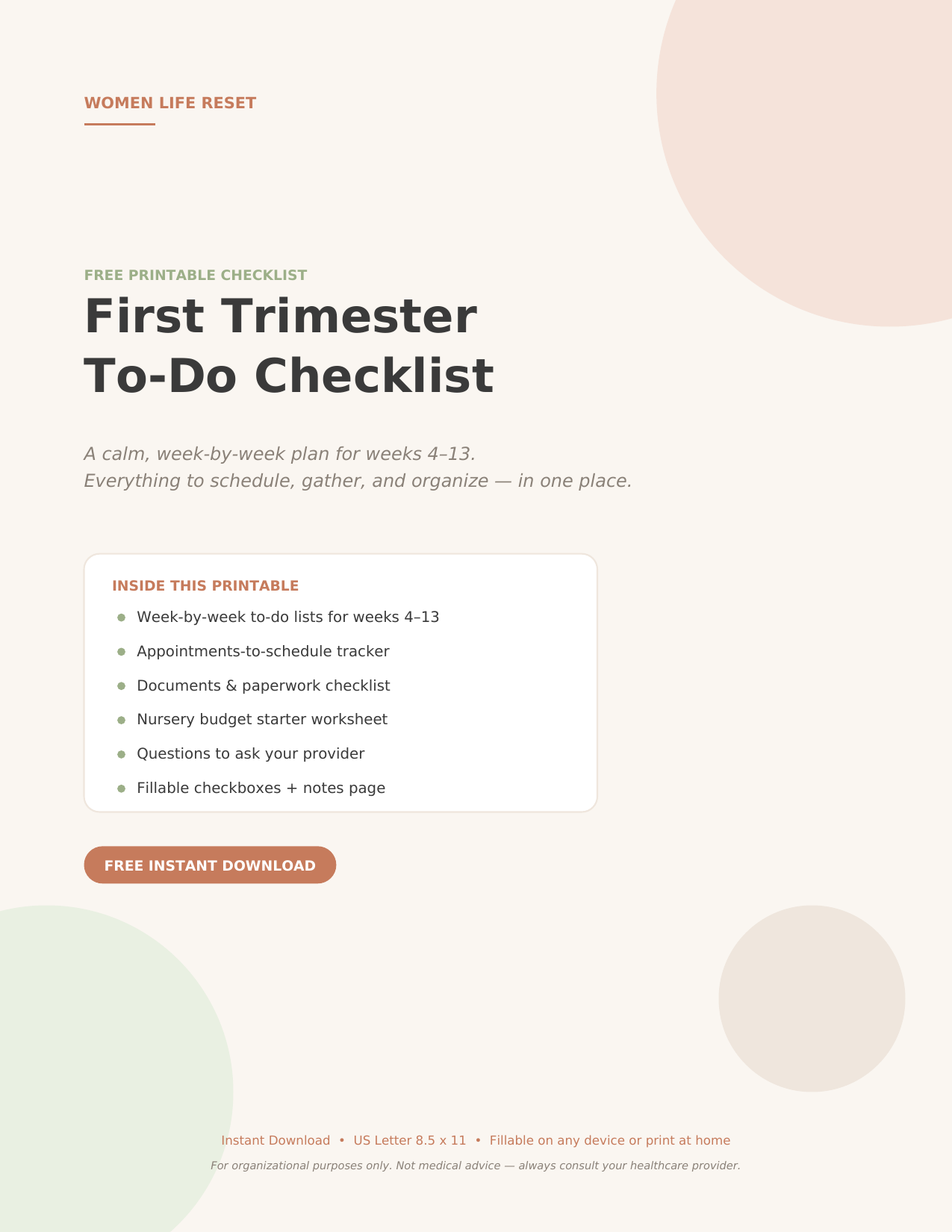
Weeks 1–13, gathered on four calm fillable pages — week-by-week to-dos, an appointment log, and room for your notes. It’s free.
Ways Families Commonly Save (Without Deprivation)
- Buy gear in waves: months 0–3 now, everything else when you know your baby’s actual preferences
- Accept hand-me-downs strategically: clothes and toys yes; car seats and cribs need safety-standard checks first — verify current guidelines
- Use registry completion discounts for the items nobody gifted
- Track for one month before judging: most families find the real numbers are 10–20% off their estimates — in one direction or the other
The Money Conversation With Your Partner
A budget spreadsheet only works if both adults share it. Schedule one calm hour in trimester two — snacks help — and walk through four questions:
- What’s our real monthly cushion today? (Not the aspirational one.)
- Which recurring baby costs can we absorb, and which need lifestyle changes?
- How are we covering the leave income gap, if there is one?
- Who owns the money admin after birth? Bills, insurance enrollment, and benefit deadlines all have to land in someone’s job description while the other parent is on baby duty.
Write the answers down. The conversation is the budget; the spreadsheet is just where it lives.
A Quick Note on Financial Products
You’ll encounter advice about savings accounts, insurance policies, and college funds during this process. Those decisions are worth making — with a licensed financial professional who knows your full picture, not from a blog post. Our lane is helping you get organized enough to have those conversations well: know your numbers, list your questions, and bring them to someone qualified.
Baby Budget FAQ
When should I start budgeting?
Second trimester is ideal — early enough to automate savings, late enough to have real appointment and registry information.
What’s the single biggest cost?
For most working families, childcare — by a wide margin. Research it first, before gear, and let it anchor Bucket 2.
How much should be in the baby fund by the due date?
There’s no universal number; it depends on your insurance, leave, and childcare plan. Your stress-test number from step 4 — the worst-case month — is the target that matters for your family.
Is it cheaper to have a second baby?
Usually, yes: gear gets reused, you know what you actually need, and the registry temptation fades. Childcare, however, doesn’t care how experienced you are.
A Trimester-by-Trimester Money Timeline
Budgeting works best when it rides along with the rest of your pregnancy organization instead of arriving as one giant scary task:
- Trimester one: open the budget tab and the baby-fund transfer. Nothing fancy — the habit matters more than the amount. Our first trimester checklist has the setup steps.
- Trimester two: the research phase. Call insurance, price childcare, fill in both buckets with real numbers, and have the partner conversation. This is where the budget is truly built.
- Trimester three: execution and buffer. Registry completion purchases, final gear buys, and growing the leave-gap cushion. By week 36, the goal is simple: no financial task should require a phone call you don’t have the energy for.
- Month one after birth: track actual spending against the plan for four weeks, then adjust the recurring numbers. Real data beats estimates every time.
The Takeaway
A baby budget isn’t about hitting a magic number — it’s about replacing vague financial anxiety with a spreadsheet you trust. Two buckets, real phone-call numbers, an automated transfer, and a monthly check-in. Do that in trimester two, and money becomes one less thing keeping you up in trimester three.
Want It All in One Place?
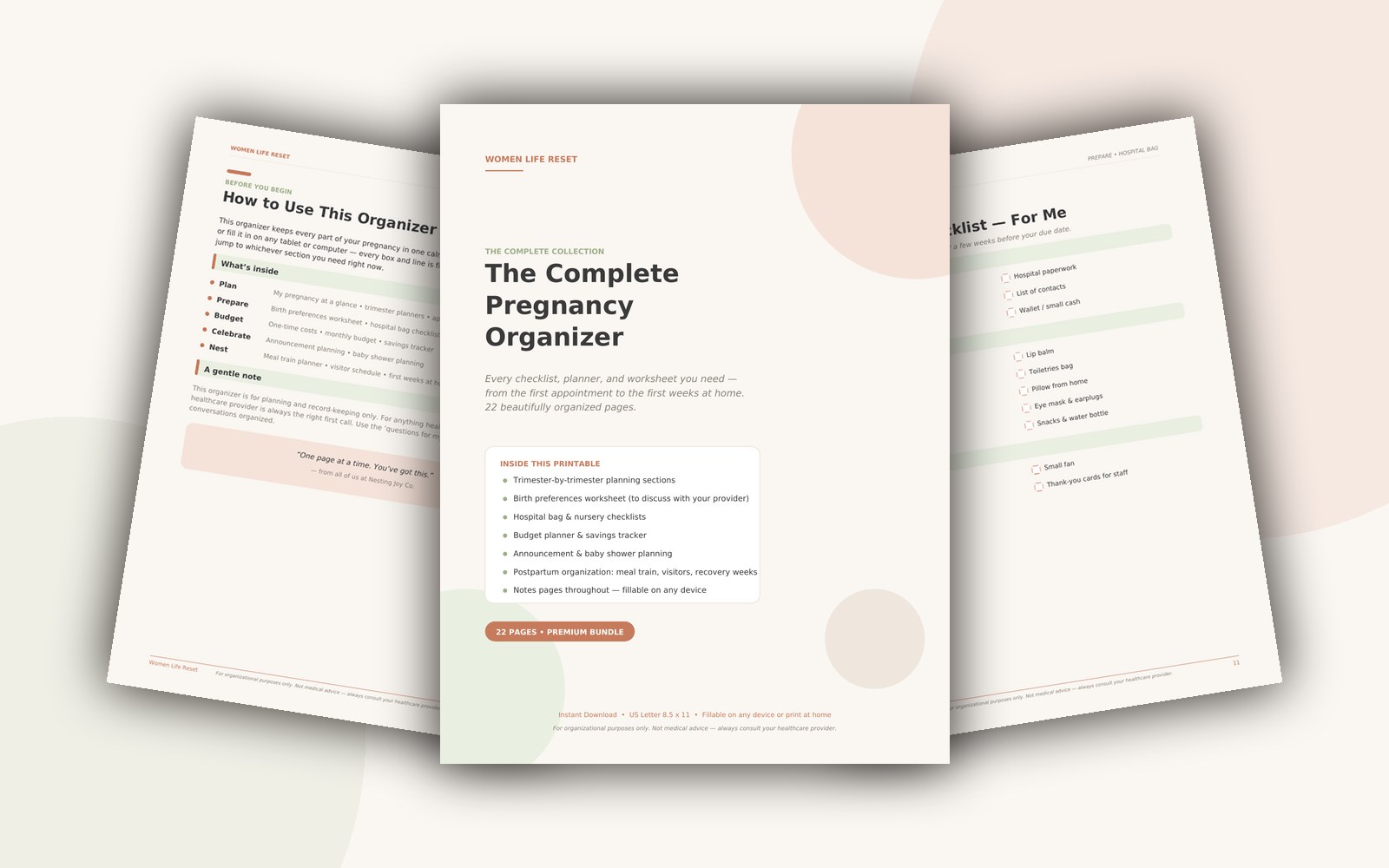
All 25 pages — trimester checklists, weekly planner & newborn trackers — in one bundle. Save nearly half vs. buying separately.
Keep Every Cost This Calm
The Baby Budget Planner maps every first-year cost before it lands — so money surprises happen on paper, not at the till. Instant download.
This article is for organizational purposes only and isn’t medical advice — your healthcare provider knows your situation best.
These planners and trackers are organizational tools only and are not medical advice. Always consult your healthcare provider about your pregnancy and your baby’s care.
Quick answers
How much does a baby’s first year cost?
Estimates range widely — roughly $12,000-$20,000 including childcare, or $2,500-$5,000 for gear and supplies alone. Your number depends mostly on childcare, feeding, and insurance.
What baby gear is safe to buy used?
Clothes, swings, bouncers, high chairs, and most toys. Buy new: car seats (crash history is invisible) and crib mattresses. Check recalls on anything secondhand.
What costs do new parents forget?
The sneaky ones: insurance deductible for the birth, adding baby to your plan within 30 days, formula top-ups even when breastfeeding, and the utility bump from laundry and heating.
How much does a baby cost in the first year?
Estimates vary widely by country and choices, but most families land in the low-to-mid thousands — with nappies, feeding and childcare as the big recurring lines. The honest answer comes from your own numbers: a written budget with your prices beats any national average.
What are the biggest baby budget mistakes?
Buying everything new and everything early. Babies need far less than shops suggest, and your needs become obvious within weeks of birth. Buy the safety items new (car seat, mattress), borrow or buy second-hand where sensible, and let the registry carry the rest.
Educational only — not medical advice. Always consult your healthcare provider.
One calm email a week
Gentle, practical organization for pregnancy and new motherhood — start with the free First Trimester Checklist (instant download, no account needed).
Free instant download · Opens right in your browser · No Canva account needed
Subscriber perk: private coupon codes by email — our list never pays full price
Make this week easier
 Nursery & Budget Planner
 Freezer Meals Before Baby
 Complete Pregnancy Organizer
Those first weeks are a blur and this course felt like a friend who had done it before. The feeding and sleep lessons saved us — I re-read them at 3am more than once.
Popular on the blog




Fresh from the blog




Your 15% welcome code is waiting
Join the Mom Club and I’ll send you my First Trimester Checklist free, plus your standing code MOMCLUB15 — 15% off everything in the store, every time you shop. One gentle, practical email a week. That’s the whole deal.
No spam, no pressure — unsubscribe anytime and keep the checklist. Only gentle notes from me, Rahila.