

Month 10 With Your Baby: Almost a Toddler
Month ten has a bittersweet flavor: the baby phase is visibly ending. Your little one cruises the furniture like a commuter, points at everything with intent, and communicates in a dozen ways before breakfast. “Almost a toddler” sounds dramatic, but watch them survey the room from standing and you will see it too.
In this article
The heart of it
- Cruising pro — but the walking range is 9 to 18 months, and later is fine
- Answer every point with a word — shared attention builds language
- Practice cup drinking at one meal a day; the one-year transition is coming
- Family meals in safe textures can replace most purees now
- Sort the return-to-work logistics — and the feelings that come with them
Your baby this month
- Cruising expertise — fast, confident laps around the furniture, sometimes letting go for a wobbly second
- First steps for some — early walkers start around now, but the normal range is huge (9 to 18 months). Later walking is not a red flag on its own
- Pointing with purpose — at the dog, the snack, the light. Pointing is your baby sharing attention with you, a major milestone
- Simple words land — a few real words used on purpose, plus much wider understanding than speech
- Cause and effect obsession — dropping things to watch them fall (and watching you fetch them) is science, not naughtiness
Sleep right now
Two naps continue for most babies, with a few starting to fight the morning nap — the two-to-one transition typically happens between 12 and 18 months, so hold both as long as they work. Nights of 10 to 12 hours with a consistent routine are the norm now, though teething molars and new skills still occasionally stir things up. Boring responses to night waking remain the whole strategy.
Feeding this month
Meals look increasingly like family meals: three meals, a snack or two, and milk feeds on top. Table foods in safe textures can replace most purees now. Cup skills are worth practicing — open cups and straw cups both build skills that matter at the one-year mark. Keep mealtimes pressure-free; appetite swings day to day are completely normal and growth is measured in months, not meals.
Play and connection
Your baby wants participation, not just audience. Simple shape sorters (you place, they applaud themselves), stacking cups to knock down, balls to roll back and forth. Lift-the-flap books are perfect — part story, part game. Dance to music together; babies this age bounce with intent and it is the best part of many parents’ day. And keep narrating — words heard now become words spoken in the coming months.
For you, mama
If a return to work is approaching, the logistics deserve attention this month — childcare waitlists, pumping or weaning plans, a gradual handover of routines with your partner or caregiver. The feelings deserve attention too: excitement and grief can share the same hour, and both are legitimate. If you are home full-time, consider what the toddler-era rhythm will look like — regular outings, other kids, and structure help everyone.
Handing over with confidence
Ten months in, life starts asking for pieces of you back — a return to work on the horizon, appointments you cannot bring a baby to, maybe the first evening out in a year. And that means handing your almost-toddler to someone else, which feels enormous precisely because they are now a person with routines, preferences and opinions.
The secret to a calm handover is writing it down once, properly. Not a text thread of reminders — one place that answers everything: the routine, what works when they fuss, allergies, the emergency numbers. Our Babysitter Binder does exactly this: an emergency page for the fridge, baby’s profile and routine, a fresh “tonight” sheet per visit, and a report-back log so you hear how it went. An hour to set up, five minutes per visit, and you walk out the door feeling calm instead of guilty.
It works for grandparents as much as paid sitters — the routine pages save everyone from the “she never naps for me” confusion, and the emergency page matters whoever is holding the baby.
And when you are together, keep collecting the small stuff. These last pre-toddler months are golden — the cruising, the babble, the laugh that sounds like an actual joke. The First Year Bucket List Cards keep one small adventure on the calendar each week, dated as you go. Year one is almost done; these cards make sure you felt it.
Free: the First Trimester Checklist
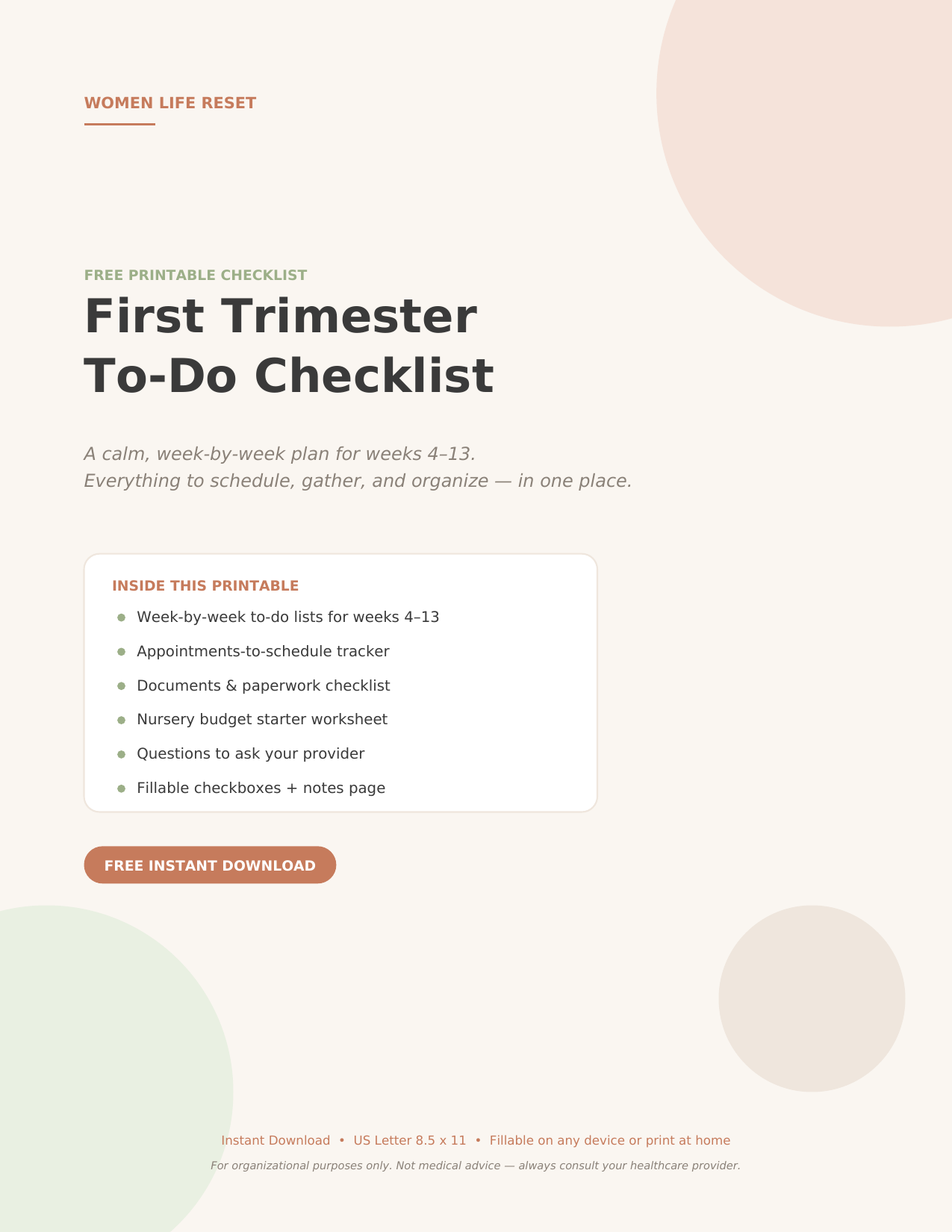
Weeks 1–13, gathered on four calm fillable pages — week-by-week to-dos, an appointment log, and room for your notes. It’s free.
The tiny checklist
- Practice cup drinking at one meal a day
- Answer every point with a word: “Yes! The dog!”
- Do a stair and gate safety check — climbers improvise
- Sort childcare or work logistics that have been floating in your head
- Write down the words, signs, and sounds your baby uses now — you will forget
Two months from a whole year. Month eleven is when the birthday planning starts feeling real.
Keep Every Handover This Calm
The Babysitter Binder puts everything a sitter needs in one calm place — emergency page, routine, tonight sheet. Set up in an hour, used for years. Instant download.
This article is for organizational purposes only and isn’t medical advice — your healthcare provider knows your situation best.
These planners and trackers are organizational tools only and are not medical advice. Always consult your healthcare provider about your pregnancy and your baby’s care.
Quick answers
When do babies take first steps?
Most take independent steps between 9 and 15 months — the middle is around 12 months. Cruising along furniture comes first. Barefoot or flexible shoes indoors help balance best.
How do I handle tantrums at 10 months?
At this age they’re frustration, not manipulation: baby wants something and can’t communicate or do it yet. Stay calm, keep them safe, name the feeling, redirect. You’re building emotional wiring, not losing control.
What games does a 10-month-old love?
Peekaboo, pat-a-cake, copying sounds and gestures, putting things in and out of containers, and anything with a beat. Simple back-and-forth games are brain-building gold at this age.
How do I prepare my 10-month-old for a babysitter?
Start with short absences and familiar faces where possible, keep the routine identical for the sitter, and write everything down so care does not depend on memory. Do a calm, quick goodbye — long farewells signal worry. Most babies settle within minutes once you are gone, especially with someone who follows their routine.
What should a babysitter know about my baby?
The essentials: feeding amounts and timing, sleep cues and routine, what soothes them, allergies or medical needs, emergency contacts, and house practicalities. Put it all on paper in one place — verbal handovers evaporate the moment you leave.
Educational only — not medical advice. Always consult your healthcare provider.
One calm email a week
Gentle, practical organization for pregnancy and new motherhood — start with the free First Trimester Checklist (instant download, no account needed).
Free instant download · Opens right in your browser · No Canva account needed
Subscriber perk: private coupon codes by email — our list never pays full price
Make this month easier
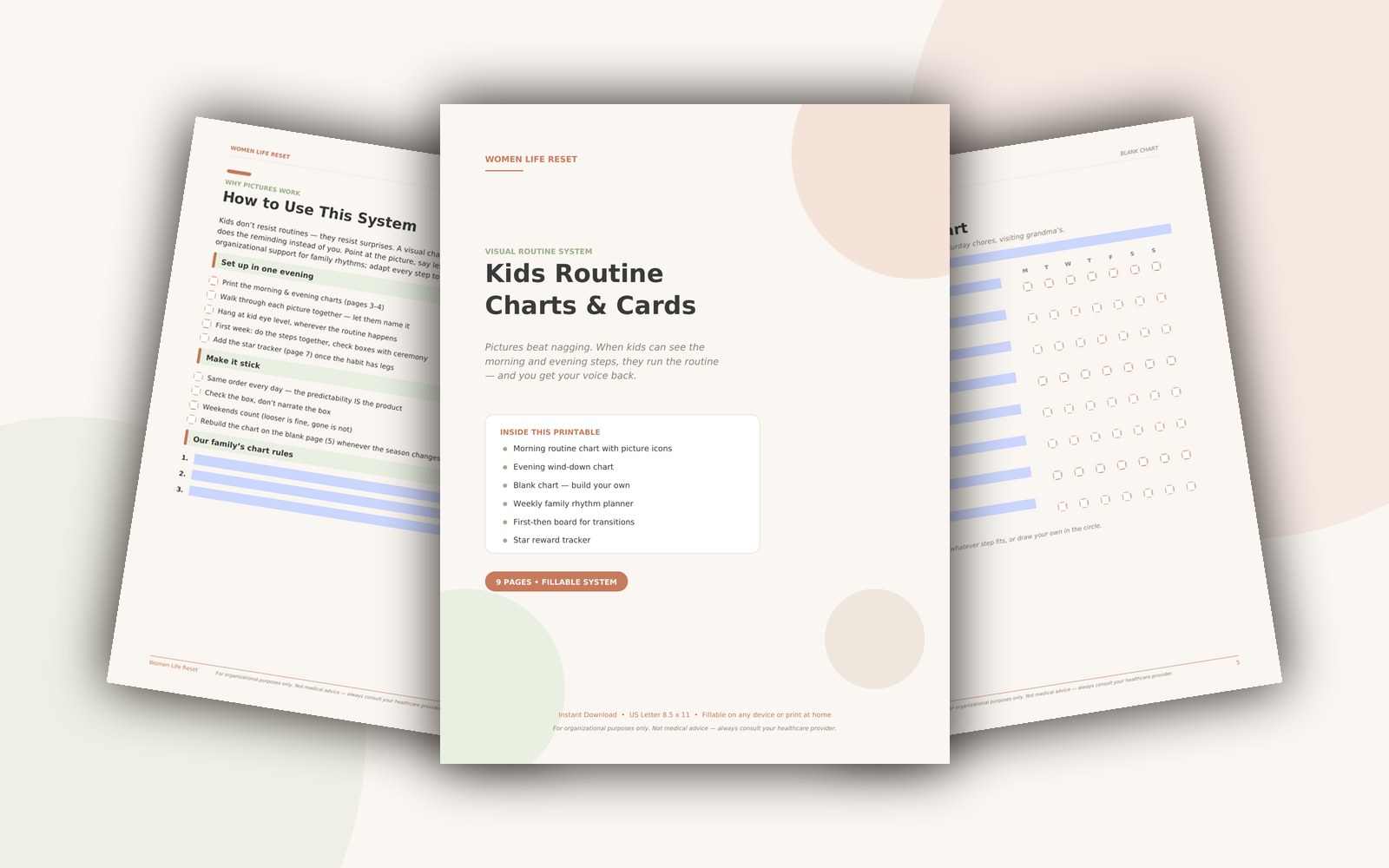 Kids Routine Charts System
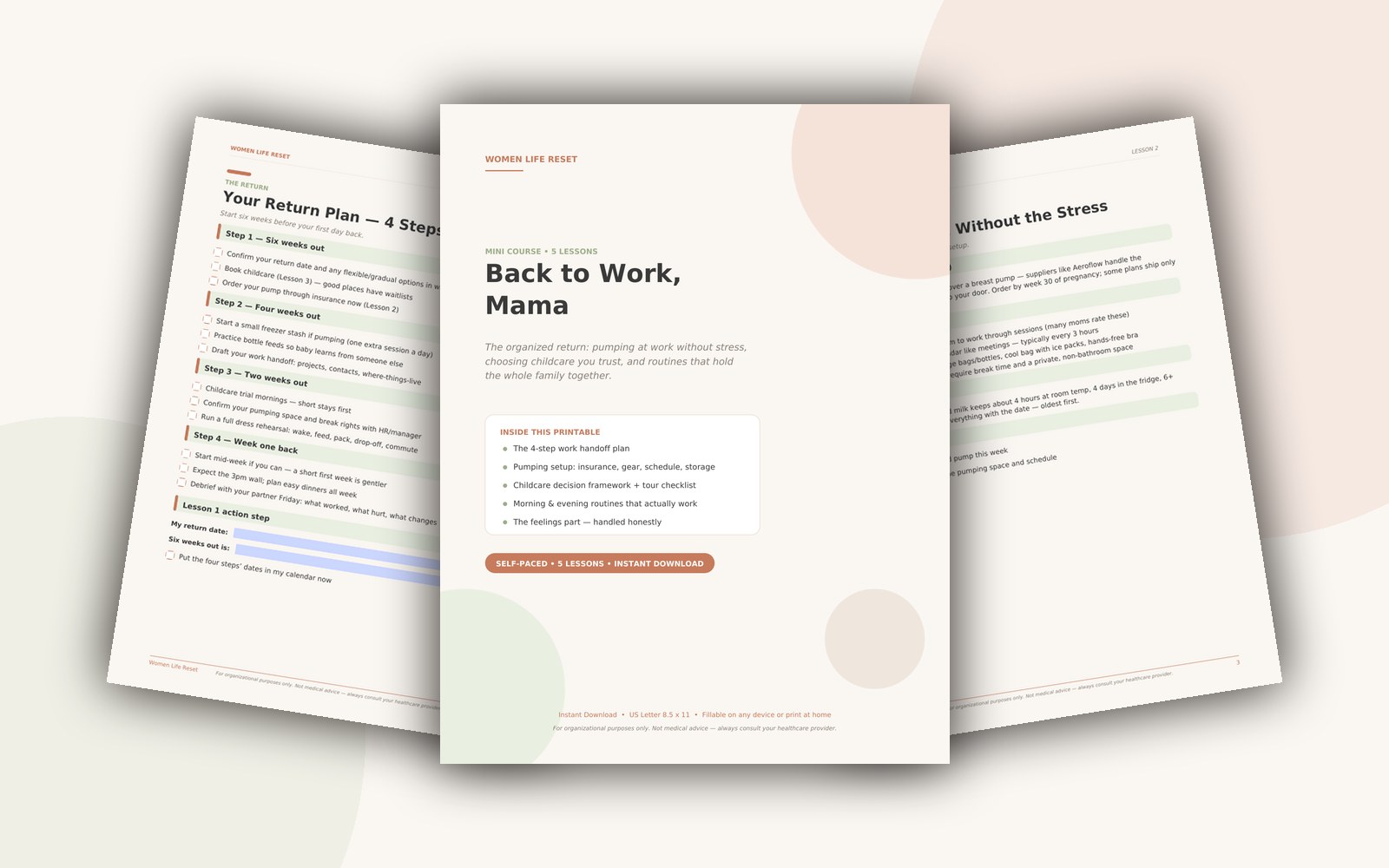 Back to Work, Mama — Return-to-Work Plan
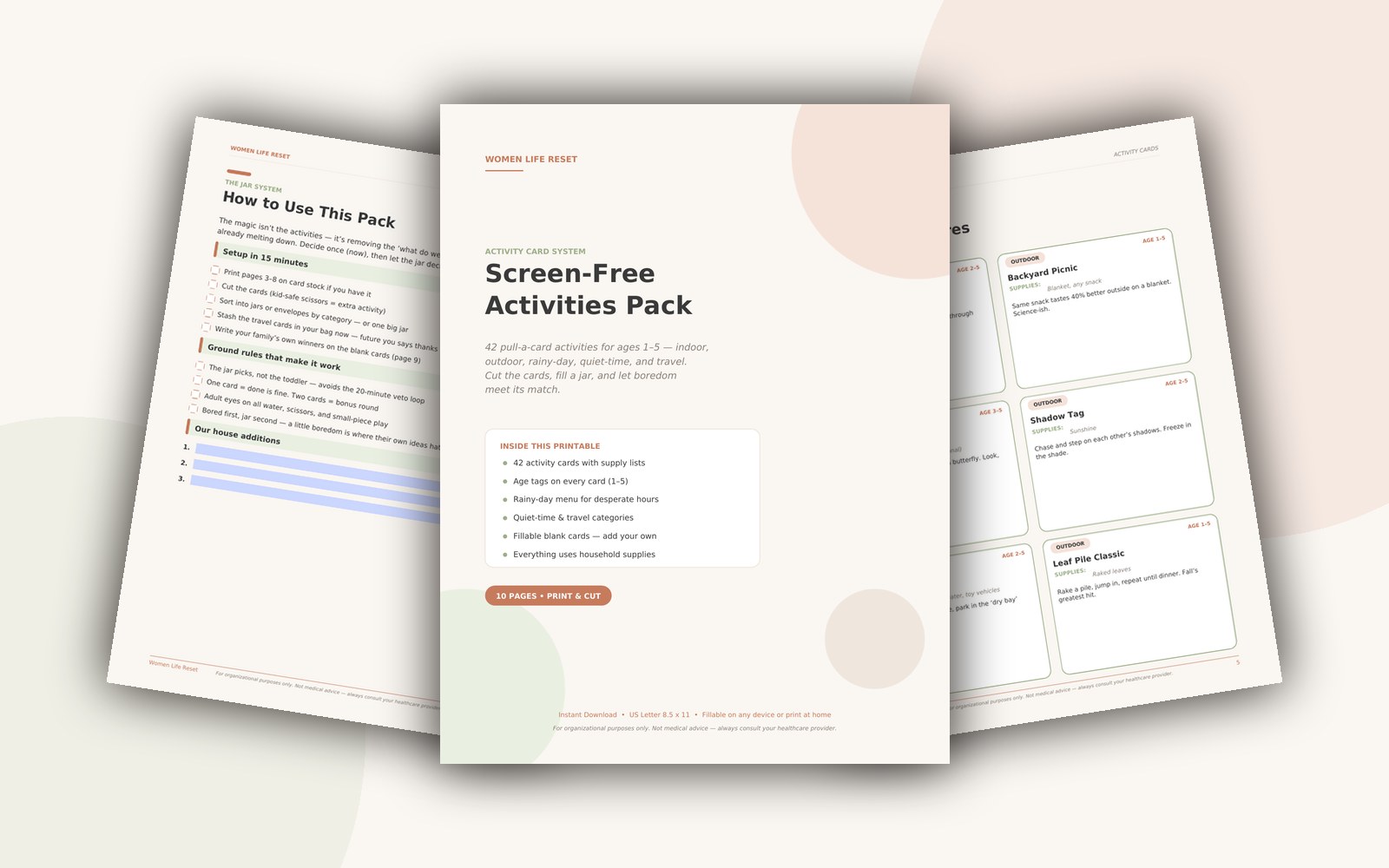 Screen-Free Activities Pack
Packed the whole bag in one afternoon at 35 weeks — when my waters broke early I just grabbed it and went. It’s a plain checklist, nothing fancy, but it did its job when it mattered.
Popular on the blog


Fresh from the blog


Your 15% welcome code is waiting
Join the Mom Club and I’ll send you my First Trimester Checklist free, plus your standing code MOMCLUB15 — 15% off everything in the store, every time you shop. One gentle, practical email a week. That’s the whole deal.
No spam, no pressure — unsubscribe anytime and keep the checklist. Only gentle notes from me, Rahila.