

Hospital Bag Checklist: What to Pack (and What to Skip)
Search “hospital bag checklist” and you’ll find lists with 90+ items — including, somehow, a full-length mirror and a rice cooker. Let’s do this the calm way instead.
With my first baby I packed like we were moving in; with my second, everything fit in a carry-on — and I didn’t miss a thing. Most families are at the hospital for one to three days, and the hospital supplies more than you’d expect. What you actually need really does fit in that carry-on. This guide organizes packing into three bags (mom, baby, support person), tells you what to skip, and gives you a timeline so the bag is ready weeks before you need it.
In this article
The heart of it
- Pack by week 34–36 — early enough for surprises, late enough to keep your chargers
- Three bags: one for mom, one for baby, one for your support person
- Split everything into pack-ahead versus grab-on-the-way-out
- Skip the anti-checklist — hospitals provide more than you think
- Two adults pack together; nobody finds anything in a bag one person packed alone
When to Pack Your Hospital Bag
- Week 28–30: Start a running list and buy/gather items slowly. No rush, no panic-buying.
- Week 34: Pack the main bag. If you’re expecting multiples or your provider has mentioned an earlier delivery possibility, aim earlier — ask them what’s sensible for you.
- Week 36: Bag zipped and by the door (or in the car trunk). Add last-minute items to a sticky note on top: phone charger, glasses, toothbrush.
Bag 1: For Mom
Documents & admin (pack these first — they’re the most forgotten):
– [ ] Photo ID and insurance card
– [ ] Hospital registration paperwork (pre-register if your hospital allows it — it saves clipboard time later)
– [ ] Copies of your birth preferences — printed, not just on your phone (our birth plan template guide covers building one)
– [ ] A small notebook + pen for questions and notes to share with your care team
Comfort & clothing:
– [ ] 2–3 front-opening nightgowns or nursing tanks (easy access beats cute)
– [ ] A lightweight robe
– [ ] Non-slip socks or slippers
– [ ] A going-home outfit in a size that fit around month six
– [ ] Hair ties, headband, lip balm (hospital air is dry)
– [ ] Your own pillow with a colored pillowcase (so it doesn’t get swept up with hospital linens)
Toiletries & extras:
– [ ] Travel-size toothbrush, toothpaste, face wash, deodorant
– [ ] Phone charger with a long cable (outlets are never near the bed)
– [ ] Earbuds and a downloaded playlist or podcasts
– [ ] Snacks for after delivery (check with your provider about eating during labor — that’s their call)
Bag 2: For Baby
The hospital typically provides diapers, wipes, and basic supplies during your stay — confirm with yours. So baby’s bag is short:
- [ ] 1–2 going-home outfits (bring newborn and 0–3 month sizes — babies are bad at reading size charts)
- [ ] A weather-appropriate layer or blanket for the ride home
- [ ] Infant car seat, installed and checked. This is the true non-negotiable — you can’t leave without it. Many fire stations and hospitals offer free installation checks; book one for week ~35.
Bag 3: For Your Support Person
- [ ] Their own snacks and water bottle
- [ ] Phone charger, book or downloaded shows for downtime
- [ ] A change of clothes and basic toiletries (many can stay overnight)
- [ ] Cash/card for parking and vending machines
- [ ] A printed contact list: who gets the “baby’s here!” call and in what order
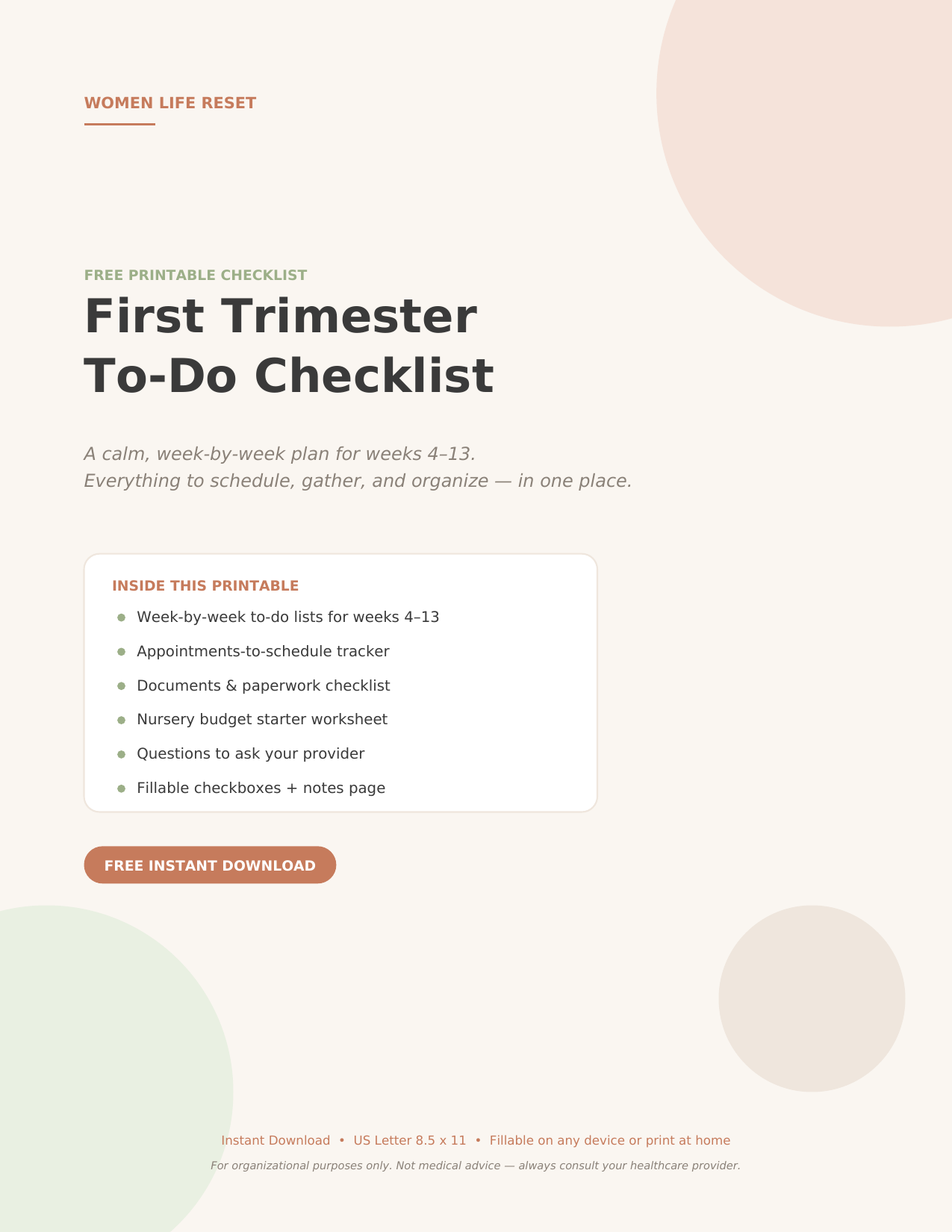
Free: the First Trimester Checklist
Weeks 1–13, gathered on four calm fillable pages — week-by-week to-dos, an appointment log, and room for your notes. It’s free.
What to Skip (the Anti-Checklist)
Save the space. These come up on every viral list and rarely get used:
| Commonly packed | Reality |
|---|---|
| Diapers & wipes for the stay | Hospital supplies them |
| Multiple “cute” baby outfits | One going-home outfit is plenty |
| Breast pump | Hospital has them if needed |
| Full makeup bag | Lip balm and dry shampoo do the job |
| Laptop | Your phone does everything; leave it home |
| Valuables & jewelry | Leave them home, full stop |
| Candles/diffusers | Not allowed in most hospitals |
The 15-Minute Timeline
- Week 28–30: Start the list, order anything you’re missing
- Week 32: Gather everything in one corner of a room
- Week 34: Pack; attach a “last-minute grabs” sticky note to the bag
- Week 35: Car seat installed and inspected
- Week 36: Bag by the door; partner knows where everything is
- Week 37+: Relax. You’re more prepared than 90% of parents in that ward.
Comfort Upgrades Worth the Space
A few small items earn their spot for sheer quality-of-stay improvement:
- A long phone cable (mentioned above because it matters twice) — 10 feet reaches any outlet
- Your favorite water bottle with a straw — easier to drink from in any position
- One cozy layer from home — a cardigan or hoodie that smells like your house
- Dry shampoo and face wipes — the five-minute refresh when a shower isn’t happening
- A small treat — your favorite tea bags or the good chocolate. You earned it.
Everything on this list fits in a shoebox. That’s the standard: if the comfort items exceed a shoebox, you’re decorating, not packing.
Special Situations Worth Planning For
A few scenarios change the packing math — all organizational, all worth a conversation with your provider:
- Planned cesarean: expect a longer stay, so double the comfortable clothes and phone-cable count, and add slip-on shoes you can put on without bending. Ask your provider what the typical stay looks like at your hospital.
- Multiples or early delivery possibility: pack earlier (week 30–32), add a second baby outfit set per baby, and keep a “grab list” for anything that can’t be packed yet.
- Partner staying overnight: confirm with your hospital what’s provided for support people (bedding, meals, shower access) so their bag matches reality.
- Other kids at home: pack their bag too — a labeled overnight kit for wherever they’re staying, with comfort items and a note from you.
What Hospitals Usually Provide (So You Don’t Pack It)
Call your hospital once and confirm — but most provide the following during your stay, which means these stay off your list:
- Diapers, wipes, and basic baby care supplies for the stay
- Mesh underwear, pads, and peri bottles for postpartum care
- Blankets, hats, and onesies for baby while admitted
- Water pitchers, basic toiletries, and towels
- A breast pump and lactation support if needed
Knowing this list is what separates a carry-on from a moving van. Jot down whatever your hospital confirms in your notes so there’s no second-guessing at week 38.
The Two-Adult Packing Rule
Here’s the mistake that haunts delivery rooms: mom packs the bag, and mom is a little busy when it matters. The fix is a two-adult rule:
- Whoever isn’t in labor does the final grab. They should know where the bag lives, what’s on the sticky note, and where the car seat manual is.
- Do a walkthrough together at week 36. Ten minutes: “bag’s here, documents are in the front pocket, car seat’s installed, hospital number is starred in both phones.”
- Take a photo of the packed bag’s contents. If anything gets unpacked and used, the photo is the repacking guide.
Hospital Bag FAQ
Should I pack two bags — one for labor, one for after?
Only if it helps you. A single carry-on with a “front pocket” for documents and labor-hour items works just as well and means less to carry.
What about snacks and drinks during labor?
That’s a provider question — policies and your situation vary. Pack a few favorites for afterward regardless, and ask your provider what’s recommended during.
Do I really not need diapers?
Most hospitals supply them during your stay — but call yours and confirm. A two-minute phone call beats trunk Tetris.
When do I pack if I’m hoping to deliver at a birth center?
Same timeline, but ask the center for their specific list — stays are often shorter and supply policies differ.
The Takeaway
A hospital bag is a logistics exercise, not a survival kit: documents first, comfort second, car seat non-negotiable, and everything else optional. Pack it by week 36 as part of your bigger final-weeks plan (see our third trimester checklist) — then cross it off and enjoy the quiet before the beautiful noise.
Want It All in One Place?
All 25 pages — trimester checklists, weekly planner & newborn trackers — in one bundle. Save nearly half vs. buying separately.
Keep Every Week This Calm
The Pregnancy To-Do Checklist sorts all 128 to-dos by trimester — bag lists included — and counts your ticks as you go. Instant download.
This article is for organizational purposes only and isn’t medical advice — your healthcare provider knows your situation best.
These planners and trackers are organizational tools only and are not medical advice. Always consult your healthcare provider about your pregnancy and your baby’s care.
Quick answers
When should I pack my hospital bag?
Have it packed by week 36 — week 34 if you’re having twins or your provider expects an early arrival. Keep it by the door or in the car from then on.
What does the hospital provide?
Most US hospitals provide diapers, wipes, receiving blankets, mesh underwear, pads, and a peri bottle during your stay. Call yours to confirm, then pack only what they don’t cover.
What do moms say they never used?
The most common regrets: too many baby outfits (they live in hospital onesies), breast pads (hospital has them), and your own towels. The most-loved extras: a long phone charger, snacks, and lip balm.
When should I pack my hospital bag?
Most mums pack between weeks 34 and 36 — early enough that a surprise arrival doesn’t catch you out, late enough that you’re still using the things on the list. Pack in two bags: one for labour, one for the stay. It halves the rummaging.
What do hospitals usually provide?
Most provide nappies, wipes, blankets and basic pads during the stay — but policies vary, so ask at a prenatal visit or check your hospital’s website. What they rarely provide: going-home outfits, your own toiletries, phone chargers and snacks. Those are on you.
Educational only — not medical advice. Always consult your healthcare provider.
One calm email a week
Gentle, practical organization for pregnancy and new motherhood — start with the free First Trimester Checklist (instant download, no account needed).
Free instant download · Opens right in your browser · No Canva account needed
Subscriber perk: private coupon codes by email — our list never pays full price
Make this week easier
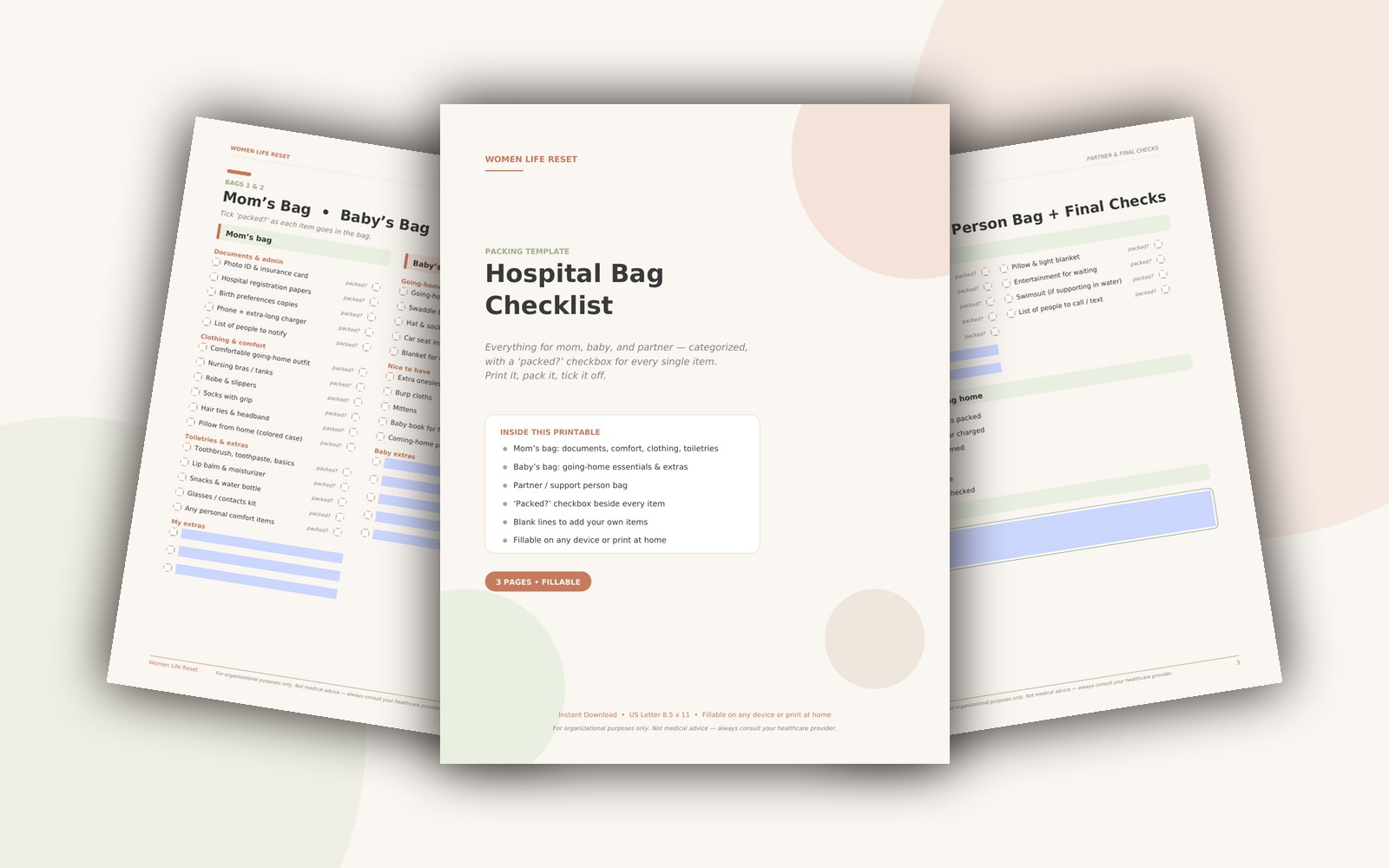 Hospital Bag Checklist
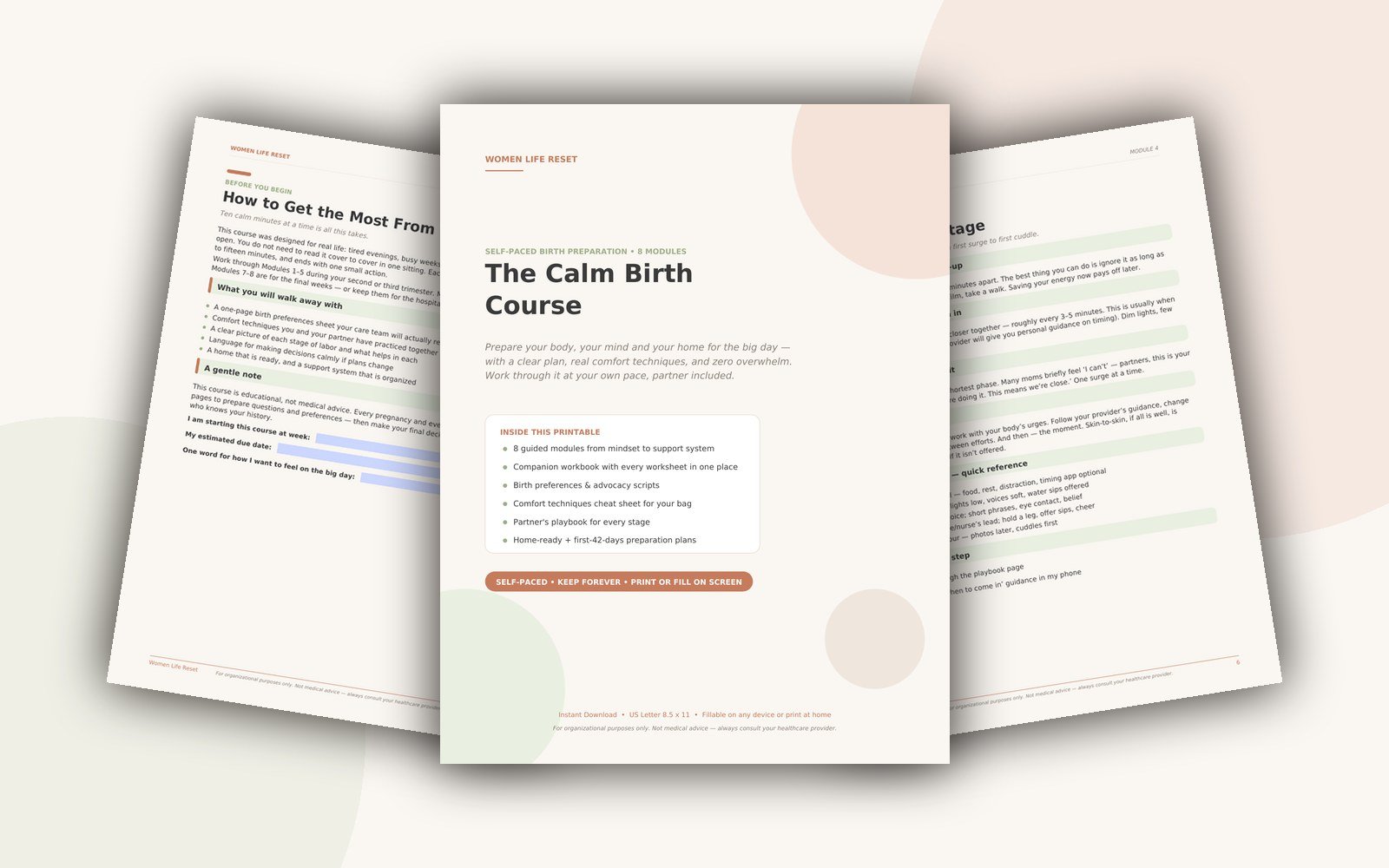 The Calm Birth Course
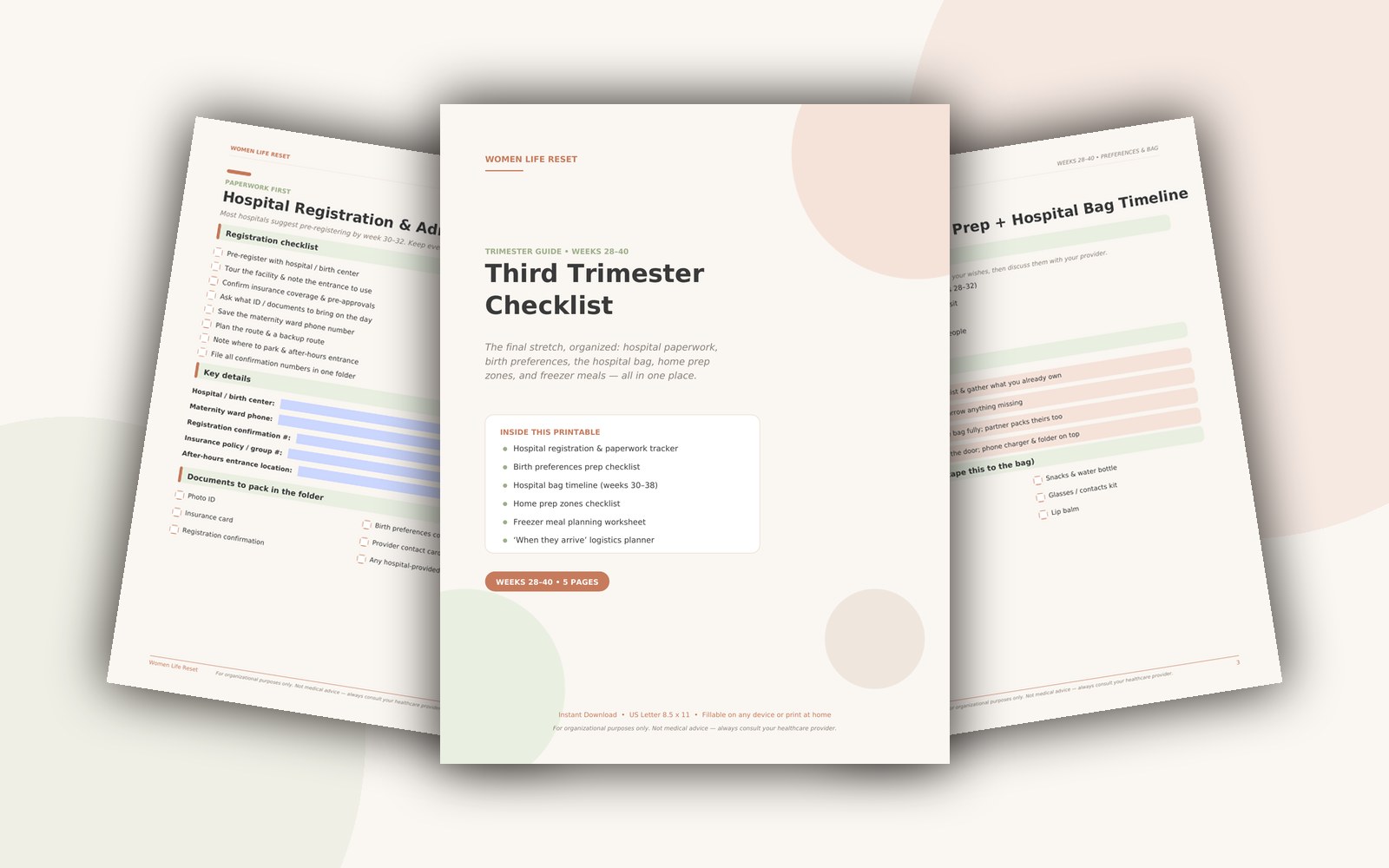 Third Trimester Checklist
I was terrified of labour. The breathing sections changed everything — I walked in actually feeling ready. My midwife asked where I learned it.
Popular on the blog




Fresh from the blog




Your 15% welcome code is waiting
Join the Mom Club and I’ll send you my First Trimester Checklist free, plus your standing code MOMCLUB15 — 15% off everything in the store, every time you shop. One gentle, practical email a week. That’s the whole deal.
No spam, no pressure — unsubscribe anytime and keep the checklist. Only gentle notes from me, Rahila.