

Nursery Planning 101: Zones, Checklists and Budgeting
Here’s the truth that saves first-time parents hundreds of dollars and several meltdowns: a nursery isn’t a showroom, it’s a workspace. You’ll spend hundreds of hours in that room at 3 a.m., often one-handed, in the dark. Plan it like a kitchen — zones, workflow, and only the tools you’ll actually use — and it will serve you beautifully no matter its size or budget.
This guide walks you through the 3-zone method, a complete category-by-category checklist, and a budget framework that works at $300 just as well as at $3,000. (Timing tip: most families plan and order during the second trimester — our second trimester checklist shows where nursery planning fits in the bigger picture.)
In this article
The heart of it
- Three zones — sleep, change, feed — organize any room of any size
- Set the budget framework before you see a single crib
- A setup timeline spreads cost and effort across weeks
- Small rooms, corners, and shared spaces all work with zones
- Borrow and buy secondhand everywhere except the safety-critical items
Step 1: The 3-Zone Method
Before you buy a single thing, divide your room — even a tiny one — into three zones. Every item you consider buying must belong to a zone and earn its floor space.
Zone 1: Sleep
- Crib (check that any crib — especially secondhand — meets current safety standards; your pediatrician or official safety resources can point you to the guidelines)
- Firm mattress with 2–3 fitted sheets (spares matter)
- Blackout option for the window — dark rooms support daytime naps
- Sound machine (optional but popular)
- Monitor if you’re using one
Zone 2: Change
- Changing surface: a dedicated table or a secured pad on a dresser (the dresser route doubles your storage)
- Diapers, wipes, and cream within one arm’s reach — never step away from baby on the surface
- Diaper pail or lidded bin
- A small basket of backup clothes for blowout emergencies
- Hamper within arm’s reach
Zone 3: Feed & Soothe
- Comfortable chair with back and arm support — test-sit before buying if possible
- Side table for water, phone, and snacks (you’ll be parked there a while)
- Night light or dimmable lamp — enough light to function, not enough to fully wake anyone
- Burp cloths and a small blanket basket
- Optional: footstool, book basket for older siblings
The workflow test: stand in the room and mime a middle-of-the-night cycle — crib to changing pad to chair. If anything blocks the path, move it now, not at 3 a.m.
Step 2: The Complete Nursery Checklist
Organized by category so you can shop (or registry-build) in passes:
| Category | Need | Nice-to-have | Skip for now |
|---|---|---|---|
| Sleep | Crib, mattress, 2–3 sheets | Sound machine, blackout shades | Crib pillows, positioners, decor bumpers |
| Change | Changing surface, diapers, wipes, cream, hamper | Diaper pail, wipe warmer | Changing table if a dresser works |
| Feed | Chair, side table, burp cloths | Footstool, feeding pillow | Fancy bottle gadgets (wait and see) |
| Storage | Dresser or bins, closet dividers | Shelf baskets, book ledge | Over-the-door everything |
| Decor | — | Wall art, rug, curtains | Anything fragile at grab-height |
Two rules of thumb:
1. Buy for months 0–3 only. Babies outgrow gear and preferences fast; let the registry and real life reveal what you need later.
2. Safety beats aesthetics. Anchor furniture to the wall, keep the crib bare per current safe-sleep guidance, and confirm specifics with your pediatrician or official safety sources.
Step 3: The Budget Framework
Nursery budgets spiral when you shop without a ceiling — I once fell hard for a glider before checking the price or measuring the room, and neither went well. Set three numbers before browsing:
- Total budget — the real number, not the aspirational one
- Big-three allocation — crib/mattress, chair, storage typically eat 60–70% of a nursery budget
- Decor cap — the category with infinite upsell; give it a hard ceiling
Sample allocations at three levels (adjust to your reality):
| Tight ($300–$500) | Middle ($800–$1,500) | Roomy ($2,000+) | |
|---|---|---|---|
| Crib + mattress | Secondhand-safe or budget new | Mid-range new | Investment convertible crib |
| Chair | Existing chair + cushion | Budget glider | The dream rocker |
| Storage | Dresser you own + bins | New dresser combo | Custom closet system |
| Decor | Printables + paint accent | Rug, art, curtains | Full design moment |
Money-savers that don’t look like compromises: secondhand dressers (often sturdier than new budget furniture), registry completion discounts (many registries offer a percentage off remaining items — time your purchases), and skipping the “nursery set” (buying pieces separately almost always costs less).
For the bigger first-year money picture beyond the nursery, pair this with our baby budget planner guide.
Free: the First Trimester Checklist
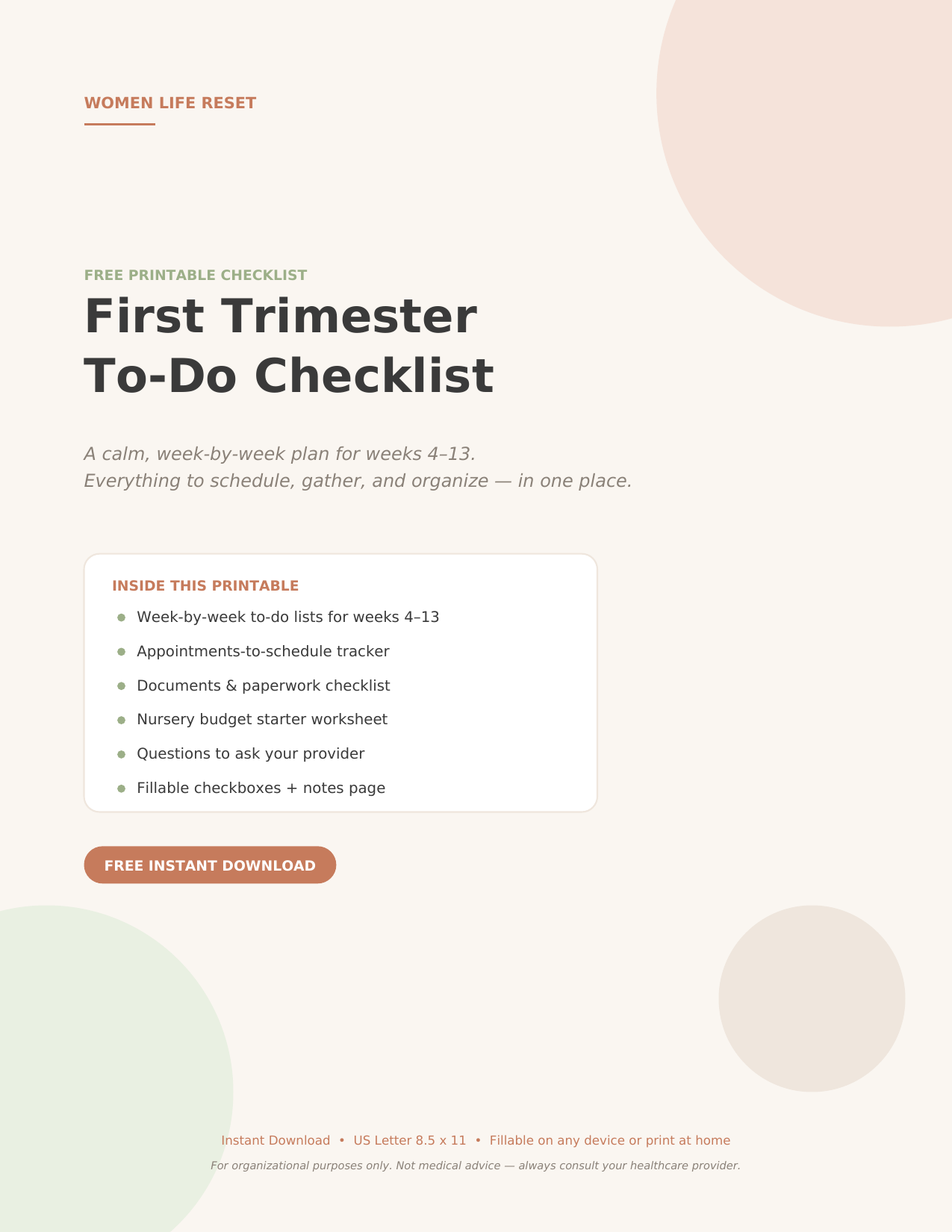
Weeks 1–13, gathered on four calm fillable pages — week-by-week to-dos, an appointment log, and room for your notes. It’s free.
Step 4: The Setup Timeline
- Weeks 18–22: Measure, zone the room on paper, set the three budget numbers, order furniture (lead times can be long)
- Weeks 23–27: Assemble the crib, anchor furniture, set up the changing station
- Weeks 28–32: Wash and file first-size clothes, stock diapers and wipes, do the workflow test
- Weeks 33–36: Final touches, decor, and a lamp test at night. Done — close the door and enjoy the calmest the room will ever be.
Small Rooms, Corners and Shared Spaces
No spare room? The zone method scales down beautifully:
- Nursery corner in your bedroom: many families room-share early on anyway. A mini crib or bassinet (sleep zone), a dresser-top changing pad (change zone), and your existing chair with a side table (feed zone) cover everything in about 25 square feet.
- Vertical storage is your friend: wall shelves above the changing surface, closet organizers, and bins under the crib reclaim floor space.
- Rolling cart as mobile zone: a three-tier cart holds diapers, burp cloths, and feeding supplies, and wheels between rooms — one “nursery” that follows you.
- Skip the dedicated changing table entirely in small spaces; the dresser-top pad does the same job and converts back to a normal dresser later.
Common Nursery Planning Mistakes
- Buying before measuring. That dresser is two inches wider than the alcove. Measure twice, order once — and photograph the room dimensions into your phone for store trips.
- Decorating before the workflow test. Arrange furniture for the 3 a.m. path first; hang art second.
- Overbuying newborn clothes. Everyone gifts them; babies wear them for weeks. A handful of sleepers covers you until the shower and reality reveal what you need.
- Ignoring the room’s light. Visit the room at nap-time hours before choosing blackout solutions — the sun angle in February isn’t the one in June.
- Building a “display nursery.” Open shelves of tiny shoes photograph wonderfully and dust terribly. Closed bins win the long game.
Where to Buy (and What to Borrow)
A quick sourcing strategy that protects the budget without sacrificing the room:
- New: crib mattress, car seat, and anything where safety standards and product history matter. When in doubt, verify current safety guidance through official sources or your pediatrician.
- Secondhand or heirloom: dressers, gliders, bookshelves, and decor — inspect sturdiness, anchor everything, and refinish rather than replace.
- Borrow or rent: the gear you need for weeks, not months — newborn-sized items, specialty pillows, travel cribs for a one-off trip.
- Registry: anything mid-price that others love to gift — monitors, carriers, high-quality swaddles, the cute-but-practical stuff.
Keep every receipt and order confirmation in one email folder labeled “Nursery.” Returns, warranty claims, and price adjustments all live there, and the folder pays for itself the first time a crib arrives with a missing rail.
The Takeaway
Zones first, checklist second, budget always. A nursery planned around how you’ll actually use it — in the dark, half-asleep, holding a baby — will outperform a picture-perfect room every single time. And remember: babies don’t notice decor. They notice parents who aren’t stressed. Build the room that makes your nights easier.
Want It All in One Place?
All 25 pages — trimester checklists, weekly planner & newborn trackers — in one bundle. Save nearly half vs. buying separately.
Keep Every Room This Calm
The Baby Registry Checklist sorts 150+ items by room, marks must-haves from skips, and adds up the budget as you tick. Instant download.
This article is for organizational purposes only and isn’t medical advice — your healthcare provider knows your situation best.
These planners and trackers are organizational tools only and are not medical advice. Always consult your healthcare provider about your pregnancy and your baby’s care.
Quick answers
What are the essential nursery zones?
Three: sleep (crib, blackout, monitor), change (dresser or table with supplies within arm’s reach), and feed (chair, side table, water station). Everything else is decoration.
What are the crib safety basics?
A bare crib is a safe crib: firm mattress, fitted sheet, nothing else — no bumpers, pillows, blankets, or stuffed animals for sleep. That’s the current safe-sleep guidance.
Do I need the nursery finished before baby arrives?
No. Most newborns sleep in a bassinet in the parents’ room for the first months. A finished-by-due-date nursery is nice; a changing station and a car seat are necessary.
When should I start setting up the nursery?
Most parents start in the second trimester, when energy is highest and there’s still slack in the timeline. Aim to have the essentials done by week 36 — but remember baby may not even sleep there for months, so an unfinished nursery is a wish, not an emergency.
How much does a nursery really cost?
Anywhere from almost nothing (a safe cot, a drawer of clothes, a changing mat on the floor) to thousands for a full designer room. The zones matter more than the spend: somewhere to sleep, change, feed and store. Budget for those four first; decor is the flexible line.
Educational only — not medical advice. Always consult your healthcare provider.
One calm email a week
Gentle, practical organization for pregnancy and new motherhood — start with the free First Trimester Checklist (instant download, no account needed).
Free instant download · Opens right in your browser · No Canva account needed
Subscriber perk: private coupon codes by email — our list never pays full price
Make this week easier
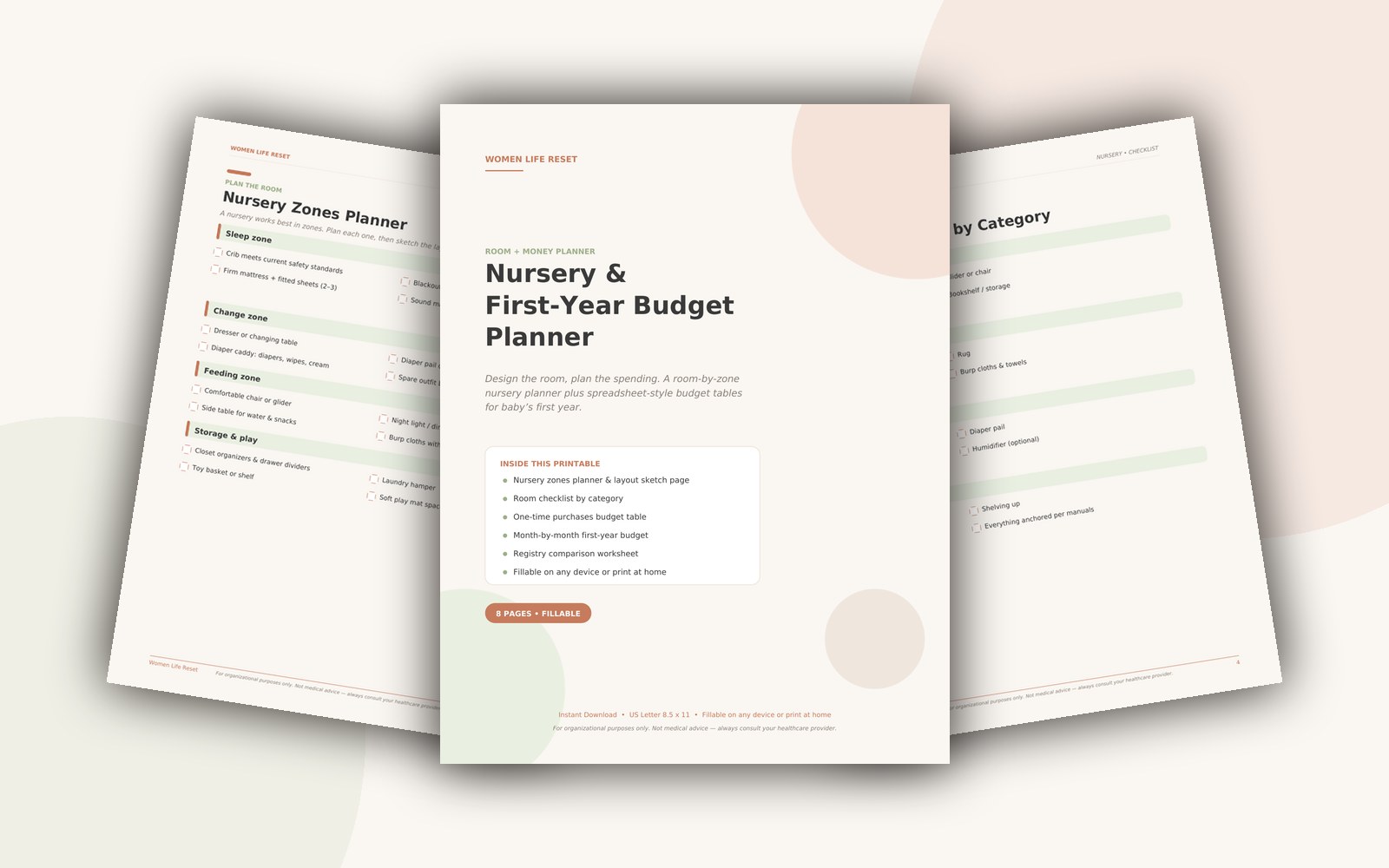 Nursery & Budget Planner
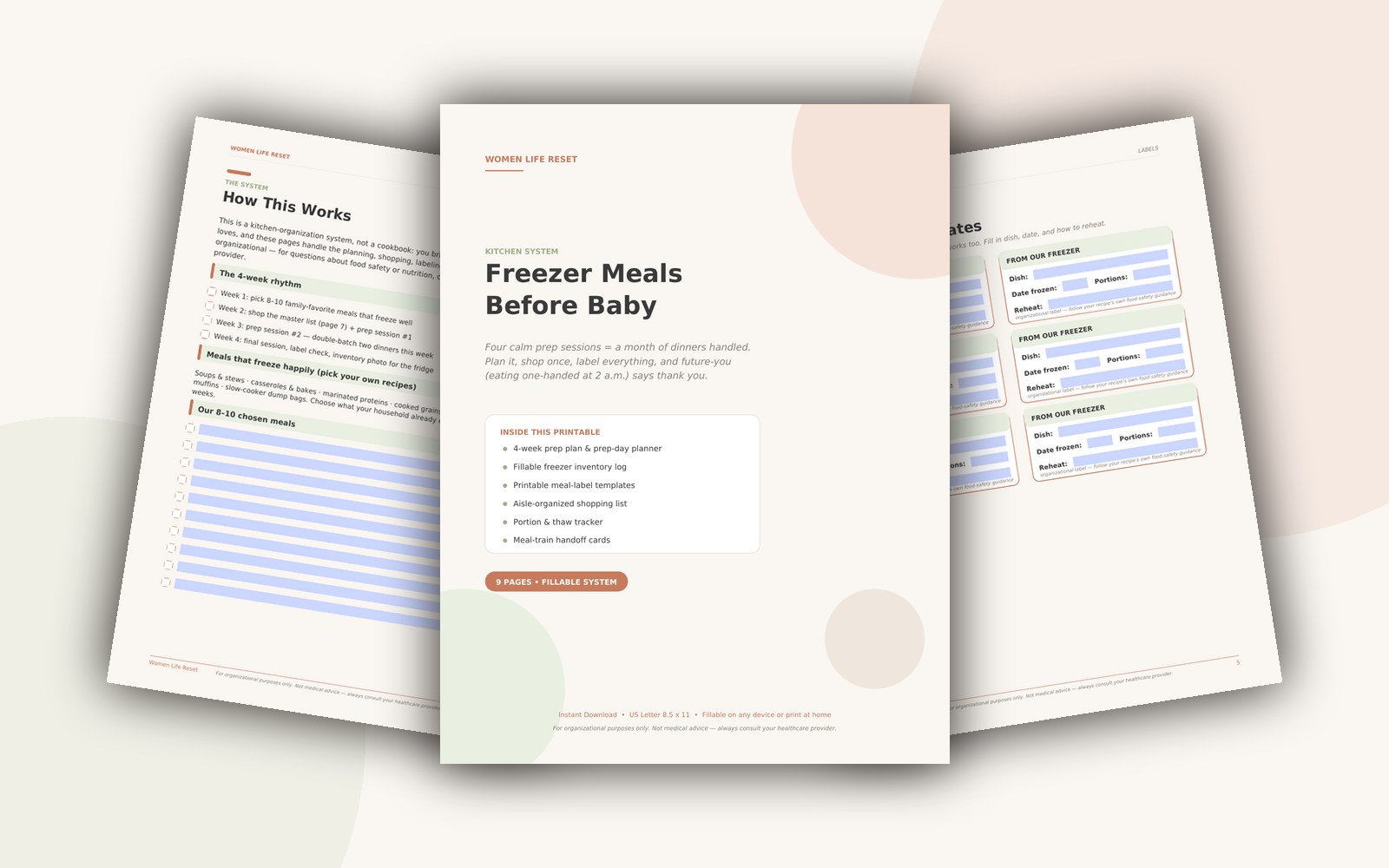 Freezer Meals Before Baby
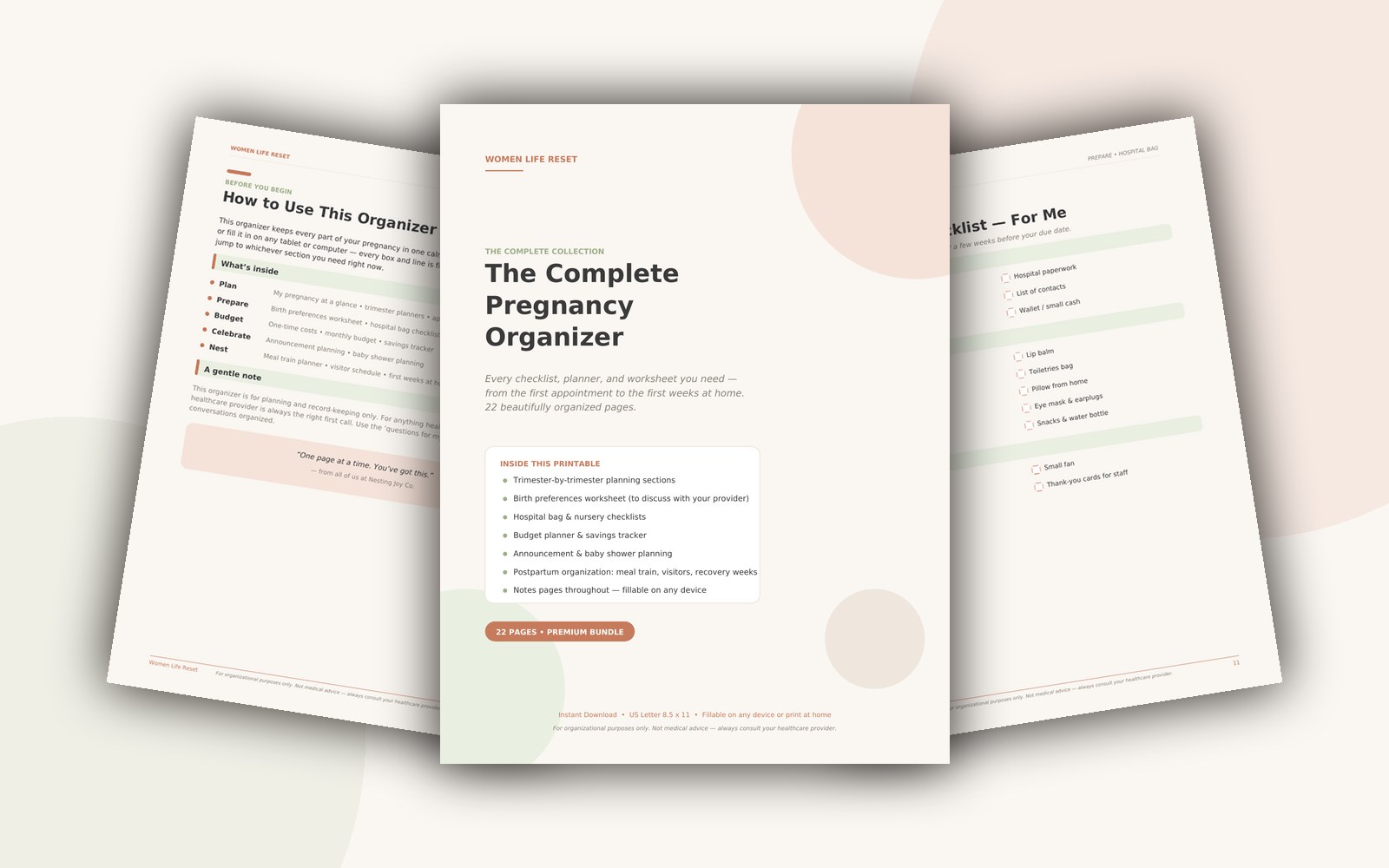 Complete Pregnancy Organizer
Two Sunday afternoons = a month of dinners in the freezer. At 2 weeks postpartum I cried with gratitude at past me. Buy it before the baby comes.
Popular on the blog


Fresh from the blog



Your 15% welcome code is waiting
Join the Mom Club and I’ll send you my First Trimester Checklist free, plus your standing code MOMCLUB15 — 15% off everything in the store, every time you shop. One gentle, practical email a week. That’s the whole deal.
No spam, no pressure — unsubscribe anytime and keep the checklist. Only gentle notes from me, Rahila.