
How to Track Ovulation: A Calm Beginner's Guide to Your Cycle
When I first started tracking my cycle, I did what everyone does: downloaded three apps, bought a pack of fifty ovulation strips, took my temperature for nine days, forgot on day ten, and then felt vaguely guilty about all of it. Sound familiar?
Here’s the truth nobody leads with: your body already tells you when ovulation is coming. The tracking tools just help you listen. So let’s start with what your body does, then build the simplest system that captures it — one you’ll actually keep up past week two.
In this article
The Biology, in Plain Language
Your cycle runs from the first day of your period to the first day of the next one. Ovulation — the release of an egg — typically happens about 14 days before your next period starts, which is not the same as “day 14” unless your cycle is exactly 28 days. If your cycle runs 32 days, ovulation lands closer to day 18. This single misunderstanding is why so many couples accidentally aim at the wrong week.
The egg lives 12 to 24 hours. Sperm, though, can wait around for up to five days. That’s why the real “fertile window” is the five days before ovulation plus the day itself — with the two days before ovulation being the golden ones. You don’t need to hit a single magic moment; you need to be in the right neighborhood.
The Three Signs Worth Watching
You could track a dozen things. Three carry almost all the information:
Cervical mucus. Not glamorous, genuinely useful. As ovulation approaches, it turns clear, stretchy, and slippery — the classic “egg white” texture. That’s your body rolling out the welcome mat for sperm. When you see it, the window is open.
Basal body temperature. Your resting temperature dips slightly right before ovulation, then rises about half a degree (Fahrenheit) after and stays up until your period. Temperature confirms ovulation happened — it doesn’t predict it — so it’s best used to learn your personal pattern over a couple of cycles, not to time things in real time.
Ovulation predictor kits. These strips detect the LH surge that happens 24 to 36 hours before ovulation. Start testing a few days before you expect the surge (based on your cycle length), and when you get a positive, the next two days are your best days. Cheap strips work fine; you don’t need the digital ones unless you prefer them.
The System That Doesn't Take Over Your Life
Here’s the failure mode I see constantly: a mom-to-be starts tracking everything, perfectly, and by cycle three she’s exhausted by her own spreadsheet. Tracking only works if it’s lighter than the problem it solves.
The minimalist version: one page per cycle. Cycle length, when the egg-white days showed up, OPK results, and when you, well, made use of the information. That’s genuinely all you need to spot your pattern — and your pattern is the whole point, because apps guess from averages and your body is not an average.
We put exactly this layout into the cycle pages of Two Pink Lines, our TTC course — a one-page-per-cycle tracker plus the eight lessons that explain what you’re seeing, so the numbers turn into decisions instead of anxiety. It’s $19, self-paced, and built for real life, not for people who enjoy spreadsheets.
When Tracking Isn't Enough
A few honest signposts. If your cycles are regularly shorter than 21 or longer than 35 days, if they’re wildly unpredictable, or if you never see an LH surge or temperature shift, bring that up with your provider sooner rather than later — those can be signs ovulation isn’t happening reliably, and that’s very treatable information to have.
The standard guidance: if you’re under 35 and have been trying for 12 months, or over 35 and trying for 6, it’s time for a proper conversation with your doctor. And if you go in with two or three cycles of tracked data in your hand? That appointment becomes dramatically more useful. Providers can do a lot with a clear record — which is exactly the kind of thing a calm paper trail is for. (The Pregnancy Weekly Planner picks up right where cycle tracking ends, by the way — same idea, next chapter.)
These planners and trackers are organizational tools only and are not medical advice. Always consult your healthcare provider about your pregnancy and your baby’s care.
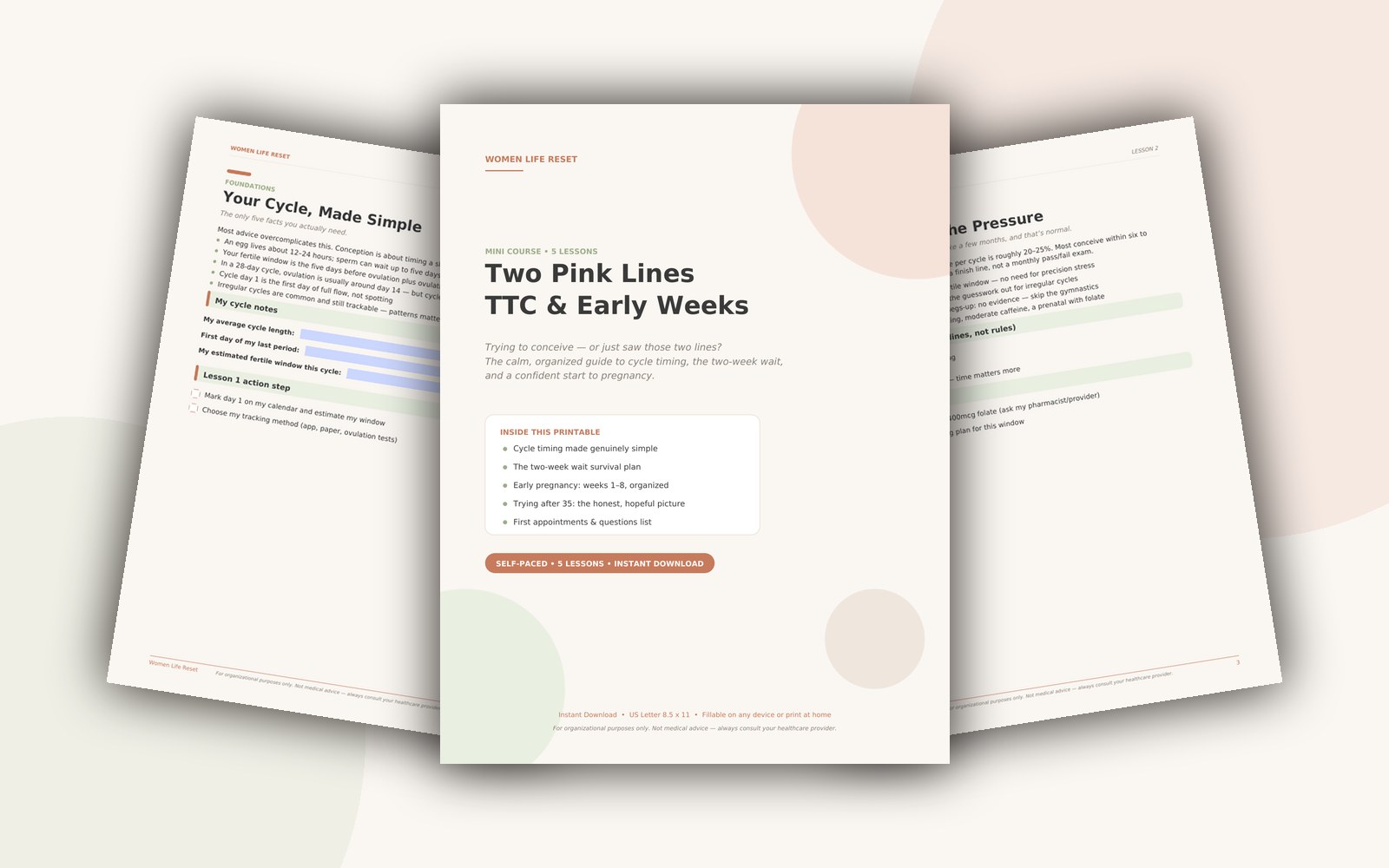 Two Pink Lines — the TTC course
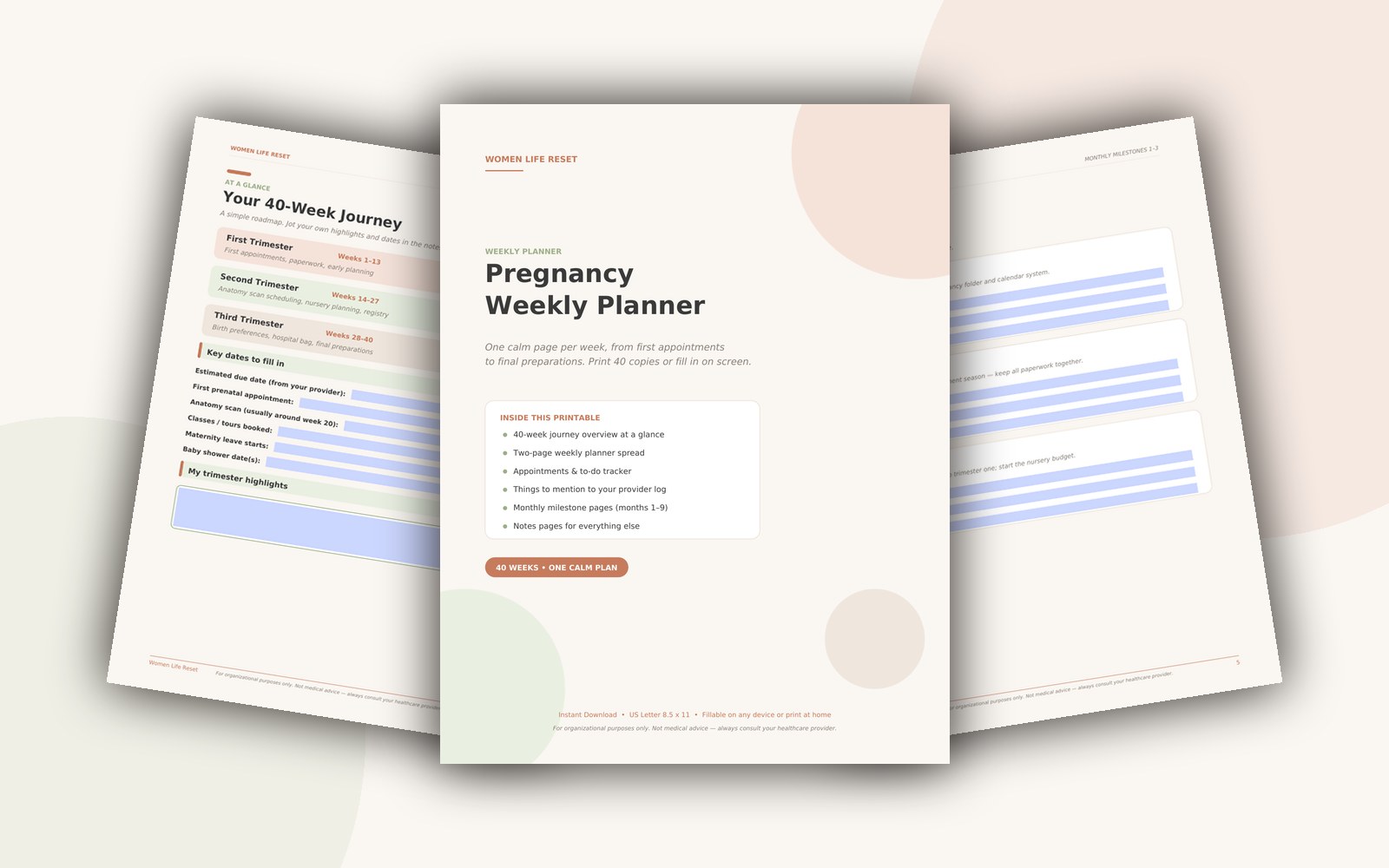 Pregnancy Weekly Planner
 The Course Library — all 4 courses
After months of googling at midnight, this gave me a calm plan and actual answers. My cycles finally made sense on paper.
Quick answers
When in my cycle can I actually get pregnant?
The fertile window is the five days before ovulation plus ovulation day itself. The highest odds are the two days right before ovulation. Outside that window, conception is essentially not possible that cycle.
Do ovulation apps work?
They’re educated guesses based on averages, and they get less accurate the less average your cycle is. Fine as a rough calendar — but pair them with your body’s own signs (cervical mucus, OPKs, temperature) before you trust the prediction.
How many cycles should I track before worrying?
Tracking two to three cycles teaches you your pattern, which is useful whether or not you’re worried. The worry timeline is separate: 12 months of trying under 35, 6 months over 35 — or sooner if your cycles are very irregular or absent.
Educational only — not medical advice. Always consult your healthcare provider.
Popular on the blog



Fresh from the blog




Your 15% welcome code is waiting
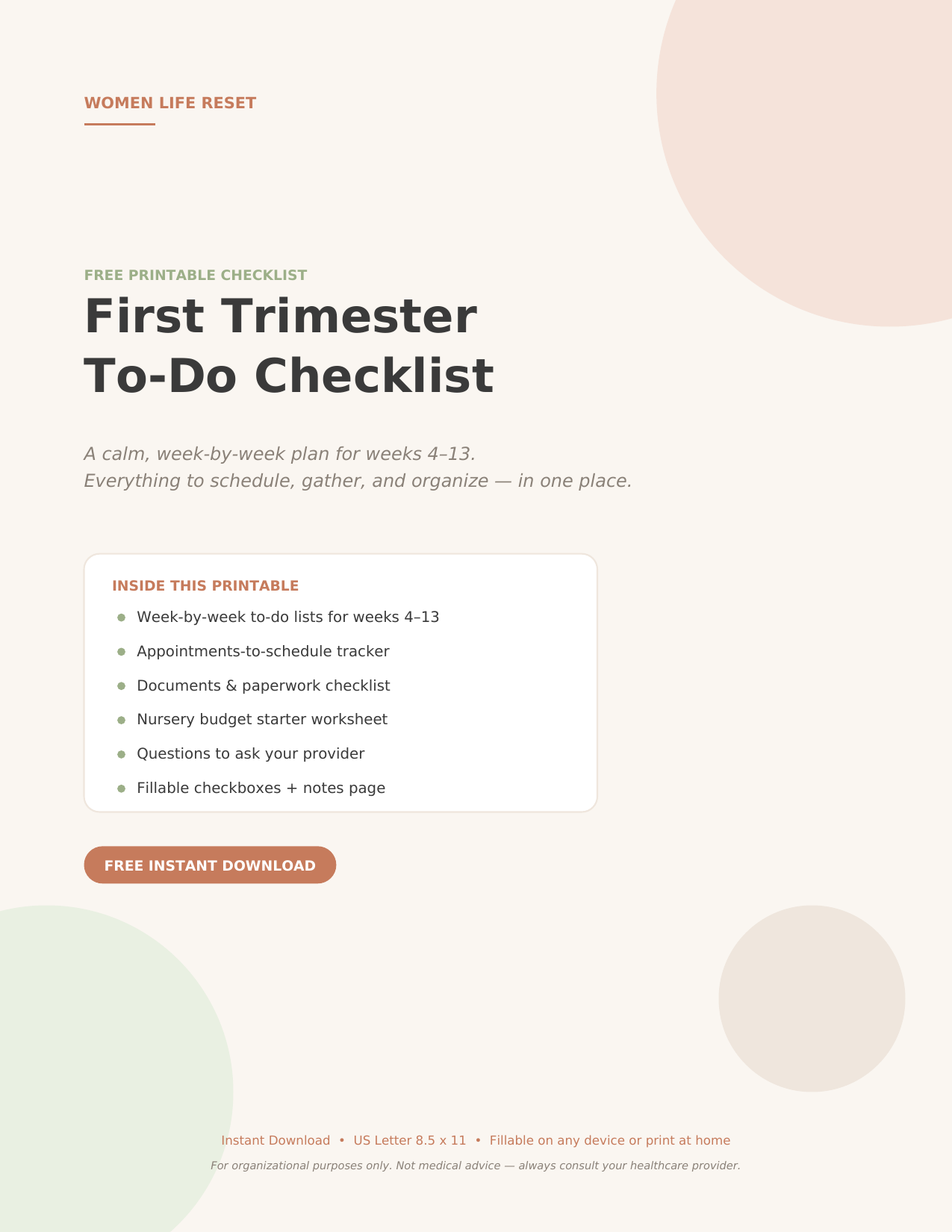
Join the Mom Club and I’ll send you my First Trimester Checklist free, plus your standing code MOMCLUB15 — 15% off everything in the store, every time you shop. One gentle, practical email a week. That’s the whole deal.
No spam, no pressure — unsubscribe anytime and keep the checklist. Only gentle notes from me, Sarah.
Leave a Reply